
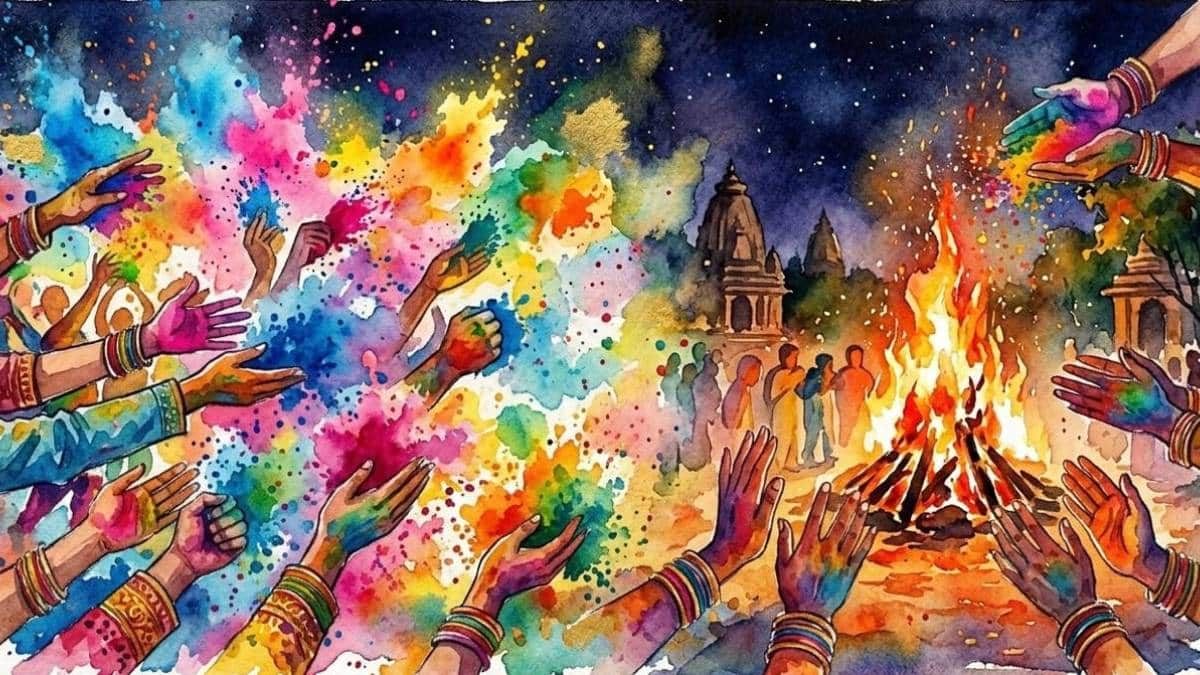
The Profound Significance of Holi: Beyond the Vibrant Colors of Spring

Holi is one of the most vibrant and beloved celebrations in the Hindu calendar, marking the arrival of the spring season (Vasant Ritu) on the full moon of the Phalguna month. While it is globally recognized as the “Festival of Colors,” the true significance of Holi lies in its deep spiritual, social, and scientific foundations that transcend simple celebration.
As explored by Shashvat Research, the multi-layered meaning of Holi festival is an ancient journey of purification, devotion, and collective awakening. It serves as a sacred interval where the internal landscape of the seeker is cleansed through ritual and reflection before the outward joy of the colors begins.
1. The Triumph of Devotion: Prahlad and Holika
The most famous legend associated with the festival is that of Bhakta Prahlad and his demonic father, Hiranyakashipu. The King, blinded by ego and power, sought to kill his son for his unwavering devotion to Lord Narayan (Vishnu).
When all other attempts failed, Hiranyakashipu’s sister, Holika, who possessed a boon that made her immune to fire, sat in a blazing pyre with Prahlad in her lap. However, the fire consumed the “invincible” Holika while Prahlad emerged untouched. This story serves as a timeless reminder that Asuric (demonic) tendencies—ego, selfishness, and materialism—are ultimately destroyed by the power of pure devotion and righteousness. It teaches us that even if the righteous are few in number, they are protected when they remain active and devoted.
2. The Fire of Self-Restraint: Shiva and Kamadeva
Another profound narrative involves Lord Shiva and Kamadeva (the God of Desire). While Shiva was deep in meditation, Kamadeva attempted to disturb him to fulfill Goddess Parvati’s wish for marriage. Shiva opened his third eye and reduced Kamadeva to ashes with his yogic fire.
The ritual of Holika Dahan (the bonfire) is a symbolic reenactment of this event. It encourages society to practice Samyam (self-control) over worldly desires and passions. This “fire of self-restraint” suggests that true peace is found only when one masters their inner senses before engaging with the external world.
Is there a deeper science behind the symbols? Beyond the legends of Prahlad and Shiva, the rituals of Holi serve as a sophisticated system of community and personal renewal. Watch this insightful exploration by Shashvat Research to see how ancient wisdom translates into modern scientific purification.
The Deep Meaning of Holi: A visual guide to the spiritual and scientific layers of India’s most vibrant festival. Discover why we burn the bonfire and how it cleanses our inner and outer worlds.
3. Scientific and Environmental Purification
The tradition of the communal bonfire also has a practical, scientific basis rooted in the Ayurveda and Holi connection during the change of seasons.
- Atmospheric Cleansing: During the transition to spring, there is often an increase in microorganisms. Historically, the wood and medicinal materials burned in the Holi pyre acted as a collective fumigation, purifying the air for the entire community.
- Mental Renewal: The custom of burning old items is a metaphor for discarding negative thoughts. This “mental cleansing” allows people to start the new season with a pure heart and a clear mind, washing away the sluggishness of winter.
4. Social Harmony and the Power of Unity
The second day of Holi, Dhulandi, is when people play with colors. This tradition serves a vital social function:
- Erasing Boundaries: When everyone is covered in gulal (colored powder), distinctions of caste, creed, and status disappear. It is a day to forgive old grievances and embrace one another in a spirit of brotherhood.
- Nature’s Joy: Originally, Holi was played with natural colors derived from flowers like Palash and Kesari. This connected humanity with the blooming beauty of the Earth, reminding us that we are merely a small part of this vast natural creation.

Where to Celebrate: A Regional Guide to Holi
While Holi is celebrated with fervor across the country, the most grand and diverse experiences are found in specific cultural pockets:
- The Heartland: Mathura & Vrindavan (UP): The spiritual epicenter. Visit Vrindavan for Phoolon Wali Holi at the Banke Bihari Temple and Mathura for grand spiritual processions.
- The Unique: Barsana & Nandgaon (UP): Witness Lathmar Holi, where women playfully “beat” men with sticks, reenacting the divine play of Radha and Krishna.
- The Royal Experience: Jaipur & Udaipur (Rajasthan): Experience the majestic Holika Dahan at the Udaipur City Palace with the Mewar Royal Family or cultural folk performances in the Pink City.
- The Artistic: Shantiniketan (West Bengal): Celebrate Basanta Utsav, a graceful spring festival introduced by Rabindranath Tagore featuring traditional dances and yellow attire.
- The Modern: Delhi & Pushkar: Pushkar offers a high-energy street party vibe, while Delhi features “Urban Holi” with music festivals and traditional Gujiya.
- The Warrior’s Holi: Anandpur Sahib (Punjab): Known as Hola Mohalla, this celebration focuses on Sikh martial arts, sword fighting (Gatka), and daring horsemanship.
The Definitive Holi 2026 FAQs
🏛️ Official Holi & Braj Travel Resources (Click to Expand)
🌸 Official Braj & Mathura Guides:
UP Tourism – Mathura & Vrindavan Destination Guide
*Note: Use this to check the official “Holi Calendar” for Lathmar Holi and Phoolon Wali Holi dates in 2026.*
🏰 Royal Rajasthan Celebrations:
Rajasthan Tourism – Official Festival & Event Portal
Recommended for travelers looking for the Royal Holika Dahan schedule at the Udaipur City Palace.
Conclusion: A Resolve for New Life
Understanding the true significance of Holi reveals it to be a festival of action and awakening. It reminds us that celebration without purification is incomplete. From the Holika Dahan story of Prahlad’s victory to the practical science behind Holi and its atmospheric cleansing, this is a 3,000-year-old ritual of seasonal and soulful renewal. As you apply the colors this year, remember that you are participating in a profound meaning of Holi festival—burning the “Holika” of inner darkness to pave the way for a life filled with joy, unity, and spiritual growth.
Editor’s Note:
While it is globally celebrated for its vibrant colors, at BharatDesha, we believe the true spiritual importance of Holi lies in its layers of ancient science and psychological depth. This guide is designed to help the modern seeker understand the meaning of Holi festival beyond the surface-level celebration. Whether you are following the Holi traditions in the temples of Vrindavan or witnessing the royal fires of Rajasthan, we’ve curated the essential logistics and “internal landscape” insights you need for an authentic 2026 experience.
Explore More on BharatDesha:
- 👉 The 14-Day North India Masterclass: Navigate the Taj Mahal and Rajput Deserts with precision.
- 👉 Stay Safe in the Crowds: Our guide to UPI payments, ATMs, and medical safety.
- 👉 (Coming Soon)The Wise Man’s EQ: Ancient lessons for modern leadership and peace.


