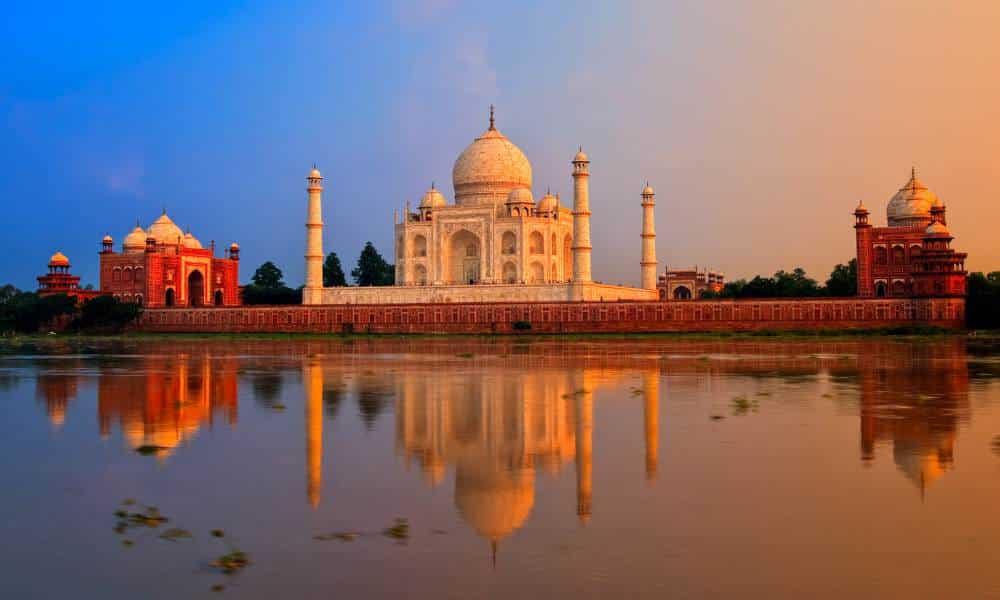
The Taj Mahal framed by the Yamuna River during sunset as seen from Mehtab Bagh gardens.

The Imperial North: 14-Day Classic India Itinerary from Delhi (2026)

14 Days

Optimal North India rhythm.

2026 Ready

Vande Bharat & Direct Flights.

Oct – Mid April

The Golden Window for skies.

Heritage Hybrid

Where luxury meets local soul.

Disclosure: Some links in this article are affiliate links. If you make a purchase through them, we earn a small commission at no extra cost to you.

India doesn’t just show you its sights; it demands your full presence.

For the modern seeker, a first journey to Bharat feels less like a vacation and more like a rite of passage. This 14 Day India Itinerary is designed for 2026, where the legendary “Golden Triangle” has evolved into something deeper. It is no longer a rushed sprint between monuments, but a 2 week India itinerary masterclass—a journey where the velocity of a Vande Bharat train meets the stillness of a Himalayan sunrise.

Choosing the Imperial North via Delhi is your strategic anchor. It allows you to ground yourself in the nation’s historical heart before spiraling outward into the desert royalty of Rajasthan or the spiritual reset of the foothills. This first time India itinerary 2026 is crafted for the traveler who seeks the grandeur of 5-star, Vastu-compliant stays but refuses to miss the authentic, grit-and-glory moments found in the backlanes of Chandni Chowk.

As you prepare for this sensory marathon, we focus on the two pillars of a successful journey: e-Visa requirements and the Sadhana anchors of spiritual resilience. We aren’t just showing you where to go; we are showing you how to thrive within the vibrant chaos of this best 14 day India tour.

Infographic map of 14 day India itinerary route covering Golden Triangle and extensions
Your 2026 Blueprint: Trading long drives for high-speed connections across the heart of Bharat.

Is this for you? If you want to experience the majesty of the Taj Mahal, the pink heritage of Jaipur, and the spiritual pulse of Rishikesh without the “road fatigue” of traditional tours, this is your masterclass.

This blueprint is optimized for the 2026 travel trends, trading dusty, 8-hour car journeys for high-speed rail and strategic internal flight hops. We ensure you arrive at every destination with your energy—and your curiosity—intact. By leveraging Delhi Aerocity transit and the latest infrastructure, we’ve solved the India 14 day trip cost and logistics puzzle for the modern seeker.

Choose Your BharatDesha Persona

Select a path below to see how this 14-day blueprint adapts to your travel style.

The Vibe: “Imperial Grandeur meets Modern Speed.”

You are here for the icons—the Taj Mahal, royal forts, and heritage havelis—but you want them optimized. This route leverages 2026 travel trends like the Vande Bharat Sleeper and internal flight hops to eliminate long drives. It gives you more time for sundowners on palace rooftops and private walks through the finest Pink City architecture.

The Vibe: “Spiritual Reset & Inner Stillness.”

You seek the “Why” behind the “Where.” This version of the itinerary swaps one Rajasthan city for an extended stay in the Himalayan foothills. Grounded in Sadhana anchors, it prioritizes sunrise rituals, ashram visits, and wellness practices to ensure you return home mentally renewed, following the most soul-aligned first time India itinerary 2026.

Switch to the Soul Seeker Route (Coming Soon)

The Vibe: “Grit, Glory & Local Soul.”

You want the raw, unfiltered spirit of Bharat. This path focuses on the Chandni Chowk grit, overnight trains, and local markets. It’s built for the social explorer who wants to trade luxury lobbies for rooftop community cafes and the untamed energy of the backstreets, capturing the true grit-and-glory of the subcontinent.

View the backpacker trail (Coming Soon)

🕉️ BharatDesha Quick Take

Note: Short on time? Use the bulleted schedules for quick planning, or open the ‘Visualize’ sections for the full cultural deep-dive.

Interactive Route Map

Phase 1: The Imperial Foundation (Days 1–3)

Location: New Delhi

India Gate and Kartavya Path at sunset in New Delhi for 14 day India itinerary
The Imperial Axis: Where modern ambition meets colonial grandeur.

The Vibe: Transitioning from the 21st-century sky to the sandstone echoes of history. This phase is about grounding your energy in the Imperial Axis while slowly peeling back the layers of Delhi’s grit-and-glory.

Day 1: The Imperial Axis & The Gilded Feast

Your first day in Bharat is designed to be a “soft landing.” In 2026, we prioritize Energy Management—allowing the grandeur of the North to reveal itself only once you are refreshed and ready.

  • Arrival: Meet your Welcome Pickups chauffeur at IGI Airport.
  • Morning: Check-in at your Heritage Hotel (Maidens or The Imperial). Priority: Deep Rest.
  • Afternoon (15:30): Panoramic drive-through: Red Fort ➔ Connaught Place ➔ Raisina Hill (India’s seat of power).
  • Sunset: Drop-off at Vijay Chowk for a walk down Kartavya Path to India Gate.
  • Evening: Authentic Mughlai dinner at your hotel’s heritage restaurant (try the Dum Pukht).

The Arrival: A Seamless 2026 Entry

After clearing IGI Airport in the early morning stillness, your journey begins with a pre-booked Welcome Pickups transfer. Your English-speaking chauffeur will be waiting for you at the arrivals gate with a personalized sign, ready to help with your luggage and whisk you away from the airport clamor.

As you move toward the city, the urban outskirts give way to the wide, tree-lined boulevards of the Colonial Axis. Check into your heritage sanctuary—perhaps the colonial-era Maidens Hotel or the art-deco icon The Imperial.

The First Pillar: Reclaim Your Energy

Since most international flights arrive in the pre-dawn hours, the most strategic move you can make is to surrender to sleep. Spend your morning in the cool quiet of your heritage suite. By mid-day, head down to the courtyard to ground yourself with a cup of Darjeeling tea and a light lunch. You want your “first look” at the capital to be through rested eyes, not a jet-lagged haze. his is the first step in your first time India itinerary 2026.

The “Grand Circle” Drive-Through

As the afternoon sun softens, your private chauffeur takes you on a panoramic introduction to the capital. This isn’t a tour; it’s a cinematic reel of an empire’s evolution:

  • The Red Fort (Lal Quila): You’ll circle the massive red sandstone walls of the Mughal seat of power. In the late-afternoon light, the fort stands as a silent witness to the centuries of “Grit and Glory” you read about in your introduction.
  • Connaught Place (CP): Experience the white-pillared heartbeat of the city. As you drive through the inner circle, you’ll see the juxtaposition of 1930s Georgian architecture and the vibrant 21st-century energy of Delhi’s elite.
  • The Power Corridor: Your car will then ascend Raisina Hill. To your left and right stand the North and South Blocks—the literal engines of the Indian state—flanking the path to Rashtrapati Bhavan (The President’s House). The sheer scale of the dome against the Delhi sky is your first true realization of the capital’s weight.

✨ The Main Character Moment: Sunset at Kartavya Path

The Scene: Your driver drops you at the edge of Vijay Chowk just as the sky turns a dusty violet.

The Experience: Walk the newly reimagined Kartavya Path (the Path of Duty). In 2026, this ceremonial boulevard is a masterpiece of urban restoration. Stroll past the granite canals toward the towering India Gate. The air is thick with the scent of night-blooming jasmine and the distant hum of the city. Stand beneath the Great Arch as the National War Memorial lights up, feeling the history you’ve just driven through. This is the moment you realize you haven’t just arrived in a city; you’ve arrived in a civilization.

The Evening: An Authentic Mughlai Feast

Retreat from the evening breeze back to the sanctuary of your hotel. Tonight, you avoid the clamor of the streets and let the history come to you on a silver platter. In the hotel’s signature heritage restaurant, you will experience Authentic Mughlai Cuisine as it was intended:

  • The Scent: Saffron-infused Dum Pukht Biryani and the smokiness of Galouti Kebabs that melt before they even hit your palate.
  • The Setting: Surrounded by dark wood and polished brass, you’ll dine on recipes passed down through generations of royal kitchens.

Day 2: The Geometry of the Divine

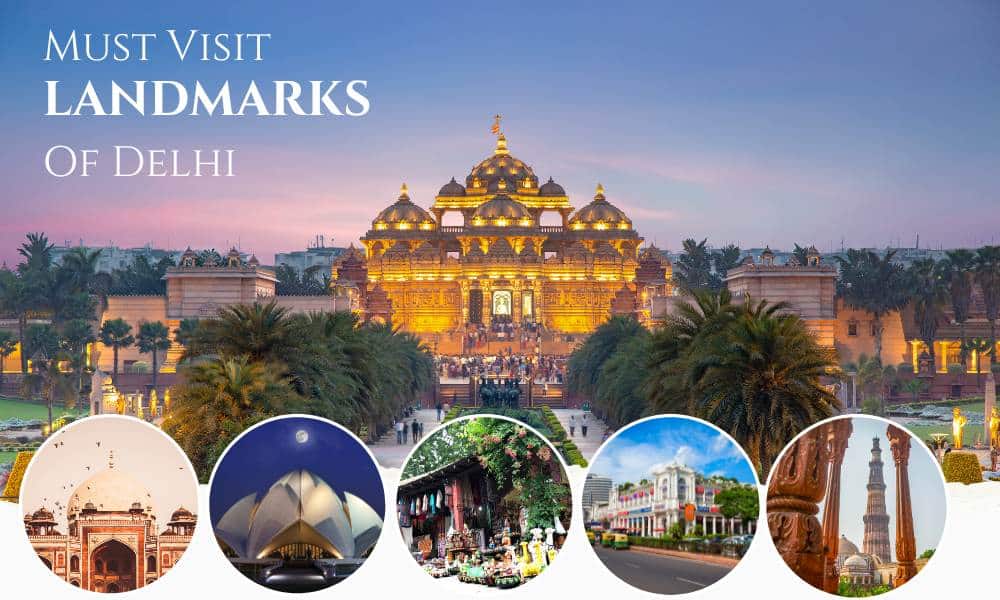
Experience a day of architectural symmetry, transitioning from the soaring red sandstone of the 12th century to the pristine white marble of the Lotus Temple and the golden spiritual glow of Akshardham. It is a journey through Delhi’s shifting identity—from its sultanate roots to its modern spiritual heart.

  • Morning (09:00 – 11:30): Explore the Qutub Minar complex. Marvel at the world’s tallest brick minaret and the ancient, rust-free Iron Pillar.
  • Late Morning (12:00 – 13:00): A moment of stillness at the Lotus Temple. (Closed on Mondays).
  • Lunch (13:30 – 14:30): Dine at an iconic Mehrauli joint like Dramz or Olive Bar & Kitchen for views of the Minar, or try authentic Bihari flavors at The Potbelly.
  • Afternoon (15:30 – 19:30): Dedicate your evening to Swaminarayan Akshardham.
  • Sadhana Anchor: Practice “Digital Detox.” Akshardham is a strict no-phone zone, providing a rare opportunity for uninterrupted presence.

The Morning Light at Qutub: Start your day as the sun hits the fluted red sandstone of the Qutub Minar. Walking through the Quwwat-ul-Islam Mosque, you see the intricate fusion of Indo-Islamic art—carvings that have survived nearly a thousand years. It is a masterclass in scale and precision.

The Petals of Silence: From the red stone, move to the pure white Greek marble of the Lotus Temple. The architecture is designed to resemble a blooming lotus, but the true experience is the silence inside. Under the massive dome, people of all faiths sit in a collective, quiet meditation—a powerful reset before the afternoon energy.

The Imperial Lunch: In the shadow of the monuments, enjoy a long, slow lunch. Whether you choose the European elegance of Olive or the heritage-heavy atmosphere of Dramz, this is your chance to discuss the history you’ve just walked through before crossing the Yamuna River.

✨ The Main Character Moment: The Akshardham Glow

As you surrender your electronics at the security gate, you enter a world of hand-carved stone and golden idols. Wander through the Gajendra Pith—a base of 148 life-sized stone elephants—before taking the Sanskruti Darshan boat ride through 10,000 years of Indian history.

As the sun sets, find your seat for the Sahaj Anand Water Show. In 2026, this remains a multimedia masterpiece. Lasers, underwater flames, and water jets synchronize to tell a story from the Kena Upanishad. Without your phone to distract you, the colors feel more vivid, and the spiritual narrative feels like a direct conversation with the ancient world.

Day 3: The Mughal Blueprint & The Artisans’ Alley

Trace the architectural DNA of the Taj Mahal at its red sandstone predecessor before diving into the sensory kaleidoscope of Delhi’s most famous open-air craft bazaar. It’s a day of transitioning from the silent majesty of 16th-century gardens to the vibrant, multi-state hum of modern Indian craftsmanship.

  • Morning (09:00 – 11:30): Visit Humayun’s Tomb, the first garden-tomb on the Indian subcontinent and the direct inspiration for the Taj Mahal.
  • Transit: Take a classic Auto-Rickshaw ride from the tomb to INA Market. It’s the quintessential Delhi experience—wind in your hair and a front-row seat to the city’s organized chaos.
  • Afternoon (12:30 – 15:30): Shopping and regional lunch at Dilli Haat (INA). Explore stalls representing every Indian state.
  • Late Afternoon: A curated Street Food Trail. Focus on high-turnover stalls for a safe, authentic taste of Delhi’s “Grit and Glory.”
  • Sadhana Anchor: Practice “Active Observation.” Use your time at Dilli Haat to notice the intricate patterns of different regional crafts from across Bharat, connecting with the hands that made them.

📍 Coming Soon: Our [New Delhi City Guide] will feature a deep dive into the legendary parathas and kachoris of the walled city.
The Paradise Garden: Start your morning walking through the high arched gateways of Humayun’s Tomb. The symmetry is startling; the “Charbagh” (four-part garden) layout is designed to represent the gardens of paradise. As you stand before the white marble dome, you are seeing the prototype for the Taj Mahal—the very moment Mughal architecture found its soul.

The Auto-Rickshaw Pulse: Step out of the serene tomb complex and hail a yellow-and-green auto. The 15-minute zip to Dilli Haat is your “Delhi rite of passage.” Watch the city blur past as your driver weaves through traffic with surgical precision—it’s the most visceral way to feel the pulse of the capital.

The Artisans’ Alley: Enter Dilli Haat, an open-air village market in the heart of the city. This is where you find the high-quality souvenirs you actually want to keep: Pashmina shawls from Kashmir, Madhubani paintings from Bihar, and hand-tooled Juttis (leather shoes) from Punjab.

The State-by-State Feast: Forget a standard restaurant for lunch; instead, wander the food stalls of Dilli Haat. Grab Momos from the Sikkim stall, Litti Chokha from Bihar, or a spicy Rajasthani Thali. It is the safest way to sample regional specialties in a controlled, hygienic environment.

✨ The Main Character Moment: The Street Food Vow

As the evening lights come up, join the locals at a busy street food stall. The air is heavy with the scent of frying spices and hot oil.

The Experience: Stand by a steaming Tawa and watch a vendor flip fresh Aloo Tikki or serve a plate of Papdi Chaat.

The 2026 Safe-Bet Rule: Go where the line is longest and the food is piping hot. The high turnover ensures freshness, and the energy of a “Chaat” stand is where the real spirit of Delhi resides. This is the “Grit” that makes the “Glory” of your 5-star heritage stay feel even more earned.

A collage of New Delhi landmarks showing the architectural evolution from the 12th-century Qutub Minar to the 21st-century Lotus Temple and Akshardham complex.

BharatDesha Quick Take: Phase 1 Logistics

Getting Around

  • Welcome Pickups (Airport)
  • Uber / Ola Rentals (On-Demand)
  • MakeMyTrip Cabs (Full Day/Intercity)

Phase 2: The Crown Jewel (Days 4–5)

Location: Agra

Taj Mahal during day time for Agra India itinerary
The White Marble Vow: Witnessing the world’s greatest monument to love before the crowds arrive.

Day 4: The Agra Leap & The White Marble Vow

Route: New Delhi → Agra (Train/Intercity Car)

Trade the colonial bustle of the capital for the Mughal romance of the Yamuna banks. In 2026, the transition is seamless—a high-speed dash on the Vande Bharat Express/Gatimaan Express that delivers you to the doorstep of the world’s most famous monument to love before the morning mist has fully lifted.

  • Morning (06:00 – 07:40): Board the Vande Bharat Express (#22470) from Hazrat Nizamuddin. Enjoy breakfast at 130 km/h as you exit the capital.
  • Arrival (08:00): Meet your pre-booked Welcome Pickups chauffeur at Agra Cantt (AGC) station.
  • Late Morning: Check-in at your heritage stay (e.g., The Oberoi Amarvilas for ultimate views or ITC Mughal for royal gardens).
  • Afternoon (15:00 – 17:30): Explore the Agra Fort, the massive red sandstone city where Emperor Shah Jahan spent his final years gazing at the Taj from a distance.
  • Sunset: Visit Mehtab Bagh (The Moonlight Garden) for a quiet, cross-river view of the Taj Mahal as it turns gold in the twilight.
  • Sadhana Anchor: Practice “Anticipatory Silence.” Use the train journey to meditate on the concept of Prem (Divine Love) before you witness its greatest architectural expression.

The Velocity of 2026: Your day begins in the pre-dawn cool of Hazrat Nizamuddin station. As you step onto the Vande Bharat, the sleek, white aerodynamic nose of the train signals a new era of Indian travel. Within minutes of departure, you are gliding past the Delhi suburbs. The cabin is quiet, the tea is hot, and the large windows offer a blur of rural Uttar Pradesh—mustard fields and small villages waking up to the day.

The Red Fort’s Shadow: By late morning, you are walking through the Amar Singh Gate of the Agra Fort. This isn’t just a fortification; it’s a palace of tragic beauty. Wander through the Diwan-i-Khas and find the marble balcony where Shah Jahan was imprisoned by his son. From here, you’ll get your first glimpse of the Taj Mahal—a white teardrop on the horizon, framed by the red arches of the fort.

✨ The Main Character Moment: The Moonlight Reflection

Skip the mid-day crowds at the Taj and head instead to Mehtab Bagh at the edge of the Yamuna River.

The Scene: As the sun begins to dip, the white Makrana marble of the Taj Mahal begins to cycle through colors—from a brilliant white to a soft, ethereal yellow, and finally, a ghostly blue-grey.

The Experience: Standing in the gardens across the river, you avoid the thousands of tourists behind the gates. It’s just you, the river, and the reflection. This is the “Main Character” moment where the scale of Shah Jahan’s grief and love finally makes sense. You aren’t just looking at a building; you are looking at a promise kept for 400 years.

The Evening Rest: Return to your hotel for a quiet evening. In Agra, the air is different—heavier with history. Tonight, keep your dinner light, perhaps a traditional Petha (Agra’s famous ash gourd sweet) as a palate cleanser, as you prepare for the sunrise “Vow” tomorrow morning inside the gates.

💡 Pro-Tip: Book the Executive Chair Car (EC). Not only is the seating more spacious for your 1h 40m dash, but the meal service is significantly upgraded, featuring regional breakfast specialties that are surprisingly high-quality for rail travel.

Day 5: The Sunrise Vow

Witness the white marble of the Taj Mahal transform from a ghostly grey to a warm, golden glow as the first rays of the Indian sun hit the dome. It is a morning of absolute presence, where the “Grit” of the pre-dawn queue is rewarded by the “Glory” of the world’s most beautiful silhouette.

  • Morning (05:30 – 09:00): Early wake-up call for the Taj Mahal Sunrise. Enter via the East Gate for the shortest security lines.
  • Breakfast (09:30): Return to your hotel for a celebratory “Post-Taj” breakfast on the terrace.
  • Afternoon (12:00 – 14:30): Visit the Itmad-ud-Daulah (The “Baby Taj”)—a delicate jewel box of marble inlay that predates the Taj Mahal.
  • Late Afternoon: Local Agra artisan visit—witness the descendants of the original Taj builders practicing Pietra Dura (marble inlay work).
  • Sadhana Anchor: Practice “Drishti” (Focused Gaze). Spend 10 minutes sitting on a garden bench in the complex, ignoring your camera, and simply observing how the light moves across the stone.

📍 Perspective Check: Is the 5:30 AM alarm truly necessary? Read our honest take: Is the Taj Mahal a Tourist Trap? The Honest Truth (6 AM vs. 4 PM Guide) to see why timing is everything in 2026.

The Pre-Dawn Vigil: Your day begins in the velvet dark of 5:30 AM. Agra is quiet, save for the distant hum of the river. You arrive at the East Gate just as the first few travelers gather. There is a quiet, shared energy in the air—a collective “vow” to see the monument at its most pure.

The Red Sandstone Gateway: As the gates creak open at 6:15 AM (30 minutes before the sun), you pass through the intense security check. Walk through the dark, towering Darwaza-i-Rauza (Great Gate). Suddenly, the frame opens, and there it is: a pale, ethereal shape floating in the morning mist at the end of the reflecting pools.

✨ The Main Character Moment: The Golden Bloom

Find a spot near the central “Diana Bench” or retreat to the side arches for a framed view.

The Experience: At approximately 7:10 AM, the first sliver of sun breaks the horizon. Watch as the cold, blue-grey marble suddenly “blushes” into a soft pink, then a searing, brilliant gold. The symmetry is so perfect it feels unreal. In this moment, the 20,000 artisans and 22 years of construction aren’t just historical facts—they are a tangible vibration of human devotion.

The Intricate Close-Up: After the initial sunrise “vow,” move toward the main plinth. Put on your shoe covers and step onto the cool marble. Lean in close to the walls; notice how the semi-precious stones—lapis lazuli, malachite, and carnelian—are inlaid so seamlessly that you cannot feel the seam between the stone and the flower. This is the “Heritage Hybrid” reward: seeing the macro-scale grandeur and the micro-scale perfection in one morning.

The Baby Taj Transition: After a restful brunch, your car takes you to the Tomb of Itmad-ud-Daulah. Smaller, quieter, and arguably more intricate, this “Baby Taj” allows you to appreciate the marble inlay technique without the crowds. It is the perfect, graceful exhale after the morning’s high-energy experience.

🛡️ The 2026 Crowds Rule: Even in January, the Taj attracts thousands. By staying at the Oberoi Amarvilas, you are just 600 meters from the gate. Use the hotel’s private golf buggy to reach the East Gate 15 minutes before the crowd, ensuring you are among the first 50 people to enter the complex.

A collage of Agra’s Mughal heritage featuring the Taj Mahal at sunrise, the red sandstone ramparts of Agra Fort, and the marble inlay of the "Baby Taj".
The White Marble Vow. Witnessing the “Glory” of the Mughal blueprint, from the world’s greatest monument to love to the fortress-cities of the Yamuna.

BharatDesha Quick Take: Phase 2 Logistics

Getting Around

  • High-Speed Rail (Vande Bharat/Gatimaan)
  • Welcome Pickups (Station Greetings)
  • MakeMyTrip/Uber/Ola (Full Day/Intercity)

Phase 3: The Rajput Horizon: Pink Palaces & Forts (Days 6–9)

Location: Jaipur

Hawa Mahal Palace of Winds facade in Jaipur for Rajasthan itinerary.
The Pink City Awakening: Architecture designed so royal ladies could observe the street life unseen.

📍 BharatDesha Guide: See Jaipur like a pro with our Jaipur City Guide: Beyond the Pink Paint (The 2026 Insider Edition).

Day 6: Symphony of the Steppes: The Ancient Road to Jaipur

Route: Agra → Jaipur (By Road)

Leave the white marble of Agra for the sun-drenched ochre of Rajasthan on a high-stakes “Heritage Hop.” This is a 240km cinematic drive where an abandoned Mughal capital, a UNESCO wetland, and a hypnotic geometric maze guide you toward the regal gates of the Pink City.

  • Brunch (10:00 – 11:30): Fuel up with a “Heritage Brunch” at your hotel—think Mughlai Parathas or a robust masala omelet—before hitting the NH21.
  • Stop 1: The Ghost City (12:30 – 14:00): Explore Fatehpur Sikri, the red sandstone city that was the Mughal capital for just 14 years.
  • Stop 2: The Nature Reset (14:45 – 16:15): A cycle-rickshaw safari through the marshes of Keoladeo National Park (Bharatpur). A BharatDesha recommendation.
  • Stop 3: The Geometric Wonder (17:15 – 17:45): A final pause at Chand Baori (Abhaneri), an 8th-century stepwell of 3,500 perfect steps. A BharatDesha recommendation.
  • Evening (19:30): Arrival in Jaipur. Check into your heritage haveli and catch your first glimpse of the illuminated Hawa Mahal.
  • Sadhana Anchor: Practice “The Observer’s Pulse.” Notice how the landscape shifts from the lush Yamuna plains to the rugged, thorny beauty of the Aravalli foothills.

The Red Sandstone Ghost: Your journey begins at Fatehpur Sikri. Walking through the Buland Darwaza, you feel the weight of Akbar’s ambition. It is a city of echoes—beautifully preserved but completely silent. Visit the white marble tomb of Salim Chishti in the central courtyard; it’s a site of deep spiritual significance where travelers still tie threads for fulfilled wishes.

The Wetland Whisper: As you cross into Rajasthan, the air changes. At Bharatpur, you trade the engine’s hum for the soft pedaling of a cycle-rickshaw. Your guide will point out Sarus Cranes and Painted Storks in the UNESCO-listed wetlands. It is a vital palate cleanser of green and blue before the “Pink” of the next five days takes over.

The Illusion of Depth: Your final detour is Abhaneri. Standing at the edge of Chand Baori, the symmetry of the 3,500 steps descending into the earth is dizzying. It’s an architectural feat that looks like an Escher painting come to life—a reminder that in India, even the most functional structures (a well) were built with divine proportions.

✨ The Main Character Moment: The Pink City Entry The Scene

You cross the final Aravalli ridge just as the Jaipur streetlights begin to flicker on. The Experience: Your driver enters the “Old City” through the massive arched gates. Suddenly, every building is a uniform shade of terracotta pink. Passing the Hawa Mahal when its 953 windows are backlit by gold light is your official welcome to Rajasthan. You aren’t just arriving in a city; you are being granted entry into a living kingdom.

Day 7: The Royal Mirror: From Honeycomb Windows to Hilltop Forts

Reverse the traditional route to catch the “Golden Hour” at the forts after a morning of symmetrical perfection in the walled city. This is the “Insider’s Script”—where you photograph the Hawa Mahal before the crowds arrive and toast the sunset from the ramparts of Amber.

  • Morning (08:30 – 10:30): Early morning at Hawa Mahal. Walk the narrow corridors inside, then cross the street for the iconic facade photo.
  • Photo Op (10:45 – 11:30): Rooftop coffee at The Tattoo Cafe or Wind View Cafe for a birds-eye perspective of the “Palace of Winds.”
  • Lunch (12:30 – 14:00): A royal courtyard lunch at Baradari inside the City Palace—the best “Heritage Hybrid” dining in the city.
  • Afternoon (14:30 – 16:30): Explore the City Palace museums. Opt for the Royal Splendour tour to see the private blue-and-gold rooms.
  • Late Afternoon (17:00 – 19:00): Ascend to Amber Fort (Amer) as the light softens. Visit the Panna Meena Stepwell just before sunset.
  • Twilight (19:15 – 20:00): On the way back, stop at Kanak Vrindavan Gardens and capture the Jal Mahal (Water Palace) as it lights up over Man Sagar Lake.
  • Sadhana Anchor: Practice “Pratibimb” (Reflection). At the Jal Mahal, watch the palace reflection on the water and reflect on how your perception of the city has shifted from “Grit” to “Glory” over the last 24 hours.

The Honeycomb Morning: Start your day as the sun begins to backlight the 953 windows of the Hawa Mahal. At 8:30 AM, the street is just waking up. Inside, the breeze (from which the palace gets its name) still feels cool.

✨ The Main Character Moment: The Rooftop Frame The Scene

You are perched on the third-floor balcony of a cafe directly opposite the palace.

The Experience: With a hot Masala Chai in hand, you look across at the pink sandstone structure. Without the afternoon traffic, you can see the intricate white “Larkh” (lime) work that gives the palace its wedding-cake appearance. This is your definitive Jaipur postcard shot.

The Palace Heartbeat: Head into the City Palace Jaipur. Lunch at Baradari is a must—the architecture here was reimagined by Studio Lotus to blend historic stone with modern brass and marble. Spend your afternoon wandering through the Pritam Niwas Chowk (the courtyard of four gates), each representing a different season.

The Fortress Glow: As most tourists are leaving, you arrive at Amber Fort. The “Script Flip” means you see the Sheesh Mahal (Palace of Mirrors) when the evening light begins to make the glass shimmer like a galaxy. Just outside the fort, the Panna Meena Stepwell is nearly empty at this hour, allowing you to appreciate its yellow geometric stairs in total peace.

The Water Palace Vigil: Your descent back to the city takes you past the Kanak Vrindavan gardens—a favorite Bollywood filming spot—and finally to the edge of the lake. Stand on the promenade as the Jal Mahal illuminates. The “Grit” of the street vendors selling spicy corn-on-the-cob and local snacks blends with the “Glory” of the floating palace. It’s the perfect, shimmering end to your royal day.

Day 8: The Artisan’s Hand & The Wild Heart

Shift from the rhythmic “thump” of hand-block printing to the golden eyes of an Aravalli leopard. As the sun sets, choose your own adventure: a panoramic sunset from the ramparts of Nahargarh or a sensory plunge into the vibrant bazaars for juttis and street food.

Jaipur traditional crafts block printing and blue pottery artisans
The hands that built the heritage: Exploring the living craft traditions of Rajasthan.
  • Morning (09:30 – 12:30): Hands-on Block Printing Workshop in Sanganer. Create your own scarf using traditional teak blocks and natural dyes.
  • Lunch (13:00 – 14:00): Farm-to-table lunch at Anokhi Cafe or a traditional Rajasthani Thali at Laxmi Mishtan Bhandar (LMB).
  • Afternoon (15:00 – 18:00): Jhalana Leopard Safari. Track India’s most successful urban leopards in an open 4×4 Gypsy.
  • Evening Pivot (Choose One):
    • Option A (The View): Sunset at Nahargarh Fort. Enjoy the “Step-by-Step” light show as the city flickers to life below.
    • Option B (The Bazaar): Shopping in Bapu Bazaar (for leather juttis) and Johri Bazaar (for jewelry and handicrafts), followed by a street food trail.
  • Sadhana Anchor: Practice “Chayan” (Mindful Choice). Whether you choose the silence of the fort or the buzz of the market, commit fully to the energy of that space.

The Rhythm of Sanganer: Your day begins in the artisan hub of Sanganer. Inside the sun-drenched workshop, you take a hand-carved block, dip it into rich indigo, and press it onto the cotton. Thump, thump, thump. You realize that the “Glory” of the textiles you see in high-end boutiques is born from this physical, rhythmic precision.

The Ghost of the Aravallis: By mid-afternoon, you enter Jhalana. In 2026, this remains the most reliable place in India to see a big cat.

✨ The Main Character Moment: The Golden Eye The Scene

Your Gypsy stops in a dry nullah. Your naturalist points to a granite ledge.

The Experience: A leopard stands and stretches, its rosette coat camouflaged perfectly against the yellow stone. Watching this predator navigate the rocks with the city skyline in the distance is the ultimate “Heritage Hybrid” moment—wilderness meeting the metropolis.

The Evening Pivot: Choice A — The Skyline: If you choose Nahargarh, you’ll drive up the winding Aravalli road as the sky turns violet. Standing on the fort walls, you watch Jaipur transform into a shimmering sea of stars. It is the city’s grandest “Glory” perspective.

The Evening Pivot: Choice B — The Bazaar Soul: If you choose the streets, your chauffeur drops you at Bapu Bazaar.

The Search: Hunt for the perfect pair of camel-leather Juttis—hand-embroidered and soft as silk. Wander into the jewelry lanes of Johri Bazaar to find silver trinkets and blue pottery.

The Street Food Trail: This is where the “Grit” tastes the best. Stand by a steaming stall for a Pauri Kachori (spicy onion pastry) at Rawat’s, or grab a thick, creamy Lassi in a clay kulhad at Lassiwala. The air is a mix of frying spices, marigold garlands, and the electric energy of a city that never sleeps. You aren’t just shopping; you are absorbing the heartbeat of Rajasthan.

Day 9: The Sacred Leap & The Desert Sunset

Route: Jaipur → Pushkar → Jaipur (By Road)

Trade the royal geometry of Jaipur for the bohemian pulse of the world’s only Brahma temple. It’s a day of spiritual “Base Jumping”—leaping from the urban planning of the Pink City into the ancient, circular energy of the sacred Pushkar Lake.

  • Departure (07:30 – 10:00): A 2.5-hour drive via the Jaipur-Ajmer Expressway. Pro Tip: Use a private car via MakeMyTrip for a seamless round-trip.
  • Late Morning (10:30 – 12:00): Visit the Brahma Temple Pushkar, the only significant temple in the world dedicated to the Creator.
  • Lunch (12:30 – 13:30): Enjoy a “Hippie-Chic” vegetarian lunch at a rooftop cafe like The Laughing Buddha or Sunset Cafe, overlooking the ghats.
  • Afternoon (14:00 – 16:30): Explore the Pushkar Bazaars. A treasure trove of tribal silver, embroidered bags, and incense.
  • Sunset (17:00 – 18:30): Hike (or take the cable car) to the Savitri Temple for a 360-degree view of the Thar Desert.
  • Sadhana Anchor: Practice “Mauna” (Sacred Silence). Spend 20 minutes sitting on the Pushkar Ghat during sunset, letting the sound of the evening bells be your only companion.

The Gate of the Creator: Your morning begins in the narrow, winding lanes of Pushkar. As you approach the Brahma Temple with its distinct red spire, the air becomes heavy with the scent of rose petals and incense. This is a rare spiritual anchor—the one place on earth dedicated to Lord Brahma. The “Glory” here isn’t in gold, but in the antiquity of the ritual.

The Circular Soul: Walk down to the 52 ghats surrounding the holy lake. Legend says the lake was created when a lotus fell from Brahma’s hand. In 2026, the energy here remains a unique “Heritage Hybrid”: you’ll see ancient priests performing Puja alongside global travelers practicing meditation.

✨ The Main Character Moment: The Desert Horizon The Scene

You are perched on the steps of the Savitri Temple at the highest point in town.

The Experience: Below you, the town of Pushkar looks like a white pearl in the center of the vast, golden Thar Desert. As the sun begins its slow descent, the Aravalli peaks turn a deep purple. This is the moment you realize that the “Grit” of the dusty desert and the “Glory” of the sacred lake are two sides of the same coin. The panoramic silence at this height is the perfect antidote to the vibrant noise of Jaipur.

The Evening Glow: End your day with a walk around the lake as the evening Aarti begins. The reflection of thousands of oil lamps (diyas) on the water makes the lake look like a mirror of the night sky. Return to Jaipur in the cool evening breeze, carrying a small vial of rose oil—the literal scent of the desert’s soul.

BharatDesha Quick Take: Phase 3 Logistics

Getting Around

  • MakeMyTrip Cabs (Full Day/Intercity)
  • Uber / Ola Rentals (On-Demand)
  • E-Rickshaw (Jaipur Shopping)

Phase 4: The Final Act (Days 10–14)

You have successfully navigated the “Grit and Glory” of India’s royal core—Delhi, Agra, and Jaipur. Now, your journey evolves. Based on the energy you want to carry home, choose your final immersion. In 2026, seamless flight and rail connectivity mean the Himalayas, the Ganga, the Deep Desert or the 2nd-century BC Ellora Caves are all just a short leap away.

Editor’s Note: You don’t have to choose now. Open each tab below to see which “Final Act” resonates with your energy after 9 days in the heart of India.

Day 10: The Himalayan Exhale (Rishikesh)

Route: Jaipur → Rishikesh (Direct Flight), Location: Rishikesh

Trade the desert heat for the emerald mist of the foothills. In just 60 minutes, transition from the “Palaces of Men” to the “Abode of the Gods,” where the air is scented with cedar and the sound of the city is replaced by the roar of the young Ganges.

  • Morning: Direct flight from Jaipur (JAI) ➔ Dehradun (DED).
  • Arrival : A 35-minute scenic drive to Rishikesh. We recommend staying in the Tapovan area for the best views.
  • Late Afternoon: A slow walk across the Bajarang Setu (glass suspension bridge) to watch the river rafters below.
  • Sunset (18:00): Experience the Ganga Aarti at Parmarth Niketan—the most soulful and musically rich ritual in the region.
  • Sadhana Anchor: Practice “Prana” (Breath). As you step off the plane in Dehradun, take three deep breaths of mountain air. Feel the “Reset” after 9 days of desert travel.

The Sky Bridge: You leave the Pink City behind and, within an hour, the brown Aravallis turn into the deep, lush green of the Himalayas. Landing in Dehradun feels like a physical weight lifting off your shoulders.

The Emerald River: As your car winds down into Rishikesh, you see the Ganga. It’s not the slow, wide river of the plains; here, it is a fast, turquoise-green torrent.

✨ The Main Character Moment: The Saffron Sunset

The Scene: You are sitting on the white marble steps of the Parmarth Niketan ghat. The Experience: Unlike the high-energy Aarti in Varanasi, Rishikesh is about harmony. The young students (gurukul) in saffron robes sing in perfect unison as the sun sets behind the mountains. You aren’t just a tourist; you are part of a 5,000-year-old “Exhale.” This is the “Glory” of the mountains—not built by kings, but carved by nature and spirit.

Day 11: The Forest Whisper & The Beatles Echo

Step into the “Silence of the Caves” where ancient sages meditated for centuries, then wander through the overgrown ruins where Western pop culture met Eastern mysticism. It is a day of internal exploration, bridging the gap between ancient ritual and the 1960s “Peace” revolution.

  • Morning (08:00 – 11:00): Drive 25km upstream to Vashistha Gufa. Meditate inside the natural cave on the banks of the Ganges.
  • Lunch (12:30 – 13:30): Healthy, sattvic lunch at Beatles Cafe (60s vibe) or Ramana’s Garden (organic and supporting local orphans).
  • Afternoon (14:30 – 17:00): Explore the Beatles Ashram (Chaurasi Kutia). Walk through the graffiti-covered meditation domes.
  • Evening (18:30 – 19:30): A quiet evening stroll through the Secret Salt Water Pool or a restorative Sound Healing session in Tapovan.
  • Sadhana Anchor: Practice “Antar Mouna” (Inner Silence). Inside Vashistha Gufa, spend 10 minutes in total darkness, listening only to the distant roar of the river outside.

The Cave of Ages: Your morning begins away from the bells and the bridges. At Vashistha Gufa, you descend stone steps to a small cave tucked into a cliff. Inside, the air is cool and heavy with the scent of old incense. This isn’t a “tourist site”—it is a living laboratory of the mind. Sitting on the cold floor, you feel the “Glory” of the Himalayan tradition: the pursuit of the self in absolute stillness.

The Jungle Revolution: By afternoon, you enter the Beatles Ashram. Once the headquarters of Maharishi Mahesh Yogi, it is now a hauntingly beautiful ruins-site reclaimed by the forest.

✨ The Main Character Moment: The Cathedral of Graffiti

The Scene: You stand inside the main “Beatles Cathedral” hall, where the walls are covered in massive, vibrant murals of the Fab Four and Hindu deities. The Experience: In 2026, the forest has woven its way through the stone meditation cells. As you walk through the “Kutias” (igloo-shaped domes), you realize this is where The White Album was born. It is the ultimate “Heritage Hybrid”—where the “Grit” of the decaying concrete meets the “Glory” of a global spiritual awakening. You aren’t just looking at ruins; you are standing at the crossroads where the East permanently changed the West.

A collage of spiritual North India showing people practicing yoga and meditation overlooking the Ganges river, the colorful graffiti on the stone walls of Beatles Ashram and Rishikesh in the evening.
The Spiritual Ascent. Trading the desert heat for the emerald mist of the foothills and the timeless, high-vibration rhythm of the Ganges.

Day 12: The Moksha Pivot (Varanasi)

Route: Rishikesh –> Varanasi (1 stop flight of 5h 35m via Delhi), Location: Varanasi

Bid farewell to the Himalayan mist as you descend toward the ancient, amber-lit ghats of Kashi. This is your “Moksha Leap”—a strategic transition from the fresh energy of the mountains to the timeless, high-vibration heart of the Ganges.

  • Morning (The Flight 09:35 – 15:20): We recommend the morning connection via Delhi (Total travel: 5h 25m). While it’s a “Heritage Leap,” arriving in the mid-afternoon ensures you reach the riverbanks before the golden hour.
  • The Check-In: A private transfer from Varanasi Airport (VNS) to your riverside haveli like BrijRama Palace or Guleria Kothi for the full immersion experience..
  • The Evening (18:00 – 21:00): Rooftop relaxation and witnessing the Ganga flow, followed by a “Night Owl” street food walk through the illuminated gallis.
  • Sadhana Anchor: Practice “Sthira” (Steadiness). As the city pulses around you, find a steady point—a flickering lamp on the river or a distant spire—and let your internal rhythm sync with the slow flow of the Ganga.

📍 BharatDesha Guide: To navigate the labyrinthine alleys and understand the logic of the newly transformed spiritual skyline, read our full Varanasi Travel Guide 2026: Decoding the New Corridor, Ancient Ghats & Salvation Homes.

The Strategic Leap: Your morning begins with a final look at the green foothills of Dehradun. The 5-hour journey via Delhi is your “Liminal Space”—a chance to journal and process your mountain “Reset” before entering the world’s oldest living city.

The Descent into Light: Landing in Varanasi at 3:20 PM, you bypass the rush. By 5:00 PM, you are sitting on the stone balcony of your haveli. The air is warm and smells of incense and history.

The Blue Hour: As the sun dips, the ghats begin to glow. Instead of fighting the crowds for a boat, you watch the distant lights of the Aarti from above, a cold drink in hand. You see the “Glory” of the ritual from a distance, allowing you to process the sheer scale of this city without being overwhelmed by its “Grit.”

✨ The Main Character Moment: The Midnight Malai

The Scene: You venture out into the cool night air of the alleys.

The Experience: The narrow lanes are quieter now, lit by old yellow lamps. You find a street vendor serving Malaiyo—a seasonal, frothy milk dessert flavored with saffron and topped with pistachios that feels like eating a cloud. Standing in an ancient alley, tasting a recipe that hasn’t changed in centuries, you realize that the soul of Varanasi is found in these quiet, late-night corners.

Day 13: The Life of the River & The Fire of Faith

Spend a full day immersed in the rhythm of the Ganges, from the pre-dawn chants to the ecstatic evening fire. This is your deep dive into the spiritual heartbeat of Bharat—where every stone tells a story of rebirth and every flame is an offering.

  • Morning (05:30 – 07:30): Subah-e-Banaras at Assi Ghat. Witness the morning Aarti, Vedic chanting, and classical music as the sun rises.
  • The Ritual (07:45 – 08:30): Ganga Snan. After the ceremony, take your holy dip at Assi Ghat. Tip: Use the designated changing rooms nearby and carry a fresh set of clothes.
  • Late Morning: Explore the Kashi Vishwanath Corridor and pay respects to Lord Shiva at Kashi Vishwanath temple. A vast, peaceful walk connecting the temple to the river.
  • Afternoon: Deep rest. Return to your haveli for a “Senses Reset”—nap, read, or watch the river from your rooftop.
  • Evening (17:30 – 19:30): The Grand Ganga Aarti at Dashashwamedh Ghat. Experience this from a private wooden boat for the best perspective.
  • Night: Shopping for Banarasi Silk (Mehta International) or Brassware (Thatheri Bazaar).
  • Sadhana Anchor: Practice “Punya” (Merit). As you take your dip, visualize the water washing away your “Grit” and filling you with the “Glory” of the ancient sages who stood in this same spot 3,000 years ago.

The Blue Hour: You are at Assi Ghat before the first ray of light. The sound of the conch shell cuts through the mist. As the morning raga begins, you feel the city waking up—not with noise, but with melody.

✨ The Main Character Moment: The Purifying Cold

The Scene: You descend the final stone steps into the Ganges. The Experience: The water is cool and surprisingly soft. As you take your dip (Snan), the world goes silent for a second. You emerge onto the steps as the sun hits the water, turning the river into liquid gold. This isn’t just a bath; it’s a “reset” button for your soul.

The Sacred Walk: Your late morning is spent in the Kashi Vishwanath Corridor. In 2026, this space is a miracle of urban planning—wide, clean, and filled with the scent of sandalwood. You move from the river to the golden temple with ease, feeling the “Heritage Hybrid” power of an ancient site reimagined for the modern seeker.

The Corridor of Fire: After an afternoon of quiet rooftop contemplation, you return to the water at dusk. Seven priests raise their lamps in a symphony of fire. Since you are on a private boat, you are away from the “Grit” of the shore, floating in a “Glory” of light and sound.

Day 14: The Lion’s Roar & The Seamless Exit

Spend your final morning in the silent deer park where the Buddha first taught, before making a seamless transition back to the 21st-century pulse of Delhi.

  • Morning (08:30 – 12:00): Half-day excursion to Sarnath. Visit the Dhamek Stupa and the Archaeological Site.
  • Lunch (13:00): A final “Banaras Brunch”—try the Chooda Matar (spiced flattened rice) or Kachori Sabzi.
  • The Exit Pivot (16:00 – 17:30): Fly Varanasi (VNS) ➔ Delhi (DEL).
  • Evening: Check into a Delhi Aerocity Transit Hotel (JW Marriott or Holiday Inn) to be 10 minutes from Terminal 3 for your international flight.

The Deer Park Silence: Your final morning in Bharat takes you to Sarnath, the “Exhale” to Varanasi’s high-energy “Inhale.” Standing before the massive Dhamek Stupa, you are at the exact spot where the Buddha gave his first sermon 2,500 years ago. Unlike the bells and fire of the ghats, Sarnath is a place of deep, humming silence. As you walk the manicured gardens, you realize that your 14 days have followed a similar path: from the noise of the world to a centered, inner peace.

The Lion’s Gaze: Inside the Archaeological Museum, you stand face-to-face with the Lion Capital of Ashoka. Carved in 250 BC, its polished sandstone still shines like glass. Looking into the eyes of the four lions, you see the “Glory” of ancient ethics—strength, courage, and truth. This is the symbol of modern India, and today, it feels like a personal seal on your journey.

✨ The Main Character Moment: The Terminal Reflection

The Scene: You are sitting in the quiet lounge of your Aerocity hotel, or perhaps looking out the window of the plane as it banks over the lit-up expanse of Delhi.

The Experience: You aren’t just carrying a suitcase full of Banarasi silk and Rajasthani trinkets; you are carrying a new frequency. You remember the “Grit”—the spicy dust of Old Delhi, the heat of the Agra sun, the sensory overload of the Varanasi gallis. But then you feel the “Glory”—the sunrise over the Taj, the stillness of a Himalayan cave, and the way a stranger’s smile in Jaipur made you feel at home.

The Learning: India didn’t change you; she simply stripped away the layers of “noise” you arrived with, revealing the resilient, observant version of yourself. You aren’t “leaving” India; you are taking the Ganga energy back to your own world. As you prepare for your international flight, you realize that the most important souvenir wasn’t something you bought—it was the quiet “Sadhana” you practiced every day. The circle is complete.

Day 10: The Indigo Awakening (Jaipur ➔ Jodhpur)

Route: Jaipur → Jodhpur (Direct Flight)/(5 hour Private Car), Location: Jodhpur

Arrive in the “Blue City,” where the architecture is as bold as the history. Today is about the transition from the Pink City’s delicate latticework to the massive, impregnable power of the Marwar Kingdom.

  • The Move: Morning flight from Jaipur (JAI) ➔ Jodhpur (JDH) or a 5-hour private car. We recommend the flight to save your energy for the fort.
  • The Check-In: Umaid Bhawan Palace (for the ultimate royal stay) or RAAS Jodhpur (for the best “Fort-on-your-face” views).
  • Late Afternoon: Visit Jaswant Thada—the “Taj Mahal of Marwar”—at sunset. The thin marble sheets glow with a warm, translucent light.
  • Evening (19:30 – 21:00): The Stepwell Serenade. Walk down to the Toorji Ka Jhalra (the 18th-century stepwell). In 2026, this area is the “cool” heart of Jodhpur. Enjoy a late dinner on a rooftop overlooking the stepwell—the sound of a live Sarangi player usually echoes through the stone architecture here.
  • Cultural Note: Most heritage stays like RAAS or Umaid Bhawan host private Manganiyar folk musicians in the courtyard during dinner. This isn’t a “stage show”; it’s an atmospheric immersion.
  • Sadhana Anchor: Practice “Drashta” (The Observer). Stand at the edge of the blue city from the Jaswant Thada gardens. Observe the indigo hue—historically used to keep houses cool and deter insects—as a symbol of practical wisdom.

The Blue Horizon: As you land, you see it—the massive Mehrangarh Fort rising like a vertical extension of the cliff. Unlike the festive pink of Jaipur, Jodhpur feels grounded and ancient

✨ The Main Character Moment: The Golden Hour Cenotaph

The Scene: You are at Jaswant Thada, leaning against a cold marble pillar as the sun begins to set. The Experience: The white marble isn’t just stone; it’s carved so thin that the light passes through it. From here, you see the fort turn deep orange while the blue city below transitions into shadow. It is the “Glory” of Marwar—not built for war, but for memory.

The Echo in the Well The Scene: You are standing on the steps of Toorji Ka Jhalra, the ancient sandstone illuminated by hidden lights.The Experience: From a nearby rooftop, the haunting, powerful voice of a Manganiyar singer drifts down. It’s a song that has been sung in the Thar Desert for a thousand years. As you watch the locals gather by the water and the fort looms above in deep orange, you realize Jodhpur isn’t just a “Blue City”—it’s a city of sound.

Day 11: The Fortress & The Fabric (Jodhpur)

Conquer one of India’s most magnificent citadels before diving into the sensory chaos of the textile markets. It is a day of sharp contrasts—the “Grit” of the battlefield and the “Glory” of the weaver’s loom.

  • Morning (09:00 – 12:00): Guided tour of Mehrangarh Fort. Use the elevator to the top and walk down through the seven gates.
  • Lunch: A traditional thali at Gypsy Dining Hall or a rooftop view at Indique.
  • Afternoon: Explore Sardar Market and the Clock Tower. Visit Saffron Heritage for hand-block printed textiles.
  • Evening (18:30 – 20:00): The Marwar Folk Performance. Head to a traditional venue (like the rooftop of Indique or a curated show at a heritage Haveli) for a Kathputli (Puppet) and Kalbelia Dance Show.
  • The Highlight: Watch the Kalbelia dancers in their flowing black skirts, performing gravity-defying feats that mimic the movements of a cobra, set to the frantic, hypnotic beat of the daff.
  • Sadhana Anchor: Practice “Laya” (Rhythm). As you watch the dancers, don’t just see the movement; feel the beat in your chest. Let the rhythm of the desert pulse through you, grounding you before your move to the “White City” tomorrow.

The Living Citadel: Your morning begins by ascending Mehrangarh Fort. As you walk through the seven massive gates—some still bearing the cannonball scars of ancient sieges—you feel the “Grit” of Marwar’s warrior past. But as you step into the Moti Mahal (Pearl Palace), the world shifts to “Glory.” The ceiling is a sea of gold leaf and the windows are made of crushed seashells that filter the desert sun into a soft, iridescent glow. You aren’t just visiting a museum; you are walking through a dream of power and beauty.

The Indigo Maze: By mid-afternoon, you descend into the Blue City. Navigating the labyrinth of Brahmapuri is a sensory journey. The smell of frying Mirchi Bada (spiced chili fritters) wafts from street corners, and every turn reveals a new shade of indigo—a “cool” practical wisdom carved into the desert rock. You witness the “Grit” of the bustling Sardar Market, where the air is thick with the scent of red chilies and the rhythmic clack of weavers’ looms.

✨ The Main Character Moment: The Dance of the Cobra

The Scene: You are seated on a low floor cushion on a rooftop haveli. The fort towers directly above you, illuminated in a haunting golden amber against the ink-blue sky.

The Experience: The hypnotic sound of the pungi (flute) begins, and a Kalbelia dancer in a swirling black and silver dress takes the floor. Her movements are fluid, mimicking the cobra, gaining speed until she is a blur of light and shadow.

The Feeling: As the Manganiyar singers reach a crescendo with their powerful, desert-worn voices, you feel the vibration in your chest. Yesterday at the stepwell was about observation; tonight is about immersion. You realize that while the fort was built to keep people out, the music of Jodhpur is what pulls you in. You end your time in the Blue City feeling the fierce, rhythmic heartbeat of the Thar Desert.

A collage showcasing the contrasting colors of Rajasthan: the indigo alleys of Jodhpur, the white palaces of Udaipur.
The Royal Deep-Dive. An immersion into the “Blue City” pulse and the ivory reflections of Udaipur’s floating palaces.

Day 12: The Aravalli Pivot (Udaipur)

Route: Jodhpur –> Ranakpur –> Udaipur (Private Car Transfer), Location: Udaipur

Embark on the most scenic road journey in Rajasthan. Trade the flat desert plains for the winding Aravalli hills, stopping at a temple that feels less like architecture and more like a marble forest.

  • The Drive (08:30 – 16:30): Private car transfer (book via MMT Intercity).
  • The Pitstop: Ranakpur Jain Temple. There are 1,444 uniquely carved pillars here. Note: Leather belts and bags are strictly prohibited inside.
  • Arrival: Check into your Udaipur sanctuary. We recommend Taj Lake Palace (floating in the water) or The Oberoi Udaivilas (for the 30-acre wildlife sanctuary).
  • Sadhana Anchor: Practice “Vismaya” (Wonder). Inside the Ranakpur Temple, find a pillar that speaks to you. Close your eyes and run your fingers over the intricate carving. Realize that this “Glory” was carved by hand over 60 years.

The Winding Aravallis: Today, the flat desert horizon disappears, replaced by the ancient, rolling green of the Aravalli Hills. As your car climbs the mountain passes, the air cools and the “Grit” of the city noise fades into the rustle of dry forests. This is the scenic pivot of your trip—the bridge between the warrior spirit of Marwar and the romantic soul of Mewar.

The Marble Forest: You step into the Ranakpur Jain Temple and lose your breath. It isn’t just a building; it’s a forest of 1,444 marble pillars, each one unique. You find yourself wandering in a daze, looking at stone that has been carved to look like lace, silk, and life itself.

✨ The Main Character Moment: The White Arrival

The Scene: It is late afternoon as you crest the final hill and Lake Pichola reveals itself.

The Experience: The City Palace stands like a massive ivory ship on the shore, and the Taj Lake Palace floats in the center like a white mirage. After 12 days of travel, this sight feels like a reward. You check into your haveli, step onto the balcony, and watch the first lights of the palaces reflect in the still water. The desert is behind you; the oasis has begun.

Day 13: The Oasis of Mewar

Slow your pace to match the ripples of Lake Pichola. Today is the “White City” experience—ivory palaces, floating gardens, and the soft, romantic energy that earned Udaipur the title of “Venice of the East.”

  • Morning (09:00 – 12:30): Udaipur City Palace. Explore the “Crystal Gallery” and the Mor Chowk (Peacock Courtyard) where the glass mosaics shimmer in the morning light.
  • Lunch (13:00 – 14:30): Ambrai (at Amet Haveli). Request a table at the water’s edge for the absolute best view of the Lake Palace.
  • Afternoon (15:00 – 16:30): Saheliyon-ki-Bari (Garden of the Maidens). Observe the gravity-fed fountains that still operate without a single electric pump.
  • The Golden View (17:00 – 18:00): Mansapurna Karni Mata Ropeway. Board the cable car to the hilltop temple. This is the highest point in the city center, offering a 360-degree bird’s-eye view of the lakes and the Aravalli range.
  • Sunset (18:15 – 19:15): Private Shikara Ride on Lake Pichola. Glide past the illuminated palaces as the sky turns lilac.
  • Sadhana Anchor: Practice “Shanti” (Peace). On the boat, watch the reflection of the palaces in the water. Focus on the stillness beneath the movement.

The Royal Labyrinth: Your morning is spent inside the Udaipur City Palace. You navigate narrow, defensive stairways that suddenly open into sprawling courtyards filled with blue-and-white tiles and stained-glass peacocks. Every window offers a “framed” view of the lake, making you feel as though you are living inside a 19th-century miniature painting.

The Skyward Ascent: In the afternoon/night, you leave the water behind for the clouds. You board the Mansapurna Karni Mata Ropeway. As the cabin glides up the hillside, the “Grit” of the modern city shrinks, revealing the “Glory” of the entire valley.

The Main Character Moment: The King’s View

The Scene: You stand at the viewing deck of the Karni Mata Temple as the sun begins to dip.

The Experience: From this height, you see the perfect logic of Udaipur. You see the Jag Mandir island, the floating Lake Palace, and the massive City Palace acting as a stone anchor to it all. The wind is cool, the temple bells are soft, and the entire “White City” is bathed in a soft, lilac-pink glow.

The Sunset Float: You end the day on a Private Shikara. As the boatman paddles silently through the ripples of Lake Pichola, you pass under the arches of the havelis. The sound of the water against the wood is the only music you need. This is the Udaipur you dreamed of—silent, shimmering, and timeless.

Day 14: The Royal Reflection & Exit (Udaipur ➔ Delhi)

Route: Udaipur –> New Delhi

One final morning in the “City of Lakes” before making your seamless exit. Reflect on the evolution of your journey—from the “Grit” of Old Delhi to the ivory “Glory” of Udaipur.

  • Morning: Visit Sajjangarh (Monsoon Palace) for a bird’s-eye view of the entire city and the surrounding Aravallis.
  • Lunch: A final meal at Jagat Niwas rooftop.
  • The Move: Fly Udaipur (UDR) ➔ Delhi (DEL).
  • Exit: Check into your Delhi Aerocity Transit Hotel (JW Marriott or Holiday Inn) to be ready for your international flight.
  • Sadhana Anchor: Practice “Ananda” (Bliss). As you pack your bags, look at the one souvenir that represents your journey. Feel the gratitude for the 14 days that changed your perspective.

The Monsoon Echo: Your final morning takes you to Sajjangarh (The Monsoon Palace), perched high on a distant peak. Looking back at the city from here, you realize how far you’ve come. You see the path of your 14-day journey—from the crowded streets of Delhi to the marble silence of the Aravallis.

The Final Brunch: You have one last meal on a lakeside rooftop—perhaps a simple Aloo Paratha or a final spicy Laal Maas. You watch the laundry being beaten on the ghats below and the tourists taking photos, but you feel different. You are no longer just an observer; you have “Bharat” under your skin.

✨ The Main Character Moment: The Aerocity Exhale

The Scene: ou are sitting in the quiet, climate-controlled comfort of your Delhi Aerocity lounge, your boarding pass for the flight home in your hand.

The Experience: The “Grit”—the heat of the sun in Jodhpur, the spicy dust of the markets, the bumpy roads—has been processed into pure “Glory.” You look at your photos and they don’t just look like pictures; they feel like memories of a past life.

The Learning: As you prepare to cross the final threshold back to your nest, you realize India didn’t change your itinerary; she changed your rhythm. You are leaving with a calmer breath, a wider perspective, and the quiet knowledge that you have successfully navigated the world’s most beautiful complexity. The circle is complete.

The Vibe: A sharp pivot from the 18th-century desert monuments to the 2nd-century BC. This path is for the “Contrast Seeker,” moving from the futuristic grit of Mumbai to the monolithic glory of the Ajanta and Ellora caves—the pinnacle of ancient Indian engineering.

Day 10: The Maximum City (Mumbai)

Route: Jaipur → Mumbai (Direct Flight), Location: Mumbai

Swap the silent desert for the electric pulse of India’s commercial heart. Mumbai is where the “Grit” of a 21st-century metropolis meets the “Glory” of the Arabian Sea—a city that never sleeps and always dreams.

  • The Move: Morning flight Jaipur (JAI) ➔ Mumbai (BOM).
  • The Stay Strategy:
  • South Mumbai (SoBo): Choose The Taj Mahal Palace or Trident Nariman Point for colonial charm and walking access to landmarks.
  • Juhu/Beachside: Choose JW Marriott Juhu or Soho House Mumbai for a creative, “Bollywood” vibe closer to the airport.
  • Late Afternoon (SoBo Focus): Walk through the Colonial District. Stand before the Gateway of India and grab a chilled beer at the legendary Leopold Cafe.
  • Sunset & Snacks: Witness the “Queen’s Necklace” light up at Marine Drive. For snacks, try the city’s icons: Vada Pav (The Indian Burger) and Bun Maska with Irani Chai at an old Parsi cafe.
  • Dinner: A “Main Character” Fish Thali at Gajalee or Trishna (the butter-garlic crab is world-famous).
  • Sadhana Anchor: Practice “Karma” (Action). Stand at the Gateway of India and watch the tide and the people. Observe the relentless energy of a city built on ambition.

The Arrival: Landing in Mumbai, the air changes—it’s salty, humid, and alive. After 9 days of Rajasthan’s quiet dignity, Mumbai’s “Grit” feels like an electric shock.

The Colonial Echo: Walking through South Mumbai, you see the “Glory” of the British Raj in the stone arches of Victoria Terminus and the Gateway. But as you sit at Leopold Cafe, surrounded by travelers from every corner of the globe, you realize Mumbai is the world’s crossroads.

✨ The Main Character Moment: The Queen’s Necklace

The Scene: You are leaning against the tetrapods at Marine Drive as the sun dips into the Arabian Sea.

The Experience: The streetlights flicker on simultaneously, forming a curve of diamonds. You bite into a spicy Vada Pav, the sea breeze hits your face, and the sound of the city’s roar fades into the background. You aren’t just in India; you are at the center of the world.

A collage of Western India showing the Gateway of India in Mumbai and the monolithic 2nd-century BC rock-cut caves of Ellora and Ajanta.
The Heritage Contrast. A sharp pivot from the 21st-century grit of Maximum City to the monolithic glory of the Deccan’s ancient cave temples.

Day 11: The Cave & The Cinema (Mumbai)

Dive deeper into the dual soul of Mumbai—from the ancient rock-cut caves in the harbor to the shimmering dreams of the silver screen.

  • Morning Choice (Pick One):
    • The Ancient Path: A 1-hour boat ride from the Gateway to Elephanta Caves. Witness the majestic three-headed Shiva (Trimurti) carved into the basalt rock in the 5th century.
    • The Modern Path: A Filmcity Tour in Goregaon. Peek behind the curtain of “Bollywood” and see where the world’s most prolific cinema is born.
  • Early Evening: Visit the Siddhivinayak Temple to experience the spiritual core of the city. Join the queue to seek blessings from the elephant-headed deity of new beginnings.
  • Evening: Shopping Therapy. Head to Colaba Causeway for bohemian finds or Pali Hill in Bandra for high-end Indian designers.
  • Sadhana Anchor: Practice “Ichha” (Desire). In the heart of Filmcity or the intensity of the temple, reflect on the dreams that drive this city—and your own.

The Harbor Crossing: On the boat to Elephanta, the Mumbai skyline shrinks into a silhouette. Entering the caves, you leave the 21st century behind. The massive “Trimurti” statue, shrouded in the cave’s shadows, represents the Creator, Preserver, and Destroyer—a reminder of the cycles of life you’ve seen across Bharat.

The Red Thread: Later, at Siddhivinayak, you stand amidst thousands. The “Grit” of the crowd is balanced by the “Glory” of shared faith. As the priest tilaks your forehead, you feel a surge of energy—this is the engine that keeps Mumbai running and your own travel fatigue will vanish.

✨ The Main Character Moment: The Sunset Shop

The Scene: You are in a small boutique in Bandra, trying on a contemporary hand-loomed silk jacket that fuses ancient technique with Mumbai street style.

The Experience: You see your reflection—sun-kissed, slightly travel-worn, but glowing with the experiences of the last 11 days. You’ve navigated the forts, the deserts, and now the megalopolis. You look like someone who belongs here.

Day 12: The Monolithic Leap (Aurangabad)

Route: Mumbai –> Aurangabad (Direct Flight), Location: Aurangabad

Fly into the heart of Maharashtra to witness a miracle of ancient engineering that defies modern logic. Today is about the transition from the ocean’s edge to the high volcanic plateau of the Deccan.

  • The Move: Morning flight from Mumbai (BOM) ➔ Aurangabad (IXU) (Approx. 1 hour).
  • The Check-In: Drop your bags at Vivanta Aurangabad or Welcomhotel Rama International to freshen up before the drive to the caves.
  • The Experience: A 45-minute private drive to the Ellora Caves. Spend the majority of your time at the Kailasa Temple (Cave 16)—the world’s largest monolithic structure, carved from the top down out of a single basalt cliff.
  • Sadhana Anchor: Practice “Shraddha” (Faith). Stand in the center of Cave 16. Reflect on the 10 generations of artisans who spent 135 years carving this “Glory” without ever seeing the finished result.

The Skyward Jump: Your morning begins with a short hop over the Western Ghats. As you land in Aurangabad, the “Grit” is immediate—this is an industrial town in transition, where rural life and urban ambition collide.

The Descent into Rock: You arrive at Ellora, but you don’t look up; you look down into the earth. Entering the Kailasa Temple, you realize the sheer impossibility of what you’re seeing. There are no joints, no mortar, and no mistakes. Every pillar and every elephant was already inside the mountain; the carvers simply set them free.

✨ The Main Character Moment:The Silent Corridor

The Scene: You walk through the dark, cool circumambulatory path that surrounds the main sanctum, your footsteps echoing against the rock.

The Experience: You look at the tool marks left by a chisel twelve centuries ago. Under the shade of your umbrella, looking at the intricate friezes of the Ramayana carved into the stone, you feel a profound sense of “Shraddha.” You are standing inside a prayer made of stone—a testament to what humans can achieve when their vision spans centuries rather than seconds.

Day 13: The Painted Silence (Ajanta Caves)

Journey deep into a hidden horseshoe ravine where 2,000-year-old Buddhist murals have survived the darkness. Move beyond the urban pulse into a landscape where ancient engineering meets the quiet grit of rural Maharashtra.

  • The Drive (08:00 – 17:00): A 2.5-hour private drive from Chhatrapati Sambhajinagar (formerly Aurangabad) to Ajanta.
  • The Marvel: Explore the 30 rock-cut caves. While Ellora is a feat of architecture, Ajanta is a masterpiece of art—the murals here influenced the aesthetics of an entire continent.
  • Weather Shield: The Umbrella Rule. Irrespective of the season, carry a sturdy umbrella. The Deccan sun is relentless, and you will spend significant time walking between the cave entrances.
  • The Setting: Notice the transition. You are now in a Tier 3 industrial hub where modern factories sit alongside bullock carts and emerald-green cotton fields.
  • Sadhana Anchor: Practice “Vairagya” (Detachment). As you look at the vibrant colors of the murals, realize they were created by monks who sought to detach from the world, yet captured its beauty with unparalleled precision.

The Hidden Valley: As you descend the stone steps toward the Waghur River, the caves reveal themselves like a giant stone necklace. This isn’t just a site; it’s an engineering marvel where ancient builders calculated light and shadow to protect delicate vegetable-dye paintings for two millennia.

✨ The Main Character Moment: The Glow in the Dark

The Scene: You stand in Cave 1, the dim light catching the “Padmapani” (The Lotus Bearer) mural.

The Experience: The colors—blues from Lapis Lazuli, reds from local minerals—glow with a lifelike intensity. You feel the “Glory” of a civilization that could carve a cathedral out of a mountain and then fill it with the world’s most sophisticated art. Under the shade of your umbrella, looking out at the rugged Deccan plateau, you realize that the greatest treasures are often found in the most isolated corners.

A collage of the Ajanta and Ellora UNESCO World Heritage sites, featuring the Reclining Buddha, ancient Buddhist murals, the monolithic Kailasa Temple, and intricate rock-cut facades.
The Heritage Contrast: A sharp pivot from the ocean’s edge to the high volcanic plateau of the Deccan, where the world’s largest monolithic structures meet 2,000-year-old “painted silence.”

Day 14: The Deccan Soul & The Seamless Exit

Experience the true grit of the Deccan before your final departure. From the fierce flavors of the local cuisine to the intricate silk looms, today is about the resilient soul of Maharashtra.

  • The Morning Bite: Start with Misal Pav—a spicy, sprouted-bean curry topped with crunchy farsan. It is the authentic fuel of the region, sharp and high-energy.
  • The Souvenir Hunt: Visit a Paithani Silk weaving center or a local Himroo workshop. These intricate fabrics were once traded for gold; taking a piece home is taking a fragment of the “Glory” of the Deccan courts.
  • The Cultural Pivot: Visit a local farm on the outskirts of Chhatrapati Sambhajinagar. Witness the “Grit” of the farmers who work this black volcanic soil, providing a grounding contrast to the palaces you’ve seen.
  • The Move: Evening flight to Delhi (DEL).
  • The Exit: Check into a Delhi Aerocity Transit Hotel (JW Marriott or Holiday Inn) for a seamless 10-minute transfer to Terminal 3 for your international flight.

The Emperor’s Shadow: As you drive through the bustling industrial streets of Chhatrapati Sambhajinagar, you reflect on the tragic, golden thread that connects this Tier 3 city back to the Taj Mahal. You remember standing in the Agra Fort on Day 4, looking through the marble lattices where Shah Jahan spent his final years as a prisoner. It was his own son, the cold blooded and ambitious Aurangzeb, who kept him there—allowing the man who built the world’s greatest monument to love to only see it from a distance through a jail window.

The Loneliness of Ambition: Now, you are in the land where that same son’s story ended. History remembers Aurangzeb as a brutal man of iron will who spent 26 years in this Deccan heat trying to subdue Bharat. In the end, despite his massive armies, he died here a lonely man, his dream of total conquest shattered by the unrelenting valor of the Maratha warriors. The man who imprisoned his father for a throne died on a simple bed of earth, his ambition left incomplete.

✨ The Main Character Moment: The Weft of Time

The Scene: You are in a small, local workshop, watching a master weaver guide a silk thread through a Paithani loom.

The Experience: You look at the shimmering silk and realize that Bharat is exactly like this fabric—a complex weave of “Grit” and “Glory.” The cruelty of emperors has faded into the black volcanic soil, but the art of the weaver and the spirit of the people remain.

The Learning: As you sit in the quiet comfort of Delhi Aerocity tonight, preparing for your flight home, the journey feels complete. You have seen the Taj through the eyes of a lover and the Deccan through the eyes of a seeker. You aren’t just leaving with souvenirs; you are leaving with the perspective of a historian and the heart of a traveler who has seen the rise and fall of giants. The circle is finally closed.

Frequently Asked Questions

Yes. Taj Mahal crowds have increased significantly. Arriving at the East Gate by 5:30 AM ensures you are among the first to see the marble transition from grey to gold. It also allows you to finish the visit before the midday heat and the peak tourist rush (10:00 AM – 2:00 PM).

Logistically, we recommend choosing one trail for Days 10–14 to avoid “Travel Burnout.” However, if you have 18 days, you can combine the Royal Deep-Dive (Udaipur) with a flight to Varanasi or Mumbai. Each trail is designed to be a distinct emotional and sensory “Finale.”

Absolutely. These high-speed routes (Delhi-Agra or Jaipur-Jodhpur) are popular with business travelers and locals. We recommend booking at least 3–4 weeks in advance via the IRCTC portal or a verified partner like MakeMyTrip to secure Executive Class seats.

BharatDesha isn’t just about sightseeing; it’s about insight-seeking. These are moments where we suggest a specific mindfulness practice—like “Digital Detox” at Akshardham or “Mauna” (silence) at Pushkar Lake—to help you process the “Grit and Glory” of India without feeling overwhelmed.

Extremely. You will be required to leave all electronics (including smartwatches) in a secure cloakroom. Treat this as a rare luxury—three hours of uninterrupted presence in one of the world’s most beautiful modern spiritual complexes.

We follow the “High-Turnover Rule.” Our recommended street food trails in Delhi and Varanasi focus on vendors with high daily sales and visible hygiene practices. For those with sensitive systems, we always provide a “Heritage Hybrid” dining alternative (like LMB in Jaipur or Ambrai in Udaipur).

Even in the cooler months, the volcanic basalt of the Deccan plateau reflects heat. An umbrella isn’t just for rain; it’s your portable shade while walking the distance between the 30+ caves at Ajanta/Ellora.

Modesty is a sign of respect. Both men and women should keep shoulders and knees covered. In Rishikesh and Varanasi, carrying a light linen scarf is helpful for temple entries or for sitting by the river during the evening Aarti.

After a long flight to Delhi or a high-energy transition to Varanasi, the “Grit” of navigating airport taxi lines can be draining. A pre-booked chauffeur provides a “Soft Landing,” meeting you with a sign and ensuring your first 60 minutes in a new city are silent and stress-free.

Your Bharat Blueprint: The Master Logistics Hub

The Grand Finale: Returning from the Grit to the Glory

Fourteen days in India is not just a holiday; it is a recalibration. You began in the frantic heart of Delhi and the white-marble symmetry of Agra. You navigated the Pink City’s royal grids and the sacred silence of the desert. Now, as you stand at the threshold of your “Final Act,” the choice you make will define the frequency you carry home.

Whether you seek the mountains, the deep desert, or the ancient caves, remember that the “Grit” you encountered—the heat, the crowds, the noise—was simply the friction required to reveal the “Glory.” You are no longer the same person who landed in Delhi two weeks ago.

Which Final Act is Yours?

To help you decide, here is the essence of your three paths:

  • The Spiritual Ascent: A transformative journey from the cooling Himalayan “reset” of Rishikesh to the high-vibration, eternal fires of the Varanasi ghats.
  • The Royal Deep-Dive: An immersive plunge into the indigo and ivory majesty of Rajasthan, trading rugged desert forts for the romantic, floating palaces of Udaipur.
  • The Heritage Contrast: A bold leap between the neon-lit, 21st-century grit of Mumbai and the mind-bending, 2nd-century BC architectural glory of the Ajanta and Ellora caves.
Your Journey is Just Beginning

The 14-day blueprint ends here, but your relationship with Bharat is lifelong. You came for the monuments, but you will leave with a new internal compass. Pack your bags, and step out into the light.

Editor’s Note:

India doesn’t give you the trip you want; she gives you the trip you need. As the creator of BharatDesha, I’ve walked these streets and sat on these ghats. My advice? Don’t overthink the logistics—we’ve handled the “Grit” of the flights and the “Science” of the Vastu for you. Instead, listen to your energy. If you are tired, go to the lakes of Udaipur. If you are seeking, go to the banks of the Ganges. Wherever you go, India will meet you halfway.

We know that planning a 14-day journey across a civilization this complex can feel overwhelming. If you have questions about specific connections, need a second pair of eyes on your custom route, or just want to verify a 2026 travel detail, we are here for you.

Reach out to us at [email protected] or drop a question in the comments section below. We would be more than happy to help you fine-tune your Bharat blueprint.


Priyanka

Similar Posts

Leave a Reply

Your email address will not be published. Required fields are marked *