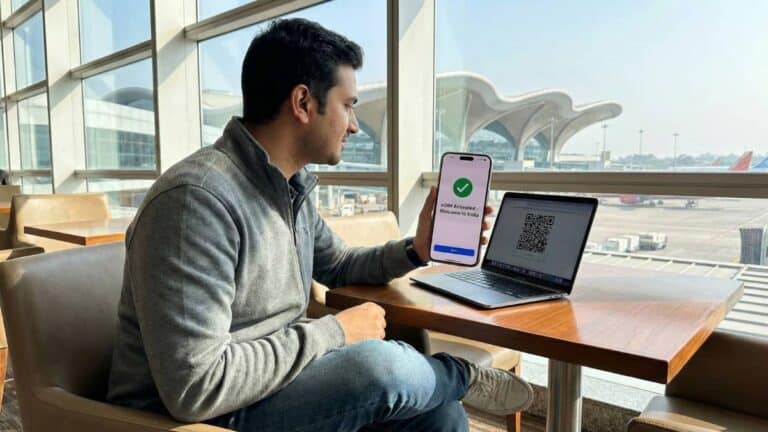
UPI for Foreigners: How to Pay Like a Local (The 2026 “One World” Guide)

Planning Series: Part of The Ultimate Guide to Planning Your First Trip to India –>
In India, Cash is no longer King. UPI (Unified Payments Interface) is.
From the high-end boutiques in Mumbai to the coconut vendor on a beach in Kerala, everyone has a QR code. If you try to pay with a ₹500 note for a ₹20 chai, you will likely hear the dreaded phrase: “No change, sir. GPay?”
For years, foreigners were locked out of this digital revolution. In 2025, that finally changed.
But there is massive confusion. Can you use your US Google Pay? Do you need an Indian bank account? Transitioning to a digital-first economy means that while your foreign credit card is a high-limit safety net, UPI is your daily survival tool for navigating the soul of Bharat.
This UPI for foreigners guide clarifies exactly which app works for YOU based on your visa status.
The “Google Pay” Trap (Read This First)
Do NOT try to use your home country’s Google Pay / PhonePe / Paytm.
- The Myth: “I have GPay in the US/UK, so it will work in India.”
- The Reality: The Indian version of these apps requires an Indian Bank Account linked to an Indian Mobile Number. Your foreign credit card will NOT work for P2P (Person-to-Person) transfers here.
- The Solution: You need a specific “Prepaid Wallet” or a specialized NRI bank app.
The New Era of UPI for Foreigners
In Bharat, Cash is no longer King. UPI (Unified Payments Interface) is. From the high-end boutiques in Mumbai to the coconut vendor on a beach in Kerala, everyone has a QR code. For years, visitors were locked out of this revolution, but in 2026, UPI for foreigners is the standard way to pay.
🏦 Official Authority: What is NPCI?
The National Payments Corporation of India (NPCI) is the specialized umbrella organization that operates the entire UPI ecosystem. Regulated by the Reserve Bank of India, it is the government-backed body that created the “One World” protocol for international travelers.
Explore NPCI Official Site →
Method 1: The “Airport” Method (Easiest for Tourists)
This is the path of least resistance. Do this before you leave the airport arrival hall.
How to get “UPI One World”:
- Find the Counter: Look for the EbixCash or Thomas Cook foreign exchange counters at Delhi (DEL), Mumbai (BOM), or Bengaluru (BLR) airports.
- Ask for: “UPI One World” activation.
- The Process: Show your Passport and Visa. Pay them in cash (Foreign Currency) or Card to load the wallet.
- The Result: They will install a partner app (often powered by IDFC FIRST Bank or ICICI) on your phone. You walk out with a working scanner.

Method 2: The “DIY App” Method (For Tourists)
If you are already at your hotel and missed the airport counter, you can download specific apps designed for foreign travelers. While these apps carry a joining fee, it is the most reliable way to access UPI One World for foreigners if you are staying for more than two weeks.
Option A: Cheq UPI (Most Popular)
- The App: Cheq (Powered by Transcorp)
- Pros: Designed specifically for foreigners. Excellent English interface.
- Cons: Higher joining fees.
- Cost: Approx ₹999 ($12) joining fee + loading charges. (The joining fee might be waived off at times based your country of residence)
- Verification: Requires digital KYC (Know Your Customer) or sometimes a physical agent verification depending on current rules.
- Verdict: The best option for tourists staying 2+ weeks.
Option B: Newer Entrants (Mony / NamasPay)
- The Apps: Mony and NamasPay are newer players entering the market.
- Pros: Often faster digital setup.
- Cons: Support networks are smaller than Cheq’s.

Method 3: The “NRI / OCI” Route (IDFC FIRST Bank)
Are you an NRI (Non-Resident Indian) or OCI Cardholder?
If you have (or plan to open) an NRE/NRO Account, you don’t need the tourist wallets above. You have a superior option.
The Solution: IDFC FIRST Bank App. IDFC is a pioneer in allowing you to link an International Mobile Number directly to UPI.
- How it works: Download the IDFC FIRST Bank App and Link your NRE/NRO account using your US/UK/Singapore/Canada mobile number.
- The Benefit: No “loading fees,” no wallet limits, and money comes directly from your bank account.
🌏 NRI Insight: IDFC International Mobile Link
IDFC FIRST Bank was the pioneer in enabling UPI for NRIs using international mobile numbers (linked to NRE/NRO accounts). In 2026, this remains the most robust solution for those in the US, UK, UAE, Canada, and Australia, as it removes the need for a secondary Indian SIM card entirely.
Check IDFC NRI Features →The “Auto-Rickshaw” Glitch (Must Read)
Crucial Warning: Merchant vs. Personal QR Codes
If you are using a Tourist Wallet (Method 1 or 2), you are legally restricted to P2M (Person-to-Merchant) transactions only. You cannot send money to a personal account (P2P).
- It WILL Work (Merchant QR): If the shop has a printed standee or a “Soundbox” (Speaker) that says “Google Pay Business” or “Paytm Business.”
- It MIGHT Fail (Personal QR): If an auto-rickshaw driver or coconut seller just shows you a QR code on their personal phone screen, it is often linked to their personal savings account. Your transaction will decline.
- The Fix: Always carry ₹500 in small notes (₹10s, ₹20s, ₹50s) specifically for rickshaws and small vendors.
The Costs & Limits on UPI for Foreigners
- Loading Fees: Be prepared for a 1% – 3% fee (Markup + GST) when you top up the wallet using a foreign credit card.
- Refunds: Unused balance can be refunded at the airport (Ebix/Thomas Cook) when you leave, but it involves paperwork.
- Our Advice: Don’t load $1,000 at once. Load $100 at a time. Spend the remaining balance on airport souvenirs or duty-free chocolates rather than chasing a refund.
A Note on Digital Security
Security is paramount when navigating new financial ecosystems. In 2026, the UPI protocol utilizes advanced multi-factor authentication and tokenization. This ensures your digital transactions remain as secure as they are seamless across Bharat, protecting your data while you explore.
FAQs: UPI for Foreigners
Conclusion: Cash or UPI for your trip?
Mastering UPI for foreigners is the single best way to upgrade your travel experience in Bharat. However, the right choice depends on the length of your stay:
- Short Trip (< 5 Days): Stick to Cash. The ~$12 setup fee and the physical KYC hassle for a tourist wallet might not be worth it for a long weekend.
- Long Trip (> 2 Weeks): Get UPI. The convenience of scanning a QR code at a street stall and not fighting for small change is absolutely priceless. It effectively bridges the gap if you don’t have a local Indian bank account.
- NRI/OCI Holders: Absolutely get the IDFC First Bank App. Being able to link your international number to your NRE/NRO account is a total game-changer for seamless payments.
Checking your budget? Before you load your wallet or visit a currency exchange, see exactly how much your money is worth at today’s mid-market rates.
Check Rates: BharatDesha Currency Converter —>
Editors Tip:
Money sorted? Now make sure you don’t overpay for your rides. Now that you have UPI for foreigners ready on your phone, you need to know exactly how much to pay for a taxi or a rickshaw to avoid the “tourist tax.”
Read Next: Bulletproof Guide: How to Get Around India (Uber vs. Ola vs. Auto-Rickshaws) –>