

Serene Varanasi Travel Guide 2026: Decoding the New Corridor, Ancient Ghats & Salvation Homes

Disclosure: Some links in this article are affiliate links. If you make a purchase through them, we earn a small commission at no extra cost to you.
Varanasi: More Than a Destination
Varanasi (Kashi) is not a city of “attractions” in the traditional sense. There are no theme parks here because the city itself is the attraction. As the spiritual heartbeat of India, it is a rare coordinate on Earth where life and death dance in a seamless, eternal loop upon the riverbanks. This Varanasi Travel Guide is designed to help you balance the ancient, raw soul of the city with the modern, refined comforts of the “New Kashi.”
Varanasi remains an assault on the senses—in the best way possible. Decades ago, a pilgrimage here meant navigating a labyrinth of congested, narrow lanes. Today, while that primal energy is preserved, the infrastructure has been reborn. With the grand Kashi Vishwanath Corridor, expansive promenades, and significantly cleaner riverfronts, the “City of Light” is now more accessible to the modern seeker than ever before.
From the 84 Ghats lining the sacred Ganga to the profound silence of the “Moksha Bhawans” (Salvation Homes), this Varanasi Travel Guide decodes the specific spots you must experience to truly understand the soul of civilization’s oldest living home.

📿 BharatDesha Quick Take
The Oldest Living City on Earth
Before we talk about what to see, we must understand where you are standing.
“Benaras is older than history, older than tradition, older even than legend, and looks twice as old as all of them put together.” — Mark Twain
While the great cities of antiquity—Babylon, Nineveh, and Thebes—have crumbled into ruins, Kashi remains. It is the oldest continuously inhabited city in the world, with archaeological evidence dating back to at least the 11th century BC. When you walk these streets, you aren’t just a tourist; you are walking on 3,000+ years of unbroken human history. This is the cradle of Indian civilization, and this Varanasi Travel Guide helps you navigate its layers.
Why Kashi? The Science & Scripture of Moksha
Kashi is not just a city; it is designed as a “Yantra” (Cosmic Machine). Its entire purpose is Moksha.
What is Moksha?
In Sanatan Dharma, the ultimate goal is not Heaven, but Moksha—liberation from the exhausting cycle of birth and death (Samsara). It is the final freedom.
The Scripture (Shastra)
The Skanda Purana (Kashi Khanda) declares the promise of this land:
“काश्यां हि मरणान्मुक्तिः।” Kashyam hi maranam muktih. (Death in Kashi is Liberation.)
“अत्र विश्वेश्वो देवः स्वयं कर्णे जपति। तारकं ब्रह्ममन्त्रं यं तत्र मुक्तिर्न संशयः॥” (Here, Lord Vishweshwara (Shiva) himself whispers the Taraka Mantra into the ear of the departing soul, granting instant liberation without doubt.) – Skanda Purana (Kashi Khanda)
The Science (Vigyan)
Why here? Geographically, Varanasi is a divine anomaly.
- Uttaravahini Ganga: In most of India, the River Ganga flows South or East towards the ocean. But here, she turns North—flowing back towards her source in the Himalayas.
- The Symbolism: “Flowing back to the Source” represents the soul turning inward, away from the material world, back towards the Divine.
- The Energy: This sharp U-turn creates a unique centrifugal force. Ancients believed this specific coordinate amplifies meditation and makes it easier for the soul to detach from the body.
The Ultimate Ritual: Ganga Snan (The Holy Dip)
You will see thousands of people—from shivering elders to laughing children—submerging themselves in the river at sunrise. In Kashi, the water is not merely H2O; it is Gangajal (Liquid Divinity). Scripture says that a single dip in Kashi with pure intent washes away lifetimes of Karma.
The Science: The Mystery of the “Phages”
Scientists have long been baffled by the water of the Ganga. In 1896, British bacteriologist Ernest Hankin observed that cholera bacteria died within 3 hours in Ganga water.
The Reason: The river contains unique Bacteriophages—viruses that specifically target and kill harmful bacteria. This is why millions dip daily without mass epidemics, and why families keep sealed pots of Ganga water at home for decades without it spoiling.
Subah-e-Banaras: The Sacred Awakening
For the Traveler: Take the Plunge
Decades ago, guidebooks warned against the water. That era is over. Since 2014, the massive Namami Gange initiative has drastically improved water quality. The floating debris is gone, sewage treatment has been revolutionized, and the river is clearer than it has been in half a century.
- The Recommendation: Do not miss this. Standing waist-deep in the cool river as the sun rises is a feeling of electric purification.
- Best Spots: If you want a quieter experience, head slightly upstream to Assi Ghat or Tulsi Ghat.
- The Alternative: If you are medically unable to enter cold water, you may perform Prokshana (sprinkling water over your head), but for the full spiritual circuit, the dip is the key.
The Heart of Kashi: Shri Kashi Vishwanath Temple
If Varanasi is the body, Baba Vishwanath is the soul. But the truth goes deeper: The scriptures say the city and the God are not two different things.
The Divine Identity: Kashi IS Mahadev
You are not just walking on holy ground; you are in presence of deity. The Skanda Purana explicitly states that Kashi is the physical manifestation of Lord Shiva’s consciousness.
“काशी केवलं बोध रूपा।” Kashi Kevalam Bodha Rupa. Meaning: “Kashi is not made of earth and stone; it is the form of Pure Consciousness (Bodha) itself.” – Skanda Purana
This is why simply living here, breathing here, and dying here is considered the highest form of union with the Divine.
The “New” Kashi Experience
In 2021, the temple underwent a historic transformation. The Kashi Vishwanath Dham Corridor was opened, connecting the ancient temple directly to the River Ganga (Lalita Ghat).
- Then: You had to navigate tight, congested alleys.
- Now: You can take a dip in the Ganga, carry a pot of holy water, and walk through a magnificent, spacious corridor directly to the temple. It is a seamless blend of heritage and modern sanitation.

The Darshan Guide (How to Visit)
Sugam Darshan (The Fast Track)
Do not stand in the free queue unless you have 4-5 hours to spare. The most efficient way is to book a “Sugam Darshan” ticket online (approx ₹300) at the official temple portal. This typically reduces your wait time to 30–45 minutes. If online slots are full, do not fret; simply take Baba Vishwanath’s name and join the general queue, which is now much more organized thanks to the wide Corridor promenades.
The Foreigner Tourist Ticket (The Physical Alternative)
If you are an international traveler and could not secure a Sugam Darshan slot online, the Temple Trust offers a dedicated physical booking process that is often overlooked.
- Where to Go: Visit the Temple Trust Helpdesk (Head Office) located at Bansphatak (CK – 37/40-41-42, near Shapuri Mall).
- The Process: You must present your original passport for verification and submit a photocopy of both your passport and valid Indian visa.
- The Cost: The ticket is priced at ₹600. This “Foreigner Ticket” includes your entry, traditional Prasadam, an Ang-Vastram (sacred stole), and the assistance of a Shastri (priest) to guide you through the rituals.
Sparsh Darshan (Touching the Deity)
Unlike many major Hindu temples where you can only view the deity from a distance, Kashi allows Sparsh Darshan during specific morning and afternoon hours. During these windows, you are permitted to enter the inner sanctum and physically touch the Jyotirlinga. It is an electrifying, deeply personal experience that remains the highlight for most seekers.
The Mangala Aarti (3:00 AM)
If you wish to see the deity decorated with flowers and “woken up” for the day, you must book a Mangala Aarti ticket online several days in advance. As the first ritual of the day, the atmosphere inside the temple at 3:00 AM is charged with a quiet, primal power that is unmatched by any other time of day.
Prohibited Items: Security Protocol
Security at the Kashi Vishwanath Dham is high-tech and strict. You are not permitted to carry mobile phones, smartwatches, or leather belts into the temple complex. We recommend using the free high-tech lockers located at the main Corridor entrance rather than the unofficial shops outside to ensure your belongings are safe.
History of Kashi Vishwanath Temple and Conflict
Kashi Vishwanath Temple in Varanasi, a significant Jyotirlinga, has a history of destruction and reconstruction, with legends crediting King Vikramaditya with its ancient build, followed by destruction by Mughal rulers like Aurangzeb, leading to multiple rebuilds, culminating in the present structure after numerous demolitions and renovations over centuries, reflecting its deep antiquity.
Watch the detailed history here
Follow ShashvatResearch for more such insightful videos.
The Guardian: Kaal Bhairav Mandir (Mandatory Visit)
If Kashi Vishwanath is the King of Varanasi, Kaal Bhairav is the Kotwal (The Sheriff). While the physical “Foreigner Ticket” gets you past the temple gates, local tradition holds that no journey to Kashi is spiritually complete without “marking your attendance” here first. You must seek his permission to stay in the city and his protection to leave safely.
- The Spiritual Visa: Just as you visit the Bansphatak helpdesk for your physical entry, devotees bow here at the Kaal Bhairav temple to ask for the spiritual “visa” to reside in Kashi without obstacles.
- The Deity: Kaal Bhairav is the fierce form of Lord Shiva—the Lord of Time (Kaal) and the absolute remover of fear.
- The Black Thread (Kashi Ka Dhaaga): It is an essential ritual to purchase the sacred black thread here and tie it around your wrist. In the 2026 Kashi experience, this remains the ultimate shield against negative energies for the modern seeker.
- The Unique Offering: Do not be surprised to see locals offering bottles of alcohol to the deity. Unlike almost any other major temple in India, liquor is the official Prasad here, representing the deity’s role in consuming the “intoxications” of the ego.
A Serene Walking Guide: Navigating Kashi’s 84 Holy Ghats
The soul of Varanasi is best experienced on foot along its riverfront—a continuous seven-kilometer stretch of steps where every stone tells a three-millennia-old story. To truly understand the city’s evolution, we recommend starting at the southern tip and walking North, witnessing the transition from ancient rituals to 21st-century infrastructure.

1. Assi Ghat (The Beginning)
- Vibe: Vibrant, spacious, and intellectually charged; this is the favorite haunt of students and long-term seekers.
- Must Do: Subah-e-Banaras. Arrive by 5:00 AM to witness a magical sunrise cultural program featuring Vedic chanting, classical music, and mass yoga. It is completely free and the most serene start to a Kashi day.
2. Tulsi Ghat (The Literary Heart)
- History: This is the sacred spot where the saint-poet Tulsidas composed the Ramcharitmanas.
- Must See: The Ancient Akhara. Visit at 7:00 AM to see traditional Indian wrestlers practicing in the mud pits (Akhara)—a timeless display of physical discipline and devotion.
3. Dashashwamedh Ghat (The Vibrant Center)
- Vibe: The undisputed heartbeat of the city—chaotic, loud, and an absolute explosion of color.
- Must Do: The iconic Evening Ganga Aarti. Whether you watch from the steps or a boat, this synchronized fire ritual is the quintessential Varanasi experience.
4. Manikarnika Ghat (The Eternal Fire)
- Vibe: Profoundly intense. Known as the “Mahashmashana,” this is the primary cremation ground where funeral pyres have burned without interruption for centuries.
- The Rule: This is a place of deep grief and spiritual transition. Strictly no photography is permitted. View from a respectful distance, preferably from a passing boat, and maintain silence to respect the departed.
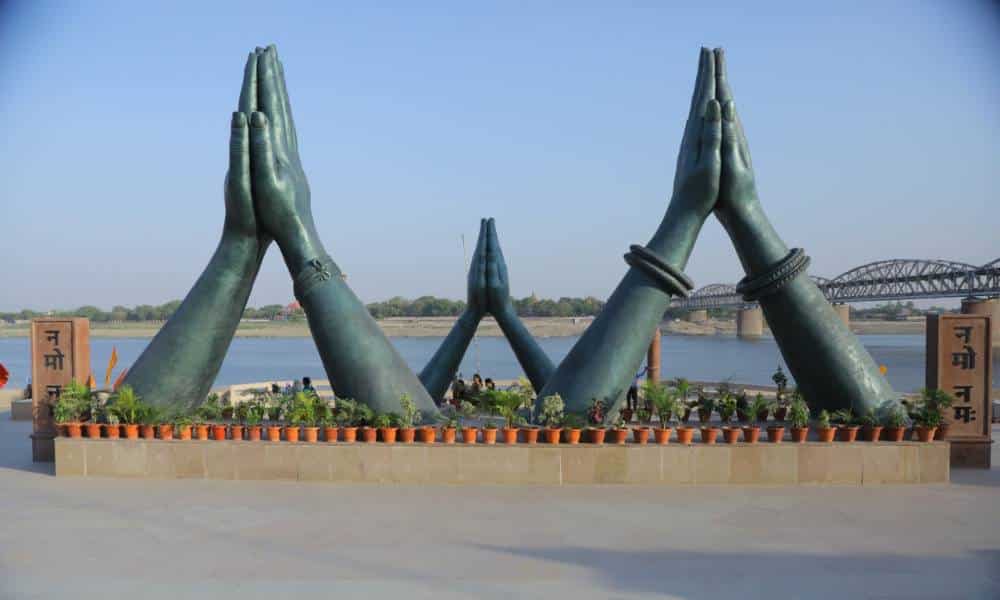
5. Namo Ghat (The Modern Landmark)
- Must Do: Visit at sunset to see the sculptures illuminated. With its food court and floating CNG station, it is the perfect place to conclude your walk with modern comforts.
- Vibe: Sophisticated and vast, this is the first fully accessible “Smart Ghat”. It represents the “New Kashi” with its clean promenades and open-air theaters.
- The Icon: Famous for the three massive “Namaste” sculptures (hands folded in prayer) that dominate the skyline.
Boating & Cruises: The Essential River Perspective
While walking the ghats is intimate, seeing Kashi from the Ganga is the only way to grasp the city’s true scale. In 2026, the riverfront has become a model for sustainable travel, blending thousands of years of tradition with cutting-edge green technology.
- The Traditional Rowboat (Panchhi): For those seeking the “Serene” soul of BharatDesha, a manual rowing boat is a must. These allow you to drift silently within feet of the rituals. 2026 Tip: Most of these boats have now shifted to silent CNG or electric motors, preserving the spiritual quiet of the river. Expect to pay between ₹600 and ₹1,200 per hour for a private boat.
- The Hydrogen-Powered Revolution: A major 2026 update is the launch of India’s first Hydrogen Fuel Cell vessel (FCV Pilot-01). Running commercially between Namo Ghat and Lalita Ghat, this zero-emission catamaran offers a noise-free, pollution-free 5-kilometer ride for just ₹50 per ticket.
- Luxury River Cruises: If you prefer climate-controlled comfort, the Bhagirathi and Alaknanda cruises offer 90-minute tours of all 84 ghats with live commentary and refreshments. Tickets typically start at ₹700 per person.
- The World’s Longest Journey: The famous MV Ganga Vilas continues its epic 51-day voyage from Varanasi to Dibrugarh. While usually booked years in advance, its presence at the Ravidas Ghat is a spectacular sight for photographers.
A Quiet Escape: Nepali Mandir (Kathwala Temple)
While the rest of the riverfront is stone, this temple is a masterpiece of wood.

- Location: Lalita Ghat (near the Kashi Vishwanath Corridor).
- The Story: Built by the King of Nepal in the 19th century, this terracotta and wood Pagoda is a precise replica of the famous Pashupatinath Temple in Kathmandu.
- Why Visit: It is one of the few places on the Ghats that is almost always quiet. The intricate wood carvings (some of which are erotically themed, similar to Khajuraho) and the shade of the Tamarind trees make it a perfect spot to sit and watch the river in peace.
Inside the “Death Hotels” (Moksha Bhawan)
You will hear them called “Death Hotels.” The correct term is Moksha Bhawan (Salvation Home). These are houses where the elderly come specifically to die, believing that leaving the body in Kashi breaks the cycle of rebirth.
- Kashi Labh Mukti Bhawan: The most famous one.
- Mumukshu Bhawan: A larger facility near the Kashi Vishwanath Corridor, catering to the elderly waiting for their final days
- The Rule: You are only allowed to check in if you are expected to die within 15 days. If you recover, you must leave.
- Can tourists visit? You cannot stay here. However, respectful visitors are often allowed during the day to speak to the manager. It is a profound experience, not a zoo.
The Manager’s Lesson
The manager often tells visitors: “People don’t hold on to life; they hold on to grudges. The secret to a peaceful death is forgiveness.”
The Aartis: Morning vs. Evening
Don’t just see one. They have completely different energies.
1. The Spectacle: Evening Aarti (Dashashwamedh)
- Time: Sunset (around 6:30 PM).
- The Experience: Highly choreographed, loud music, thousands of pilgrims.
- Pro Tip: Hire a private boat (₹500-₹1000) and watch from the water. The view from the steps is blocked by crowds.
2. The Meditation: Morning Aarti (Assi Ghat)
- Time: Sunrise (5:00 AM). It can vary based on the time of the year.
- The Experience: Quiet, Vedic chanting, facing the rising sun. Far fewer tourists. This is the spiritual choice.

New in Kashi: Museums of the Future
While Kashi is ancient, its infrastructure is catching up. Two new museums are must-visits for the intellectual traveler.
1. The Shastra Museum (Scripture Museum)
- Location: Durgakund (Dharma Sangh Complex).
- Why Visit: Newly inaugurated, this unique museum is dedicated entirely to preserving ancient Indian manuscripts. It showcases the intellectual rigor of the Vedas and Upanishads.
- Highlight: Seeing original palm-leaf manuscripts that have survived for centuries.
2. Virtual Experiential Museum (Man Mahal)
- Location: Man Mahal Ghat (near Dashashwamedh).
- Why Visit: Housed in a 16th-century palace, this museum uses VR (Virtual Reality) and 3D projection mapping to explain the history of the Ghats and the Holy River.
- Highlight: It offers a quiet, air-conditioned deep dive into history right in the middle of the chaotic market.
Logistics: How to Plan Your Stay
Varanasi has evolved. You no longer have to compromise on comfort.
Where to Stay: The 3-Tier Guide
Luxury Choice

Brijrama Palace
A 210-year-old fort on the Ghats. You arrive by boat. Expensive, stunning, and a definitive experience.
Luxury

Taj Ganges
If you prefer 5-star reliability away from the chaos of the Old City. Stay there to enjoy Taj Hospitality.
Mid Range Boutique

Suryauday Haveli
Operated by Amritara. A beautiful heritage property right on Shivala Ghat. Right on the river banks.
Mid Range & Botique

Palace on Ganges
A fusion hotel on Assi Ghat where every room is themed after a different Indian culture. Ideal for families and solo travelers.
Budget & Social

Moustache Varanasi
High standards, vibrant community, and very safe for solo travelers. A 6 minute walk to Assi Ghat. Ideal location to solo travelers.
Budget & Social

Ganpati Guest House
The “Classic” backpacker choice on Meer Ghat. Famous for its colorful courtyard & river views.
Search for all hotel options in Varanasi, from havelis to hotels you have it all.
How to Reach
By Air: Lal Bahadur Shastri International Airport (VNS) is well-connected to Delhi, Mumbai, Bangalore and all other major domestic airports in India.
By Train (The Vande Bharat Revolution): The Vande Bharat Express from New Delhi has completely transformed the pilgrimage experience—it is fast, clean, and highly reliable. For the best connectivity, aim for Varanasi Junction (BSB) or the newly redeveloped Banaras Station (BSBS).
- Train Numbers: Use the New Delhi – Varanasi Vande Bharat Express (22436) for your onward journey and the Varanasi – New Delhi Vande Bharat Express (22435) for your return.
- Alternative Option: The second set of Vande Bharat trains on this route operates under numbers 22416 (New Delhi to Varanasi) and 22415 (Varanasi to New Delhi).
- Travel Time: These premium trains cover the distance in approximately 8 hours, significantly faster than traditional express trains.
By Road: Varanasi is now excellently connected via the Grand Trunk Road (NH-19) and the new Purvanchal Expressway.
- From Prayagraj: ~120 km (2.5 hours). A smooth, easy drive.
- From Ayodhya: ~220 km (4.5 hours). Essential for the “Moksha Triangle” route.
- From Lucknow: ~320 km (6 hours).
- Bus: Comfortable AC Volvo/Scania buses run daily from Lucknow (Kaisarbagh/Alambagh) and Delhi.
Booking Tool: For hassle-free Bus & Train tickets (especially if using international cards), we recommend 12Go Asia.
Crucial Road Tip
Do Not Drive to the Ghats. The Old City (Godowlia/Ghat area) is a strictly enforced No-Vehicle Zone during the day. Do not try to drive your car to the hotel doorstep. Park at the designated Godowlia Multi-Level Parking and take an E-Rickshaw to your hotel or the river.
💡 Insider TIP: Your Personal Kashi Chariot
The most serene way to navigate the “City of Light” is to hire an E-Rickshaw for the entire day. Rather than negotiating multiple short trips, speak with a local driver to arrange an all-day “pick-up and drop” service.
- The Benefit: You get a dedicated ride at your disposal for temple visits, food runs, and ghat transfers without the stress of constant haggling.
- The Win-Win: This provides the driver with guaranteed daily earnings while giving you a local guide who knows the quickest shortcuts through the 2026 traffic patterns.
- Negotiation: Expect to pay a flat daily rate; this is often more economical and significantly less exhausting than finding new transport at every stop.
Food: A Gastronomic Pilgrimage Through the Alleys
Kashi’s food is not just sustenance; it is Prasad (a divine offering). Most of the legendary spots are hidden deep within the “Galis” (alleys), where the recipes have remained unchanged for generations.
1. Ram Bhandar: The Sacred Breakfast Ritual
- The Dish: Kachori-Sabzi & Jalebi. This is the quintessential Banarasi breakfast. The kachoris are stuffed with lentils and served with a spicy, hing-tempered potato curry.
- Insider Tip: Arrive between 7:00 AM and 9:00 AM. By 10:30 AM, they usually sell out. Pair the spicy curry with their thick, saffron-soaked jalebis for the perfect sweet-savory balance.
- Location: Thatheri Bazaar (near the Kashi Vishwanath entrance).
2. Kashi Chat Bhandar: The Tangy Soul of Godowlia
- The Dish: Tamatar Chat (Spicy Tomato Mash). This is unique to Varanasi. It’s a hot, buttery mash of tomatoes and potatoes topped with crunchy namak-pare.
- Must Order: Also try the Palak Patta Chat (crispy spinach fritters smothered in sweetened yogurt and tamarind chutney).
- Vibe: It is loud, crowded, and fast-paced. Stand on the street and eat from a traditional clay don (pot) for the authentic experience.
3. Blue Lassi Shop: 80+ Varieties of Tradition
- The Experience: A tiny, blue-walled hole-in-the-wall where the walls are a mosaic of passport photos from travelers spanning decades.
- The Dish: Mixed Fruit Lassi with Rabri. Unlike the liquid lassis of Punjab, this is a thick, hand-churned yogurt dessert served in a Kulhad.
- Note: It’s located in a lane leading to the Manikarnika cremation ghat. You will see funeral processions passing by—this is the raw, unfiltered reality of Kashi.
4. The Seasonal Miracle: Malaiyyo (Winter Only)
If you are visiting between November and February, you must find a vendor selling Malaiyyo. This is a frothy milk foam flavored with saffron and cardamom, made by leaving milk out under the night sky to catch the morning dew. It is so light it literally vanishes on your tongue.
Kashi’s Treasures: What to Take Home
You cannot leave the “City of Light” empty-handed. Kashi’s handloom and handicraft traditions are as ancient as its temples, offering seekers a physical connection to the city’s spiritual energy.
- Banarasi Silk Sarees: The “Gold Standard” of Indian silk. Look for the GI Tag (Geographical Indication) to ensure authenticity. For the most genuine experience, visit the weaver colonies in Pili Kothi, where you can see the looms in action.
- Gulabi Meenakari: A rare, pink-enameled metalwork unique to Varanasi. These intricate pieces make for exquisite, lightweight souvenirs that support a dying art form.
- Wooden Toys & Lacquerware: The vibrant, hand-painted wooden toys of Varanasi are legendary. Buying these directly from artisans in the Kashipura area ensures your money goes back into the community.
- Rudraksha & Spiritual Items: Kashi is the ultimate source for authentic Rudraksha beads. We recommend purchasing from the Shri Kashi Vishwanath Temple Trust stores to ensure you are getting genuine seeds rather than plastic imitations.
Frequently Asked Questions: Your Serene Varanasi Travel Guide
📚 References & Official Links (Click to Expand)
1. Official Temple Booking
- Shri Kashi Vishwanath Temple Trust: The only official site to book Sugam Darshan, Mangala Aarti, and Rudrabhishek. Avoid third-party agents.
- 🔗 Book Darshan Here ↗
2. Museums & Culture
- Virtual Experiential Museum (Man Mahal): High-tech museum explaining the Ghats.
🔗 Visit Official Portal ↗ - Sampurnanand Sanskrit University: Home to 100,000+ ancient manuscripts (The real “Shastra Museum”).
🔗 University Library Info ↗
3. The Science of Ganga
- Study: Bacteriophage prehistory and the waters of the Ganges.
- Source: National Institutes of Health (NIH).
- 🔗 Read the Scientific Paper ↗
Photo Credits & Acknowledgements
This guide would not be possible without the stunning visual archives from the official Kashi Vishwanath Temple Trust and Uttar Pradesh Tourism. Selected images, videos including the drone views of the corridor and certain temple interiors, are courtesy of their public portals (kashi.gov.in & uptourism.gov.in). We are grateful for their efforts in documenting the transformation of the “New Kashi” while preserving its ancient spirit.
Conclusion: The City of Light
Varanasi is a circle. You start at Assi (Life/Yoga), walk to Manikarnika (Death), and end at Mukti Bhawan (Salvation).
- The Global Lesson (Intellect): Kashi proves that civilization is not just about buildings; it is about continuity. It is the only place on earth where the rituals performed today are identical to those performed 3,000 years ago.
- The Spiritual Blessing (Soul): When you sit on the ghats and watch the river flow North, something inside you shifts. You realize that you, too, can turn against the current of the material world and find your source.
Walk the ghats. Watch the fire. Eat the chat. You will leave Kashi, but Kashi will never leave you.
Editor’s Note: A Note of Reassurance
Don’t be intimidated. Many guidebooks paint Varanasi as “scary” or “too intense.” With the new corridors, better safety, and helpful locals, Kashi is now incredibly welcoming. It is chaotic, yes, but it is “Organized Chaos.” This city is the physical manifestation of the eternal principles found in Sanatan Dharma, where life and death are viewed as a sacred, seamless cycle.
If you are feeling overwhelmed by the sensory scale of Kashi, our Survival Guide for First-Timers provides the practical “compass” you need to navigate the transition with ease. Come with an open heart, and you will find Kashi to be one of the warmest, most life-affirming places on the planet.
Next Step: Complete the Cycle. Varanasi is just one corner of the holy geometry and is rarely visited in isolation. To truly experience the spiritual geography of Northern India, seekers traditionally complete the Moksha Triangle—a sacred geometry connecting three of the world’s oldest and most significant holy sites.
- (Coming Soon)The 7-Day Moksha Triangle Itinerary –> Our master plan to help you navigate logistics, transport, and darshan timings across all three cities in one seamless journey.
- Ayodhya: The Birthplace of Ram —> Explore the grand new Ram Mandir and the solar-powered “Smart City” evolution of the ancient Kosala capital.
- Prayagraj: The King of Tirthas –> Witness the “Sangam” (confluence) of the three holy rivers and prepare for the Maha Kumbh logic.


