

Jaipur City Guide: The Divine Science & Insider Secrets (2026)

Disclosure: Some links in this article are affiliate links. If you make a purchase through them, we earn a small commission at no extra cost to you.
Most travel guides tell you that Jaipur is the “Pink City” and that you should ride an elephant at Amber Fort. We disagree.
Jaipur isn’t just a photo backdrop; it is a marvel of Sanatan Science. Built in 1727, it was India’s first planned city, designed centuries before modern urban planning existed. If you want to understand the logic behind the beauty—and find the best food that isn’t in a hotel buffet—this Jaipur City Guide is for you.

🏛️ BharatDesha Quick Take
Editor’s Note: At BharatDesha, we view Jaipur not just as a stop on the Golden Triangle, but as a masterpiece of Sanatan urban logic. While many seekers visit Rishikesh for Yoga or Kerala for Ayurvedic healing, Jaipur offers a different kind of “healing”—one found in the harmony of architecture and natural cooling. This guide is designed for the traveler who, like our visitors to Varanasi, seeks the deeper “why” behind India’s iconic landmarks.
The Science of Jaipur: Vastu & Ventilation
Ancient Urban Logic
- The Cosmic Grid (Prastara): Jaipur is designed on a 9-Square Grid (Mandala) representing the nine planets, based on Vastu Shastra. The streets are perfectly straight and wide, intersecting at 90-degree angles. This allows wind to flow through the city, naturally clearing dust and cooling the streets.
- The Hawa Mahal (The Natural AC): It’s actually a screen, not a palace. Due to the Venturi Effect, when hot air passes through its 953 small windows, it compresses and cools down. The queens could sit there in summer and feel a breeze without a single watt of electricity.

The Big Three: How to Visit Without Stress
1. Amber Fort (The Hilltop Giant at Twilight)
- The Trap: Taking an elephant ride up. (Please don’t. It is ethically controversial and unnecessary).
- The Insider Move: Take a Jeep or—better yet—walk up the back entrance (Sagari). This path was traditionally used by the royal family and offers a stunning, quiet perspective of the fort’s massive stone walls without the tourist chaos of the front gate.
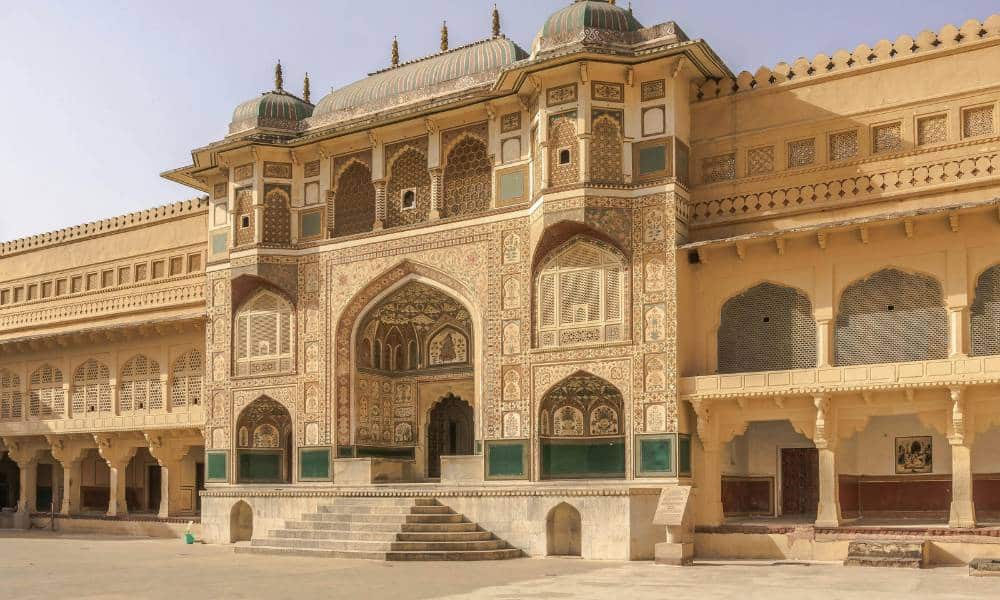
- The Science of Defense: Notice the Ganesh Pol gate. It features a secret water channel system above the gate that cooled the air for the queens watching processions from the lattices.
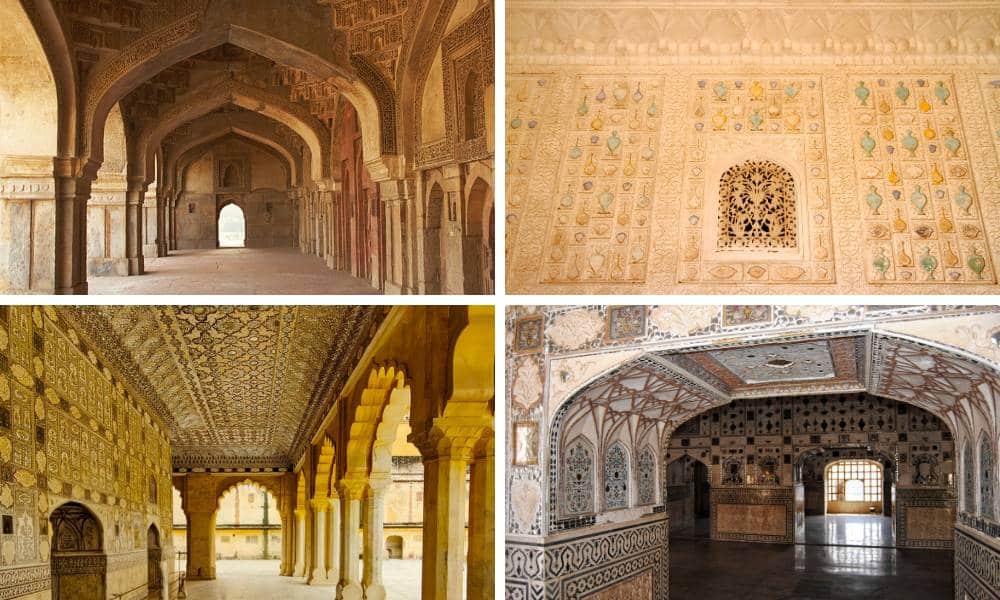
- How to spend your time: Spend at least an hour just in the Sheesh Mahal and Sukh Niwas. Look at the marble carvings of the “Magic Flower”—if you cover parts of it with your hands, it transforms into a cobra, a fish, or an elephant trunk.
- The Audio Hack: Local guides can be pushy and often rush you through the Sheesh Mahal (Mirror Palace). Move at your own pace and learn about the ingenious cooling systems and secret tunnels.
 The imposing yellow and pink sandstone facade of Amber Fort, India’s most iconic hilltop citadel.
- The Ganesh Pol served as the private entrance for the Maharajas, cooling the air for the queens through hidden water channels.
- The mirrors in the Sheesh Mahal were designed to illuminate an entire hall using just a single candle or a sliver of sunlight.

Best time of the day to Visit
- The Evening Magic: Visiting in the late afternoon means you bypass the heavy morning tour groups. As the sun sets, the fort transitions from a rugged fortress to a glowing palace.
- The Night View: Stay until 6:30 PM or 7:00 PM to see Amber by Night. The Sheesh Mahal (Mirror Palace) is best seen when the guards show you the “candle effect”—a single light source reflecting thousands of times in the Belgian glass.
2. City Palace (The Royal Residence)
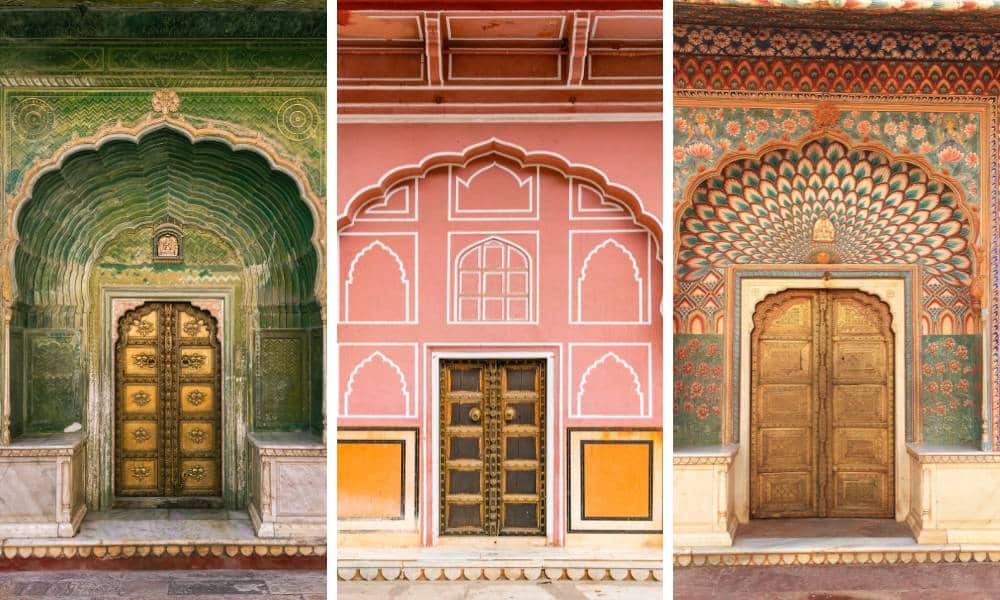
- The “Secret” Gates: In the Pritam Niwas Chowk (inner courtyard), there are four small gates representing the four seasons and four Hindu deities. Peacock Gate (Autumn/Vishnu) is the most famous, but look for the Lotus Gate (Summer/Shiva) for its incredible symmetry.
- The Silver Giants: Look for the two massive silver urns (Gangajalis). They hold the Guinness World Record for the largest sterling silver vessels. Maharaja Madho Singh II—a staunch devotee—carried 4,000 liters of Ganga water in these to England because he refused to drink foreign water.
- Pro Tip: If you want to see the famous “Blue Room” (Chhavi Niwas), you need the “Royal Grandeur” ticket. It is significantly more expensive but grants you access to the private residence where you can see the fusion of Mughal and British influences.
- Best Time Of The Day To Visit: Explore the courtyards before the mid-day head peaks. Then head into the museums and the Chhavi Niwas. Got at around 11 AM. You will need 2-3 hours to see the whole palace.
- The Four Seasons: Each gate in the City Palace represents a different Hindu deity and a specific season of the year.
- Art of Autumn: The Peacock Gate at the Pritam Niwas Chowk represents autumn and is dedicated to Lord Vishnu.
- A Royal Retreat: The Chhavi Niwas, or “Blue Room,” showcases a perfect blend of Mughal and British architectural influences.
- The Royal Square: The Pritam Niwas Chowk is the inner heart of the palace, featuring four gates dedicated to the four seasons.


3. Hawa Mahal (The Wind Palace)
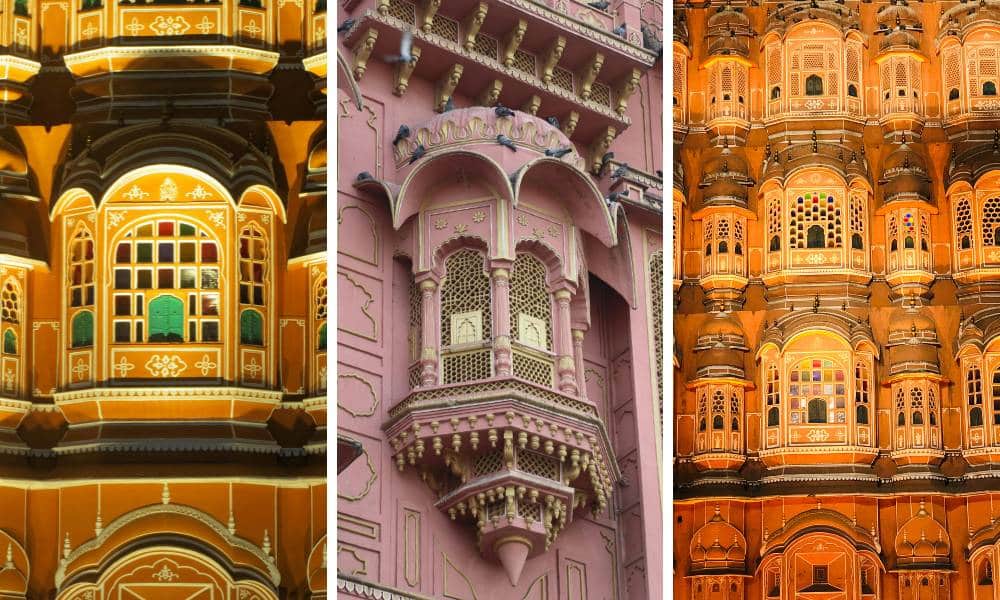
- The Scientific Screen: It isn’t actually a palace where people lived; it’s a 5-story “veil.” The 953 Jharokhas (windows) were designed so the royal women could observe street festivals without being seen, upholding Parda while staying cool.
- Photo Secret: Don’t stand on the crowded sidewalk below. Cross the street to the Wind View Cafe or The Tattoo Cafe. Buy a coffee, head to the terrace, and you’ll be at eye-level with the top floor of the Mahal for the ultimate shot.
- Quick Visit: You only need about 45-60 minutes inside. The interior is narrow and simple compared to the exterior; the real “grandeur” is in the views of the city bazaar from the upper windows.
- Best Time Of The Day To Visit: 9 AM is a good time to visit. Enjoy the best view of Hawa Mahal while you sip your coffee and have your breakfast from the cafes opposite to Hawa Mahal.
- The Venturi Effect: Every one of these 953 jharokhas was designed to funnel and cool the air naturally.
- The Pink Screen: Jaipur’s Hawa Mahal is a masterpiece of 18th-century climate-responsive architecture.

The “Way Back” Stopovers: Jal Mahal & Kanak Vrindavan
As you drive back from Amber Fort toward the city center, don’t just speed past the lake. Stop for these two gems:
1. Kanak Vrindavan (The Temple of the Valley)
Placement: Nestled in the valley at the foot of Nahargarh hills, right before Jal Mahal.
- The Sacred Connection: Maharaja Sawai Jai Singh built this lush garden and temple complex because the valley reminded him of the mythological Vrindavan where Lord Krishna performed the Raas Leela.
- The Temple: This is the Shri Radha Madhav Temple (often called the Old Govind Dev Ji Temple). It has a massive, beautiful courtyard and serves as a peaceful spiritual anchor before you re-enter the noisy city.
- Pro Tip: Most tourists skip this, so it’s usually quiet. Walk through the chhatris (cenotaphs) and admire the marble fountains—it is one of the most serene spots in Jaipur for a quick meditation.
2. Jal Mahal (The Water Palace)
Placement: On your left as you head toward Jaipur.
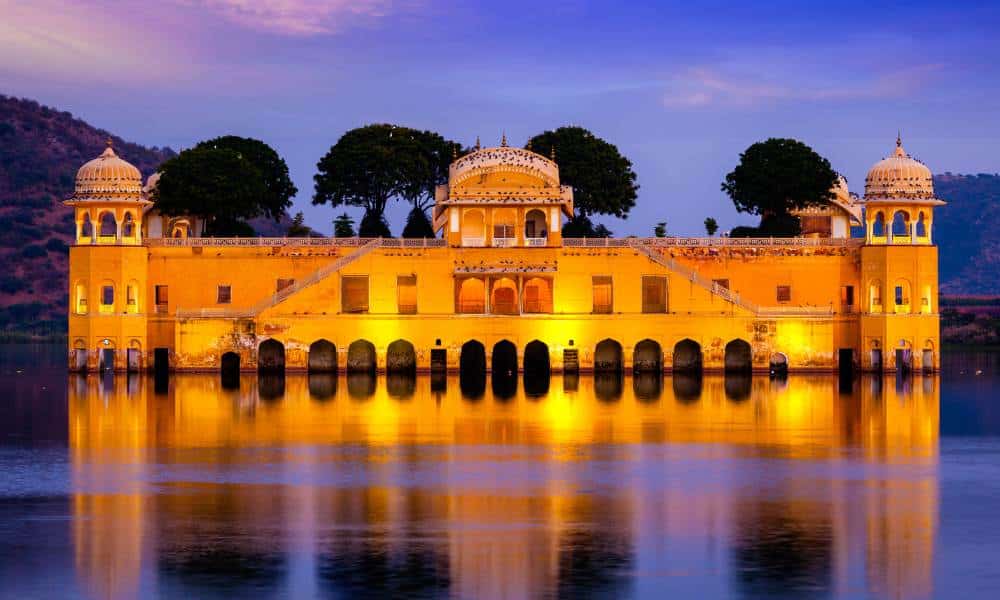
- The Hidden Engineering: While it looks like a single-story building floating on Man Sagar Lake, it is actually five stories tall. Four of those stories stay submerged underwater. The stone walls are held together by a special lime mortar that has prevented water seepage for over 250 years—a testament to ancient Indian waterproofing.
- The Best View: You cannot enter the palace, but the promenade is perfect for a 10-minute photo stop, especially during sunset when the lights reflect on the water.
Additional Insider Activities: Beyond the Monuments
If you have seen the forts, it’s time to see the soul of Jaipur.
1. Moti Dungri Ganpati (The Guardian of Jaipur)
Located at the foot of the Moti Dungri hill (crowned by a private royal castle), this temple is dedicated to Lord Ganesha and is one of the most revered spots in Rajasthan. Do visit to seek Ganpati Bappa’s blessings.

- The Ancient Idol: The idol is said to be over 500 years old, brought from Mewar by Maharaja Madho Singh I in the 18th century.
- The Vehicle Tradition: If you see dozens of brand-new cars and motorcycles lined up outside, it’s because of a local tradition: every new vehicle bought in Jaipur is first brought here for a puja to ensure safety and prosperity.
- Architecture: The temple is built in the Nagara style with three grand domes. Look closely at the stone carvings; they represent the finest of Rajasthani craftsmanship.
- Insider Tip: Tuesdays are dedicated to Lord Ganesha. The temple becomes a sea of devotees, and the surrounding markets come alive with vendors selling Motichoor Laddus (Ganpati’s favorite).
2. Jhalana Leopard Safari (Must Visit)
Most people wait for Ranthambore, but Jaipur has India’s first leopard reserve right in the city. Your chances of a sighting here are exceptionally high.
My kids loved the safari as we were able to spot 3 leopards during the safari. Leopards are a rare sighting; so don’t miss this while you are in Jaipur.
3. The Hawa Mahal Heritage Walk (The Pink Shop Stretch)
Most people take a photo of Hawa Mahal and leave. Don’t do that. Instead, cross the street and take a slow walk through Sireh Deori Bazaar.
- The Aesthetic: This is where you see the uniform, terracotta-pink shops that give Jaipur its name. Notice that every shop sign is written in the same font and color—a law enforced to maintain the city’s heritage.
- What to look for: This stretch is famous for Jaipuri Quilts (Razai). These are world-renowned because they are incredibly lightweight (often less than 250 grams) but exceptionally warm. You’ll also see rows of Camel Leather Juttis (traditional shoes) hanging like colorful curtains.
4. The “Hidden” Cloth Market: Purohit Ji Ka Katla
If you want to see where the locals actually buy their vibrant fabrics without the “tourist tax,” head to Purohit Ji Ka Katla.
- The Entrance: It is tucked away near Badi Chaupar (the large intersection near Hawa Mahal). You have to enter through a small, unassuming gateway that opens into a massive, labyrinth-like wholesale market.
- The Experience: This is the heart of Jaipur’s textile trade. You will find stacks of Bandhani (tie-dye), Leheriya (zigzag patterns), and Sanganeri prints. It is crowded, loud, and incredibly colorful—the perfect place for a “BharatDesha” explorer to see the city’s commercial soul.
- Pro Tip: This is primarily a wholesale market, so while they do sell individual pieces, it is the best place to buy unstitched fabric by the meter for custom outfits.
5. Govind Dev Ji Temple Aarti
Located within the City Palace complex, this is the spiritual heart of the city. The 5:00 AM or 7:00 PM Satsang is an electric experience of Sanatan devotion.
6. Nahargarh Fort (For Sunset)
Go to the “Padao” restaurant for the best view of the city lights.
7. Galta Ji (Monkey Temple)
A stunning temple complex built into a narrow crevice between two hills, filled with natural springs and monkeys.

Shopping: Gems, Prints & Pottery
- Textiles: Bapu Bazaar for bargaining; Anokhi for fixed-price, high-quality organic cotton. Do not leave Jaipur without a Bandhani dress or dress material.
- Jewelry: Johari Bazaar. Look for Meenakari (enamel) and Kundan work.
- Lac Bangles: Tripolia Bazaar. Specifically, walk down Maniharon ka Raasta to see artisans creating bangles from resin right in front of you.
- Wooden Carvings: Kishanpole Bazaar. Famous for intricate wooden sculptures and traditional furniture.
- Blue Pottery: Visit the Blue Pottery Art Centre near Amer Road. This pottery is unique because it is made of ground quartz, not clay.
- Camel Leather Juttis: A must buy in Jaipur. You will find them at shops across Jaipur. Sireh Deori Bazaar will be the best place to buy them.
- Jaipuri Quilts (Razai): There are my favorites. Light weight and comfy. If you are worried about carrying them, the traders also courier them to your homes at no extra costs.
Where to Eat: The “Real” Street Food
The “Lassiwala” Warning
If you go to MI Road, you will see 5 shops all named “Lassiwala.”
- The Real: Look for Shop Number 312 (Says “Since 1944”).
- The Drink: Lassi served in a clay pot (Kulhad). They sell out by 4:00 PM—get there early!
- Pyaaz Kachori: Go to Rawat Mishthan Bhandar. It is the gold standard of Jaipur breakfast.
- Laal Maas: For the brave—fiery red mutton curry at Handi Restaurant (MI Road).
Jaipur: Your Hub for Day Excursions
Jaipur is the perfect “Base Camp.” Instead of moving hotels every night, stay in Jaipur and use private taxis or trains for these iconic day trips.
1. Sariska National Park (Must Visit)
Sariska Tiger Reserve is a quieter, more spiritual alternative to Ranthambore.
- Logistics: Located about 102 km away, it’s a comfortable 2 hour and 15 minute drive via the Jaipur-Bandikui Expressway.
- Spiritual Link: Don’t miss the Pandupole Hanuman Temple inside the park. Legend says Bhima struck the mountain with his club to create a path for the Pandavas. It’s a stunning blend of nature and mythology.
- Booking: You can secure permits at the Sariska Park Safari Booking Office.
- Editor’s Tip: If you are with kids and want to wind down, you can very well spend a couple of days in Sariska Tiger Heaven resort. It has lush green lawns, play areas, a swimming pool, and multiple room options. Its also just 10 mins from Sariska Tiger Reserve Booking office.

Sariska Tiger Heaven Resort
The resort is spread over 5 acres of lush green land, with stunning views of the surrounding hills. The accommodation options include 16 luxury tents, 14 rooms, and 10 cottages, all of which are built with natural materials and blend in with the surrounding environment.
2. The Tiger Safari (Ranthambore)
Ranthambore National Park is a must for wildlife enthusiasts.
- Logistics: Approximately 175 km from Jaipur, it takes about 3 hours and 15 minutes via the NE 4. For a day trip, you’ll need a very early start (around 5:00 AM) to catch the afternoon safari.
- Booking: Safaris sell out months in advance. Visit the Ranthambore Tiger Reserve Booking Office.
3. The Haunted Fort (Bhangarh)
- Logistics: About 2 hours from Jaipur. Combine it with the Abhaneri Stepwell to see another marvel of ancient water management.
4. The Holy Lake (Pushkar & Ajmer)
- Logistics: A 2.5-hour drive via the expressway. Perfect for a spiritual day trip to visit the only significant Brahma Temple and the sacred Pushkar Lake.
If you’re a solo traveler, the temptation to plant roots in Pushkar is real. The vibe here is deeply sacred—a rare place where ancient Sanatan traditions and a global bohemian spirit coexist in harmony. It is the kind of town that invites you to trade your rigid itinerary for a quiet sunset on the ghats. To navigate this sacred space like an insider, remember a few key rules: always remove your shoes well before approaching the lakeside, be firm but polite with ‘unsolicited’ priests offering forced ceremonies, and definitely make the early morning trek to the Savitri Temple. The panoramic view of the sun rising over the Thar Desert is the ultimate reward for the solo wanderer.
Where to Stay in Jaipur
Royal Splurge

Samode Haveli
An actual nobleman’s home. You literally sleep like a king.
heritage boutique

Pearl Palace Heritage
Every room is a different work of art.
Budget Family

Arya Niwas
Massive lawn, hygienic food, and zero-stress rooms.
|
Search for all hotel options in Jaipur |
Jaipur City Guide: The 2026 Seeker’s Frequently Asked Questions
🏛️ Official Jaipur & Regional Travel Resources (Click to Expand)
🏰 Rajasthan Tourism (RTDC):
Official Guide to Jaipur Monuments & Timings
🐅 Tiger Safari Bookings:
Official Rajasthan Forest Department (Ranthambore & Sariska)
🚌 RSRTC Inter-city Buses:
Official State Bus Booking (Jaipur to Pushkar/Ajmer)
Conclusion: Your Jaipur Time Investment
Jaipur is a city that rewards the curious. Look past the pink paint, and you will find a city built on science, art, and incredible food. To truly “inhale” the atmosphere of the Pink City at a graceful pace, here is our 2026 recommended time investment:
- 2–3 Days (The City Core): Essential for exploring the “Big Three,” the Vastu-planned markets, and the spiritual Aartis at Govind Dev Ji.
- +1 Day (Pushkar & Ajmer): A full day is needed to experience the sacred lake and Brahma Temple. For those extending their spiritual journey, Pushkar serves as a perfect bridge before heading toward the Moksha Triangle.
- +1–2 Days (Wild & Haunted): Add a day each for Sariska/Ranthambore safaris or the mystery of Bhangarh.
- Total Recommendation: Plan for 5 to 7 days to see Jaipur at an “insider” pace.
What’s Your Next Destination?
- Heading North? Don’t make the “Noon” mistake in Agra. Read our Taj Mahal Sunrise Guide to see the marble marvel in its most divine light.
- Seeking Total Immersion? View our master (Coming Soon)7-Day Golden Triangle & Moksha Triangle Itinerary to see how Jaipur fits into the ultimate Indian pilgrimage.


