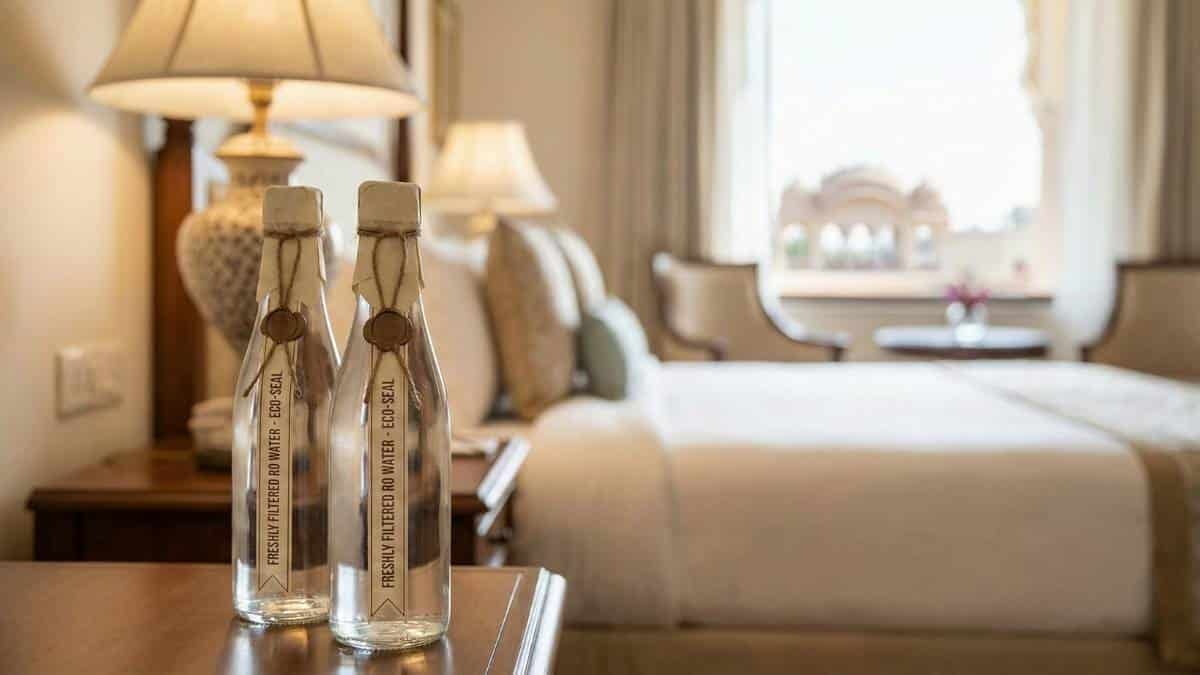
Two elegant glass water bottles with paper seals on a hotel bedside table.

Safe Drinking Water in India: Why I Refuse “Filtered” Hotel Water

Finding safe drinking water in India is often the single most important factor in determining the success of your trip. You check into a nice 4-star hotel in Jaipur, and on the bedside table, instead of the plastic Bisleri bottles you expected, you see two elegant glass bottles with a paper seal that says “Freshly Filtered RO Water.”

It looks premium. It looks eco-friendly. It looks safe.

I won’t touch it.

While I applaud the move away from single-use plastic, as a traveler, I cannot afford to take the risk. When it comes to safe drinking water in India, “filtered” is a vague term; the definition of “safe” depends entirely on who changed the filter last. Here is why I trust nothing but the “Click” of a factory seal or my own proven purification system.

💧 BharatDesha Quick Take

The “Eco-Trap”: Why Glass Bottles are Risky

The shift toward sustainability in the hospitality industry is a double-edged sword when it comes to safe drinking water in India. While hotels are often well-intentioned, the decentralized nature of onsite “bottling plants” introduces three critical points of failure:

  • The Hygiene Gap: Hotels refill these glass bottles from a central RO (Reverse Osmosis) plant, but the automated sterilization found in large-scale factories is often missing.
  • The Bottle Washing Risk: Even if the water is pure, the bottle itself may not be. Was it rinsed with raw tap water? Was it dried with a common rag? These are the hidden variables that compromise safe drinking water in India.
  • The Human Element: A staff member manually fills these bottles. One unwashed hand touching the rim of the glass contaminates the “pure” water instantly, turning an eco-friendly gesture into a health hazard.
  • The RO Maintenance Myth: RO machines are sophisticated but require strict maintenance. If a hotel delays changing the membrane to save costs, that “RO Water” is functionally no different from tap water—the primary source of waterborne illness for travelers.

The Science: Bisleri vs. RO vs. Boiled

Understanding the chemistry of your hydration is essential for securing safe drinking water in India. While many options exist, they are not created equal in their ability to protect your gut health.

Safe drinking water in India. A comparison chart of factory-sealed mineral water versus hotel RO water.
Gold Standard: Factory-sealed water undergoes ozonation, a process much harder to maintain in a hotel basement RO plant.

💧 Understanding Your Options

  • Sealed Mineral Water (Bisleri/Kinley/Aquafina): This is the Gold Standard. It is ozonated and sealed in a factory. If the cap makes a “Click” sound when you twist it, it is safe.
  • RO (Reverse Osmosis): This strips the water of impurities using a membrane. It is safe if the machine is maintained.
  • Boiled Water: The traditional Indian method. If you are staying at a homestay, asking for “Hot Water” is often safer than “Filtered Water” because heat kills pathogens that filters might miss.

The Solution: The “Self-Reliance” Method

I hate buying five plastic bottles a day; it is bad for the planet and a burden to carry. The only way to guarantee safe drinking water in India without relying on external vendors is to take control of the purification process yourself. By using the right tools, you can turn any source—hotel taps, airport fountains, or roadside jugs—into safe drinking water in India.

Option 1: The Heavy Duty Savior (My Top Pick) Grayl Geopress

Grayl Geopress – This is my primary tool for securing safe drinking water in India because it doesn’t just filter; it purifies. It removes viruses like Hepatitis A and Rotavirus, which standard carbon filters often miss. It works like a French Press and is absolutely essential for long-term travel. Essential for India.

Ultimate Protection: The Grayl Geopress is essential for India as it purifies viruses, not just bacteria.

Option 2: The Budget Friendly LifeStraw Go

LifeStraw Go – It is excellent at removing bacteria and parasites in city environments, though it is important to note it does not filter out viruses.

The “Seal Check” Rule

If you must buy bottled water (and you will), follow this strict protocol.

  1. Check the Brand: Stick to the Big Three: Bisleri (Green label), Kinley (Blue label), Aquafina.
  2. Beware of Fakes: You will see “Bilseri”, “Brislei”, or “Belsri”. These are fake lookalikes filled with tap water. Read the spelling carefully.
  3. The Crush Test: This is a vital step in maintaining the supply of safe drinking water in India for others. After finishing a bottle, crush it completely. This prevents unscrupulous vendors from refilling the branded bottle with tap water and reselling it to an unsuspecting tourist.
A hand crushed used plastic Bisleri bottle to prevent unauthorized refilling kept on a hotel table.
The Final Step: Always crush your bottles to ensure they cannot be resold with unsafe tap water.

FAQs: Safe Drinking Water In India

Generally, yes. At 4 and 5-star hotels, the RO water is typically safe for quick rinsing. However, if you have a highly sensitive stomach or are at the beginning of a long trip, use bottled water or water from your Grayl purifier to be 100% safe.

Be cautious. In high-end, reputable restaurants in major cities like Jaipur, ice is usually made from filtered water. In smaller establishments or street-side cafes, it is best to ask for your drink “without ice” to avoid the risk of contaminated tap water being used in the ice trays.

Do not drink it. A missing “Click” is a red flag that the bottle may have been refilled manually with unsafe tap water. Return it to the vendor or hotel staff immediately and ask for a fresh, factory-sealed bottle.

Boiling is the most effective traditional method for killing bacteria, viruses, and parasites. If you are staying at a homestay and lack a portable purifier, asking for “Hot Water” to drink is a much safer alternative to “Filtered Water” of unknown origin.

While major international airports like Delhi (DEL) or Mumbai (BOM) have advanced filtration systems, the hygiene of the fountain nozzle itself is often questionable. Use your Grayl Geopress to filter water from these fountains for a secondary layer of protection against viruses.

You will frequently encounter “Water ATMs” or coin-operated RO stations at Indian railway stations and major bus terminals, offering chilled water for a fraction of the cost of a branded bottle. While these initiatives are a massive step forward for local sustainability, they remain a “proceed with caution” zone for international travelers seeking safe drinking water in India.

The concern is rarely the RO technology itself, but rather the “Contact Risk” and the variable maintenance of the internal filters. Public nozzles are touched by thousands of hands daily, and filter replacement schedules can be inconsistent in high-traffic areas.

If you are a budget-conscious traveler or an eco-warrior, the best strategy is the “Double-Purification” method: fill your bottle at the Water ATM to save money and plastic, but then immediately run that water through your Grayl Geopress or LifeStraw Go. This ensures you are getting the most affordable yet truly safe drinking water in India without risking a bout of “Delhi Belly” due to external contamination.

Conclusion: Your Gut is Your Vacation

Ultimately, the search for safe drinking water in India is about protecting your most valuable asset: your time. Losing three days of a ten-day itinerary to food poisoning is a tragedy that is almost always preventable.

My Final Recommendation:

  • At a 5-Star Heritage Hotel (e.g., Taj or Oberoi): You can generally trust the glass bottle, but always check for a fresh, untampered seal.
  • At All Other Accommodations: Rely on your Grayl Geopress to purify the provided water or purchase a factory-sealed Bisleri to ensure you have safe drinking water in India.
  • On the Move: If you are exploring the “Big Three” monuments in our Jaipur City Guide or any other tourist destinations, always carry your own purified supply to avoid the “lookalike” bottle traps in high-traffic tourist areas.

Editor’s Note:

Water safety is merely the first step in the BharatDesha health protocol. While securing safe drinking water in India drastically reduces your risk, travel always involves the unexpected.

If you do fall ill, having the right protection is vital. Read our Travel Insurance Guide to discover which policies specifically cover hospitalizations for food poisoning—an essential detail that many standard plans overlook. Whether you are following the Sadhana Path in Pandharpur or marvelling at the Great Living Chola Temples in Tamil Nadu, a healthy gut and a solid insurance plan are your best travel companions.

Similar Posts

Leave a Reply

Your email address will not be published. Required fields are marked *