Taj Mahal Sunrise Guide (2026): The Honest Truth (6 AM vs. 4 PM)

Disclosure: Some links in this article are affiliate links. If you make a purchase through them, we earn a small commission at no extra cost to you.
It is the most famous building in the world. It is also, arguably, the most chaotic.
If you visit the Taj Mahal at 11:00 AM on a Saturday, you will likely hate it. You will be shoved, stepped on, and swarmed by touts. You will leave thinking, “This is a tourist trap.”
But if you visit at 6:00 AM on a Tuesday… it is the most breathtaking sight in the world. The Taj isn’t the trap—the time you choose is. Here is the definitive Taj Mahal Sunrise Guide of how to visit the Taj without losing your mind.
🕌 BharatDesha Quick Take
The Verdict: 6 AM (Sunrise) vs. 4 PM (Sunset)
The Taj Mahal is a chameleon; the marble changes color depending on the sun’s angle.
|
Feature |
Option A: Sunrise (6:00 AM) |
Option B: Sunset (4:00 PM) |
|---|---|---|
|
The Vibe |
Peaceful, Spiritual, Cool. |
Energetic, Romantic, Busy. |
|
Marble Color |
Soft Pink and Pale Blue. |
Fiery Golden and Orange. |
|
Crowd Level |
Low to Moderate. 30 mins of calm. |
Peak. Maximum crowds. |
|
Best For |
Serenity seekers & Solo travelers. |
Professional photographers. |
BharatDesha Recommendation
Go at Sunrise. Arriving 30 minutes before the gates open (approx. 5:30 AM) is the only way to see the reflecting pools without a sea of people in your shot.
How to Buy Tickets (Don’t Fight the Gateway)
Skip the “Transaction Failed” Error
Option 1: The Official Site (asi.payumoney.com)
- Cost: ₹1100 + ₹200 for Mausoleum (Total: ₹1300 / ~$16 USD).
- The Issue: The gateway often rejects non-Indian credit cards. If it fails, your bank might hold the funds for 7 days.

Option 2: Ticket Window At The Taj
- You can also buy tickets directly at the ticket window. But this is time consuming if you want to beat the crowd.
Option 3: The Stress-Free Way (Klook / Viator)
- Cost: ~$18 – $20 USD.
- The Benefit: They accept Apple Pay, PayPal, and international cards. You get a QR code instantly on your phone.
The “Gate Strategy”: East vs. West
Security Red Alert: The Banned List at Taj Mahal

Security is stricter than most airports. Do not bring a backpack. * Banned: Tripods, Drones, Food, Tobacco/Lighters, Battery Packs, Laptops, Books.
- Allowed: Phone, Wallet, Passport, Camera (no extra lenses/lighting), and one small water bottle.
- Pro Tip: Your Foreigner Ticket includes a free water bottle and shoe covers. Do not buy these from the touts outside!
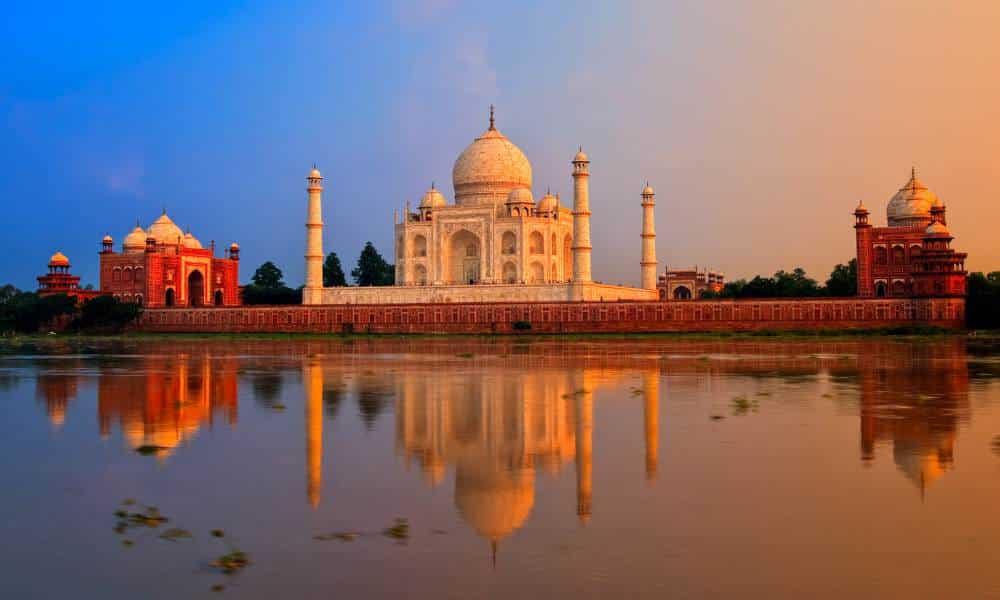
The “Secret” Sunset Spot: Mehtab Bagh
If you want the “Golden Hour” glow without the 10,000 people, head across the river to Mehtab Bagh (The Moonlight Garden).
- The View: Perfect symmetry, framed by the Yamuna River.
- The Secret: You can legally use a Tripod here, making it the favorite spot for professional landscape photographers.
- Cost: Only ₹300 for foreigners (much cheaper than the main complex).
Avoiding the “Guide” Hustle
Many “guides” inside the complex will offer to take your photo at the “Diana Bench.” They will then demand 500-1000 rupees.
- The Truth: It is public property. You do not need to pay anyone to sit there.
- Recommendation: If you want a real guide, book a Verified Klook Guide in advance who can explain the Optical Illusions of the Taj (like how the calligraphy appears the same size from top to bottom).
Frequently Asked Questions: Taj Mahal Sunrise Guide
🏛️ Official Taj Mahal & Agra Travel Resources (Click to Expand)
🎟️ Official Ticketing (ASI):
Archaeological Survey of India (Official Booking Portal)
*Note: This is the only official government site. If this fails, use the Klook/Viator links provided in the guide.*
🏥 Emergency & JCI-Accredited Healthcare:
Moolchand Medcity Agra (NABH & JCI Standards)
The most advanced tertiary care facility in Agra, accustomed to international insurance claims.
📜 Official Tourism Portals:
UP Tourism – Official Taj Mahal Guide
District Administration Agra (Official Government Site)
🌙 Night Viewing Information:
Full Moon Night Viewing Rules & Dates
Conclusion: Your 4-Step “Perfect Morning”
- 5:00 AM: Wake up and head to the East Gate. This is the most efficient entry point for international travelers.
- 5:45 AM: Scan your digital QR code. Remember, physical ticket windows are increasingly rare in 2026; having your QR code ready is the only way to beat the surge.
- 6:00 AM: Walk directly to the central water channel. This 30-minute window is your only chance for the iconic “empty” reflection shot before the reflecting pools are obscured by crowds.
- 8:30 AM: Exit and head to a rooftop cafe in Tajganj for breakfast. Popular 2026 spots like Taj Cafe Rooftop or Saniya Palace offer front-row views of the marble dome as the morning haze clears.
Editor’s Note: Beyond the Marble
The Taj is just the first jewel in the crown. To experience the full evolution of Indian royalty, you must head west into the desert.
- The Next Stop: Most travelers head from Agra to Jaipur (the Pink City) via a 4-hour train or a 5-hour drive. On your way, don’t miss the abandoned Mughal capital of Fatehpur Sikri or the deep symmetrical wonders of the Chand Baori Stepwell.
- Jaipur Preview: Once in Jaipur, prepare for a different kind of sunrise at the Hawa Mahal (Palace of Winds). Much like the Taj, visiting the Hawa Mahal facade at 8:00 AM—before it officially opens at 9:00 AM—is the best way to capture its 953 honeycomb windows without the bustling street traffic.
- The Full Route: Read our The Imperial North: 14-Day Classic India Itinerary from Delhi (2026) to see how to seamlessly fit Agra, Delhi, and Jaipur into perfect week of discovery.