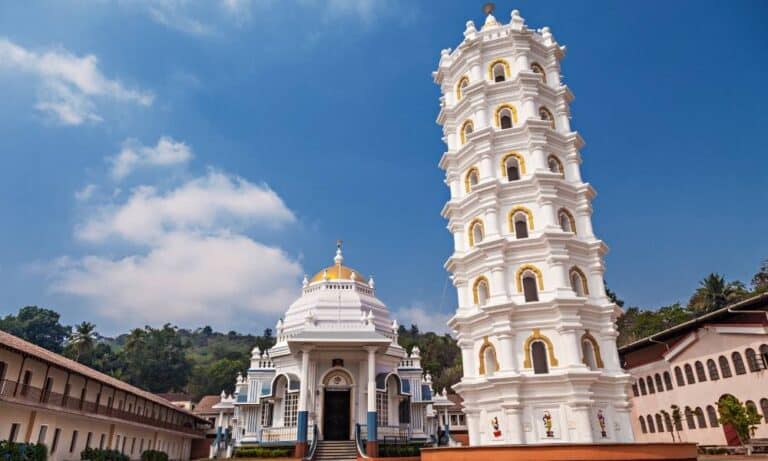
Maratha Grandeur: The Ultimate 14-Day India Itinerary from Mumbai (2026)

14 Days
Optimal West-to-North India rhythm.
2026 Ready
Direct Flights & Strategic Hops.
Oct – Mid April
The Deccan & Desert Window.
Heritage Hybrid
Basalt Grit meets Marble Glory.
Disclosure: Some links in this article are affiliate links. If you make a purchase through them, we earn a small commission at no extra cost to you.
For the modern seeker, a first journey to Bharat often defaults to the “Golden Triangle.” But for those who crave the raw, unyielding soul of the subcontinent, this 14-day India itinerary Mumbai is the definitive gateway alternative.
This masterclass swaps the manicured lawns of Mughal tombs for the vertical basalt cliffs of the Sahyadri Mountains. It is a strategic act of “Soft Landing.” You ground your energy in a cosmopolitan city before ascending the Western Ghats into the heart of the Maratha Empire—a land defined by its historic refusal to be conquered.
The Doorless Faith of the Deccan
Nothing captures the spirit of this route better than the village of Shani Shingnapur. Here, in a world obsessed with security, you will find a village where houses have no doors.
For centuries, residents have lived in absolute vulnerability, protected only by their deep faith in Lord Shani. It is a profound “Glory” moment that stands in stark contrast to the fortified “Grit” of the Maratha hill forts you will trek. In Bharat, the most powerful shields are often invisible.
The Maratha Soul: Built for Battle
As you traverse the ruins of Shaniwar Wada or the ramparts of Lohagad, you will notice a distinct contrast to the perfectly preserved palaces of the North.
The architecture here wasn’t designed for aesthetic display; it was built for independence. From the iron-spiked gates of the Peshwas to the wind-swept ridges of the Sahyadris, the landscape tells a story of unyielding resilience.ly preserved palaces of the North in this 14 day India itinerary mumbai.

Is this for you? If you are a traveler who seeks the UNESCO-recognized majesty of the Ellora and Ajanta Caves, the rugged defiance of Sahyadri mountain forts, and the romantic lakeside “Glory” of Udaipur without the “road fatigue” of traditional North India tours, this is your masterclass.
Choose Your BharatDesha Persona
Select a path below to see how this 14-day blueprint adapts to your travel style.
The Vibe: “Imperial Grandeur meets Modern Speed.”
You are here for the architectural icons—from the UNESCO-listed Ellora Caves to the lakeside palaces of Udaipur—but you want them optimized. This route leverages 2026 travel trends like private ridge drives through the Western Ghats and strategic internal flight hops to eliminate 8-hour highway hauls. It gives you more time for sundowners on Mumbai’s Art Deco rooftops and private walks through the “White City” grandeur of Mewar.
The Vibe: “The Sahyadri Silence.”
If you are looking for a deeper spiritual reset involving the Pune Ashrams and the sacred vineyards and temples of Nashik, this is your path. This loop prioritizes meditation, Pranayama, and slow-living.
The Vibe: “The Konkan Coastal Run & Hampi Ruins”
For those who want to trade forts for the “Grit” of the coast. This high-energy trail takes you through the palm-fringed shores of Goa, the sacred beaches of Gokarna, and the boulder-strewn ruins of Hampi.
🕉️ BharatDesha Quick Take
This itinerary invites you to explore Bharat’s unyielding resilience and stunning beauty, leading you from the vibrant streets of Mumbai to the tranquil shores of Udaipur.
Interactive Route Map
Pro-Tip: Click the star icon to save this route to your phone for offline navigation.
Phase 1: The Coastal Gateway (Days 1–3)
Location: Mumbai (South Mumbai & Western Suburbs)

The Vibe: High-velocity Victorian Gothic meets 21st-century ambition.
Day 1: The Soft Landing & The Queen’s Necklace
Your first day in Bharat is about “Energy Management.” After landing at CSMIA (T2), meet your pre-booked Welcome Pickups chauffeur. Avoid the stress of the local taxi hustle and head straight to South Mumbai (SoBo).
- Morning: Check into a heritage hotel like the Taj Mahal Palace or The Oberoi.
- Afternoon: A slow panoramic drive/walk through the Fort District—CSMT Station (UNESCO), the BMC Building, and the High Court. This area holds the highest concentration of Art Deco buildings outside of Miami.
- Sunset: A meditative walk along Marine Drive. As the streetlights flicker on—known as the Queen’s Necklace—you’ll feel the “Glory” of Mumbai’s modern spirit.
- Evening: A “Main Character” Fish Thali at Gajalee or Trishna (the butter-garlic crab is world-famous).
- Sadhana Anchor: Practice Drishti (Focus). Amidst the movement of 21 million people, find one steady point—the horizon over the Arabian Sea.
Day 2: The Ancient Harbor & Heritage Architecture
- Morning (9.00): Take the first ferry (09:00) from the Gateway of India to the Elephanta Caves. These 5th-century rock-cut temples dedicated to Lord Shiva are your first encounter with the “Grit” of Deccan basalt.
- Lunch: A colonial-era experience at Britannia & Co. in Ballard Estate. Try the legendary Berry Pulao.
- Afternoon: A walking tour of Kala Ghoda, Mumbai’s premier art district, followed by a visit to the Prince of Wales Museum (CSMVS).
- Evening: Explore the Colaba Causeway for artisanal handicrafts and the “Grit” of local street markets.

Day 3: Divine Beginnings & The Sensory Soul of the City
Location: Prabhadevi ➔ Mahalaxmi ➔ South Mumbai (SoBo) ➔ Goregaon (Optional)
The Vibe: Sacred rhythms transitioning into the gritty logistics of a mega-metropolis.
Your third day in Mumbai is a journey of contrasts, beginning with the spiritual “Glory” of a legendary temple before descending into the “Grit” of the world’s largest open-air laundry and the high-vibration energy of the Bollywood industry.
- Early Morning(5.30 – 8.30): Start your morning before the city fully wakes. Shree Siddhivinayak Temple in Prabhadevi is the spiritual heart of Mumbai, dedicated to Lord Ganesha, the remover of obstacles.
- Morning(9.30 – 11.00): Visit the Dhobi Ghat at Mahalaxmi. This is the world’s largest open-air laundry and a masterclass in human organization and “Grit.”
- Lunch Hour (11:30 – 13:00): Witness the Dabbawala Flow at Churchgate Station. Watch the world’s most precise logistics network sort 200,000 tiffins with six-sigma accuracy.
- Afternoon (13:00 – 15:30): Dive into a SoBo Cafe Hop. Savor Bun Maska at Kyani & Co. (est. 1904) or Keema Pav at Cafe Military, fueling up with the “Grit” of Mumbai’s street food icons followed by A curated Street Food Crawl. From the spicy kick of a Vada Pav to the buttery richness of Pav Bhaji, experience the flavors that fuel the city’s ambition.
- The Optional “Glory” Leap (Film City):
- Activity: Take a guided tour of Dadasaheb Phalke Chitranagari (Film City) in Goregaon.
- The Experience: Step onto active sets of the Bollywood industry. Witness the “Grit” behind the scenes—the scaffolding, the light rigs, and the intense labor—that creates the cinematic “Glory” exported across the globe.
- Sadhana Anchor: Practice Presence. Notice the efficiency of the Dabbawalas at Churchgate station during their lunch-hour delivery—a living example of “Flow” within chaos.
📍 Coming Soon: Our upcoming Mumbai City Insider Guide will take you beyond the tourist map. We are preparing a deep dive into the secret Art Deco pockets of Marine Drive, the best late-night Irani Cafés in South Mumbai, and a “Dabbawala Blueprint” to help you understand the world’s most efficient logistics network.
BharatDesha Quick Take: Phase 1 Logistics
Curated Stays (Mumbai)
Getting Around
- Welcome Pickups (Airport)
- Uber / Ola Rentals (On-Demand)
- Kali-Peeli Taxis(Wave your hand, stop the taxi)
- MakeMyTrip Cabs (Full Day/Intercity)
Phase 2: The Sahyadri Ascent (Days 4–5)

The Vibe: Trading sea level for the vertical cliffs of the Western Ghats.
This phase is where the “Grit” of the journey truly takes form. You leave the coastal humidity of Mumbai and ascend the Western Ghats (Sahyadris)—a rugged, ancient mountain range that served as the natural fortress of the Maratha Empire.
Day 4: The Iron Fort & The Monk’s Silence
Route: Mumbai ➔ Pune (Intercity Car)
- Morning (07:30 – 10:30): Check out early for a private ridge drive via the Mumbai-Pune Expressway. As the road begins its steep climb through the Bhor Ghat, watch the landscape shift from concrete to emerald-green basalt cliffs.
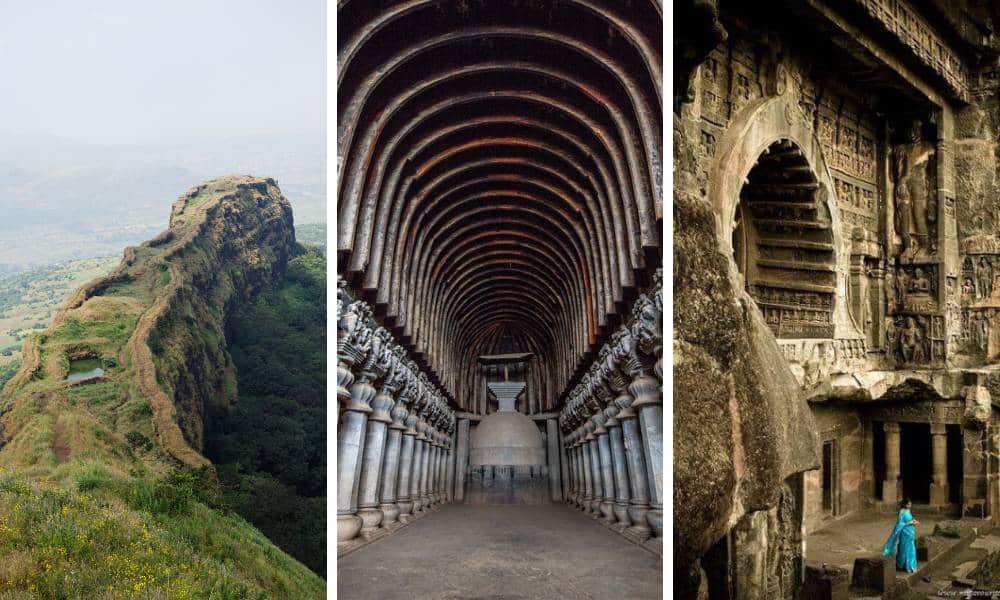
- Mid-Morning (11:00 – 13:30): The Grit of Karla & Bhaja Caves. > ⚠️ Physicality Note: Be prepared for a steep climb. Reaching the Karla Caves involves an ascent of approximately 350–500 stone steps. Marvel at the 2nd-century BCE Buddhist monasteries. Inside the Karla Chaitya, look up at the 2,000-year-old teak wood ribs on the ceiling—organic history that has survived since the Satavahana era.
- Afternoon (14:30 – 17:30): The Glory of Lohagad Fort (The Iron Fort). > ⚠️ Logistics Note: This is a non-negotiable “Grit” stop. Reaching the main gates requires a steady 30-minute uphill walk from the base village (Lohagadwadi). Trek through the four massive gates—Ganesh, Narayan, Hanuman, and Tyari. Stand on the Vinchu Kata (Scorpion’s Tail) ridge and feel the unyielding wind that once protected the Maratha heartland.
- Evening: Arrive in Pune and check into your boutique stay.
- Dinner: If you arrive early in Pune (skipping the Lohagad Fort visit) you can enjoy an authentic Maharashtrian Thali somehere in Deccan Gymkhana for legendary dinner. Places like Janaseva Bhojanalaya, Sukanta or Hotel Shreyas on Apte Road serve the most authentic vegetarian thalis in the city—unlimited servings of Amti, Bhakri, Puran Poli, and Solkadhi.
Day 5: The Peshwa Legacy & The Lion’s Fort
- Morning (09:00 – 11:30): The Seat of Power (Shaniwar Wada). Visit the ruins of the 18th-century palace-fort. While fires destroyed the internal wooden structures, the massive stone foundations and iron-spiked Delhi Gate remain. These ruins are a symbol of a civilization that chose “Grit” over surrender.
- Brunch Stop: Visit a local favorite like Bedekar Misal or Katakirr to try Misal Pav—a spicy, crunchy sprout curry topped with farsan and served with soft bread. It is the definitive fuel of a Punekar.
- Afternoon: Summon your “Vira” (Strength) with a rustic climb to the Lion’s Fort, or find your “Shanti” (Peace) with an immersive meditation at the Osho Sanctuary.
 Monastic Silence: Trading the sea-level humidity for the vertical basalt cliffs and the ancient teak-ribbed ceilings of the Sahyadris.
- The Peshwa Legacy: Standing before the “Seat of Power” at Shaniwar Wada, where the legacy of Bajirao I once commanded the heart of the Maratha Empire.
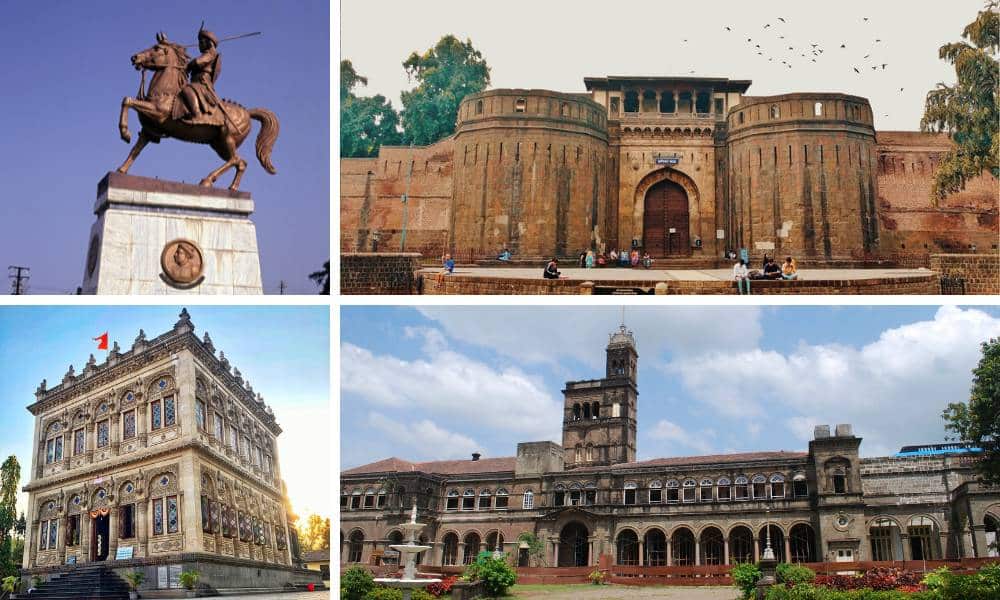
- Afternoon (14:00 – 17:00): The Lion’s Fort (Sinhagad). 💡 Strategic Choice: If the Lohagad trek felt too intense, Sinhagad is a much easier trek with a motorable road that takes you almost to the top. It offers a gentle uphill walk compared to the steepness of Day 4. Eat traditional Pithla Bhakri (chickpea curry and millet bread) prepared by local villagers on the mountaintop.
- Dinner (19:30 – 21:30): The Authentic Maharashtrian Thali. Head to Deccan Gymkhana for a legendary dinner. Places like Janaseva Bhojanalaya, Sukanta or Hotel Shreyas on Apte Road serve the most authentic vegetarian thalis in the city—unlimited servings of Amti, Bhakri, Puran Poli, and Solkadhi.
- Sadhana Anchor: Practice “Vira” (Strength). As you stand on the spot at Sinhagad where the legendary Tanaji Malusare fell, don’t just look at the view. Reflect on the internal resilience (Vira) required to build a life out of vertical rock. Take three deep breaths of the mountain air and anchor your energy to the unmoving stone.
- 02:00 PM – 03:30 PM: Registration and gate pass processing at the Welcome Center.
- 03:30 PM – 05:30 PM: Explore the Teerth Park (a lush, 12-acre Zen garden) or sit by the Basho swimming area and café.
- 05:30 PM – 06:30 PM: Prepare for the Evening Meeting. This is the highlight of the resort’s daily schedule, featuring music, silence, and a video discourse.
- 08:30 PM: The session typically ends, allowing for a late-night dinner at the German Bakery or other high-vibration cafes in Koregaon Park.
- Sadhana Anchor: Practice “Antar Mouna” (Inner Silence).If you opt for this pivot, your spiritual anchor transitions from the “Grit” of the climb to the “Glory” of the gap. As you walk through the silent, bamboo-lined pathways of the resort, focus on the sounds that usually go unnoticed—the rustle of leaves or the sound of your own breath. This is the Sahyadri Silence manifested in an urban sanctuary.
📍 Coming Soon: Our upcoming Pune City Guide will take you deeper into the “Oxford of the East.” We are mapping the secret Peths (local wards), the best places to hear Classical Hindustani Music, and a “Foodie’s Map” to the best Bakarwadi in the world.
BharatDesha Quick Take: Phase 2 Logistics
Getting Around
- Uber / Ola Rentals (On-Demand)
- MakeMyTrip MMT (Full Day/Intercity)
- Auto Rides: (Tutuk rides inside peths. Negotiate before entring the tuktuk)
Phase 3: The Monolithic Leap (Days 6–8)
Location: Pune ➔ Aurangabad (Chhatrapati Sambhajinagar)

The Vibe: Witnessing the impossible made manifest in stone.
This phase is the structural climax of the Maratha Grandeur itinerary. You leave the bustling hills of Pune for the vast, sun-drenched Deccan Plateau, crossing a sacred ridge to reach a city that serves as the gateway to humanity’s most ambitious rock-cut achievements.
Day 6: The Sacred Ridge & The Village of Faith
Route: Pune ➔ Shani Shingnapur ➔ Aurangabad
Logistics: A 5-hour private drive (approx. 235 km). Start by 08:30 AM to allow for a meaningful stop at the “Village of Faith.”
- Morning (08:30 – 12:00): The Sacred Ridge Drive. As you exit Pune, the landscape flattens into the iconic Deccan Basalt plains. The “Grit” is the dry heat of the plateau, but the “Glory” is the unbroken horizon that stretches toward the heart of the Maratha heartland.
- Mid-Day (12:30 – 14:30): The Doorless Faith (Shani Shingnapur). Visit the village where no house has a door. The Ritual: Offer prayers at the open-air Lord Shani Temple. Unlike traditional temples with ornate domes, the deity here is a 5-foot-high black stone standing under the open sky.
- The Experience: Witness a community that has lived in absolute vulnerability for centuries. The absence of doors and locks is not a gimmick; it is a profound “Glory” that defies modern security logic, rooted in the belief that Lord Shani is the ultimate guardian against theft.
- Evening: Arrive in Aurangabad (Chhatrapati Sambhajinagar). Check into a luxury anchor like the Vivanta or ITC Rama International. Enjoy a quiet dinner featuring local Naan Qalia—a slow-cooked heritage dish of meat in a rich, spiced gravy that tells the story of the city’s medieval past.
- Sadhana Anchor: Practice “Shraddha” (Faith). As you stand before the open stone of Lord Shani, observe the absence of physical barriers. Reflect on what “internal doors” you keep locked in your own life out of fear. Practice a moment of mental surrender to the flow of the journey, trusting that you are protected by a higher frequency.
Day 7: The Monolith & The Loom
Location: Aurangabad
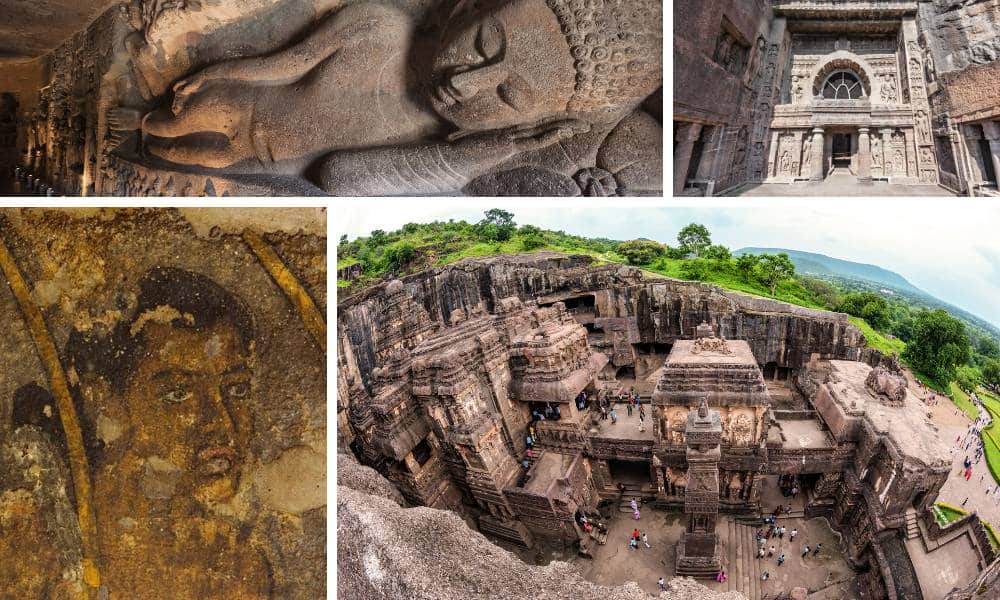
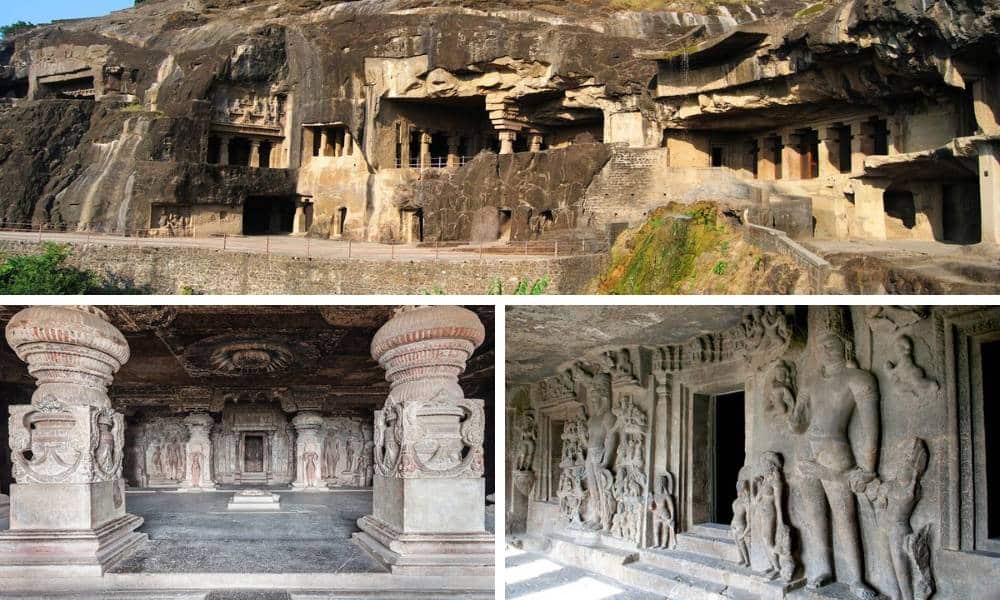
- Morning (08:30 – 12:30): The Monolithic Leap (Ellora Cave 16). Ellora Caves UNESCO World Heritage site, were created over a period of roughly 400 years, between the 6th and 10th centuries CE.Head straight to the Kailasa Temple.
- The Feat of Glory: Witness the world’s largest monolithic structure, carved top-down from a single basalt hill. Engineers estimate 400,000 tons of rock were removed over a century to “reveal” this cosmic machine of stone, galleries, and life-size elephants. Do no rush. You can push your day or drop some things in the evening. Ellora is an enginnering marvel and take your whole day based on your interest.
- Afternoon (14:00 – 16:30): The Unconquerable “Grit” (Daulatabad Fort). Climb the “Hill of the Gods,” a 14th-century fortress that was never taken by force.
- The Dark Passage: Navigate the Andhari—a pitch-black, spiral tunnel designed to confuse and trap invaders.
- The Reward: Emerging at the summit, you are rewarded with a 360 degree view of the Deccan Plateau.
- Late Afternoon (17:00 – 19:30): The Silk & Soul of the Deccan (Shopping & Culture). Skip the “Silver Taj” and dive into the legendary textile heritage of the region.
- The Paithani Masterpiece: Visit a reputable weaver’s emporium (like Paithani Weaves or the Hamaray outlets). The Paithani Saree, known as the “Maharani of Silks,” features intricate peacock motifs and borders made of pure silk and gold thread (zari). A single saree can take months to weave—a true “Glory” of Indian craftsmanship.
- The Himroo Legacy: Look for Himroo fabrics—a unique blend of silk and cotton with Persian-inspired designs that once adorned the royalty of the Deccan.
- The Bidriware Touch: Pick up a piece of Bidriware—stunning black metalwork inlaid with pure silver, a craft that has survived since the 14th century.
- Evening (19:30 – 21:00): The Royal Deccan Table. Conclude your day with an authentic Aurangabadi Dinner.
- The Dish: Seek out Naan Qalia. This isn’t just a meal; it’s a history lesson. The Qalia is a slow-cooked, aromatic meat curry made with 35 different spices, served with a special flaky Naan baked in a clay oven. This dish was perfected by the armies of the Mughals and the Nizams as they traversed the Deccan.
- Sadhana Anchor: Practice “Dharana” (Concentration). As you watch a weaver’s fingers dance across the loom to create a Paithani border, observe the absolute concentration required. Practice Dharana by holding your attention on the rhythmic sound of the loom for three full minutes, letting the external world dissolve into the thread.
- The Monolithic Leap: Witnessing the impossible made manifest in stone—from “Painted Silence” to the world’s largest monolith.
- The Unyielding Soul: Exploring the structural climax of the Deccan, where basalt cliffs were transformed into spiritual sanctuaries.
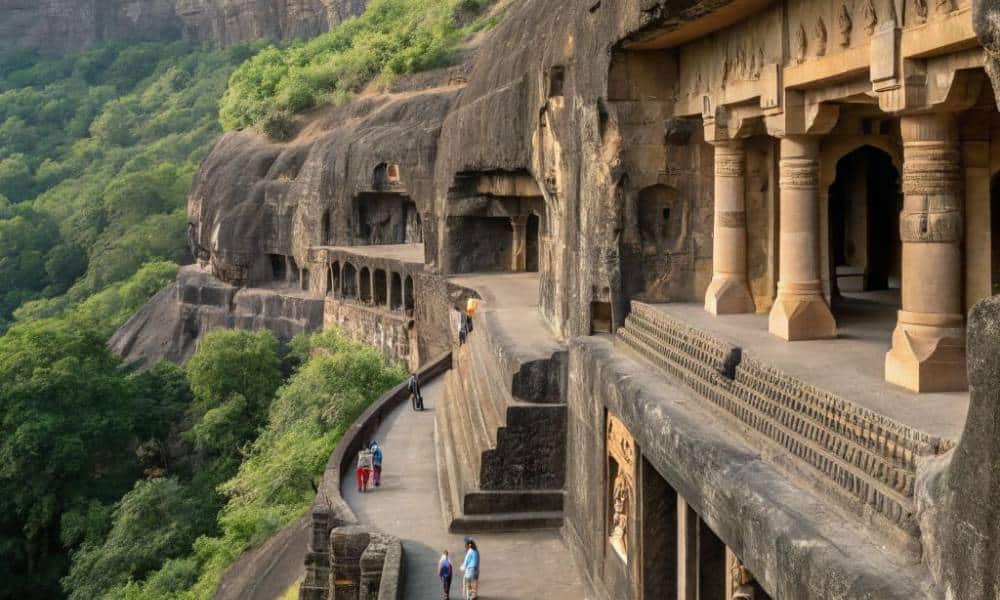
- The walking pathway along the Ajanta gorge.
Day 8: The Painted Silence & The Imperial Leap
Route: Ajanta Caves ➔ Aurangabad Airport (IXU) ➔ New Delhi (DEL)
The Vibe: Moving from the ancient, cave-bound silence of the South to the imperial velocity of the North.
- Morning (08:00 – 13:00): The Painted Soul of Ajanta. Depart early for the horseshoe-shaped gorge of Ajanta. Unlike the stone-carved “Glory” of Ellora, Ajanta is a masterclass in fresco painting.
- The Experience: Enter the dim, cool interiors of Cave 1 and 2. Using only natural light reflected by mirrors, witness the 2,000-year-old murals of the Padmapani and Vajrapani. The lapis lazuli blues and ochre yellows still glow with an emotional depth that feels startlingly modern.
- Afternoon (13:00 – 16:00): The Return Drive. Enjoy a rustic lunch near the viewpoint overlooking the gorge before heading back to Aurangabad.
- Evening (18:00 – 21:00): The Imperial Leap. Board your direct flight from Aurangabad (IXU) to New Delhi (DEL). This “Leap” saves you nearly 20 hours of rail travel, preserving your energy for the Rajasthan finale.
- Arrival: Meet your Welcome Pickups chauffeur at Delhi T3 and transfer to your hotel in Aerocity (for ease) or Lutyens’ Delhi (for heritage).
- Sadhana Anchor: Practice “Antar Mouna” (Inner Silence). Spend ten minutes in the colossal Cave 26 at Ajanta, before the giant reclining Buddha. Let the weight of the basalt and the ancient silence absorb your internal noise. Carry this stillness with you as you transition into the high-velocity energy of New Delhi.
BharatDesha Quick Take: Phase 3 Logistics
Flights (By Expedia)
Curated Stays (Aurangabad)
Getting Around
- MakeMyTrip Cabs (Full Day/Intercity)
- Uber / Ola Rentals (On-Demand)
- Auto–TukTuk (Local Shopping)
Phase 4 & 5: Choose Your Northern Finale (9-14)
You have witnessed the basalt soul of the Deccan. Now, the landscape shifts from the rugged Maratha “Grit” to the imperial “Glory” of the North. For your final six days in Bharat, choose the path that resonates with your traveler’s heart
- Path 1: The Golden Triangle Masterclass (Delhi, Agra & Jaipur)
- Path 2: The Mewar Oasis & The Great Wall (Delhi, Agra & Udaipur)
Editor’s Note: You don’t have to choose now. Open each tab below to see which “Final Act” resonates with your energy after 8 days in the heart of India.
The Vibe: High-velocity, iconic, and architectural.
Phase 4: The Golden Triangle & Beyond — Delhi to Agra Logistics

Day 9: The Vertical Empire & Ceremonial Heart
Location: New Delhi
The Vibe: A journey through time, from 12th-century grit to 21st-century modernism.
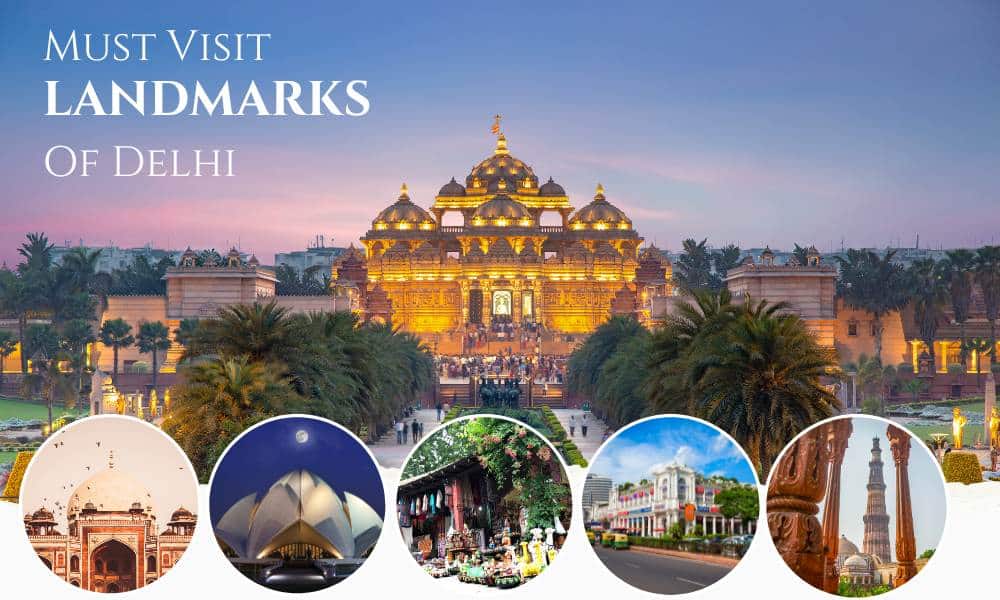
- Morning (09:00 – 12:00): The Grit of the Qutub Minar. Start your North Indian chapter at the world’s tallest brick minaret. This is where the “Grit” of the early Delhi Sultanate is etched in stone.
- Mid-Day (13:00 – 15:00): The Modern Glory of the Lotus Temple. Shift your energy to the Bahá’í House of Worship.
- The Experience: Unlike the ancient carvings of the Deccan, this is a masterpiece of Expressionist architecture. Shaped like a floating lotus flower with 27 free-standing marble-clad “petals,” the interior is a sanctuary of absolute silence. It is the perfect modern counterpoint to the “monolithic” energy of Ellora.
- Afternoon (15:30 – 17:00): The Power Drive. A panoramic drive through Raisina Hill. Pass the Rashtrapati Bhavan (President’s House) and the New Parliament Building—the epicenter of the world’s largest democracy.
- Sunset (17:30 – 19:00): The Walk of Honor at India Gate. End your day at the ceremonial heart of Bharat. Walk the Kartavya Path (Path of Duty) as the India Gate—a 42-meter war memorial—glows under the floodlights.
- Sadhana Anchor: Practice “Dharana” (Focus). Amidst the evening crowds at India Gate, find a single steady flame at the Amar Jawan Jyoti. Practice holding your focus there for two minutes. In the heart of the capital’s chaos, find your internal still point.
Day 10: The Garden Tomb & The Cultural Bazaar
Location: South Delhi
The Vibe: Symmetry, serenity, and a sensory masterclass in Bharat’s diverse craftsmanship.
- Morning (09:00 – 12:00): The DNA of the Taj (Humayun’s Tomb). Spend your morning at this UNESCO World Heritage site, the first substantial example of Mughal architecture in India.
- The Detail: This is where the concept of the Charbagh (four-quadrant garden) was perfected. As you walk toward the central plinth, notice the “Glory” of the red sandstone and white marble inlay. It is the architectural blueprint—the DNA—that would later evolve into the Taj Mahal.
- Lunch & Afternoon (13:00 – 17:00): The Pan-India Masterclass (Dilli Haat). Head to Dilli Haat INA, an open-air food and craft plaza that acts as a miniature version of Bharat.
- The Experience: Unlike a chaotic local bazaar, this is a curated space where artisans from every state showcase their “Grit.” Wander between stalls of Madhubani paintings from Bihar, Chikan embroidery from Lucknow, and pashminas from Kashmir.
- The Food Trail: Skip the formal sit-down meal and do a “Regional Tapa” lunch. Try the Momos from the Sikkim stall, Litti Chokha from Bihar or food from other parts of India
- Evening (17:30 – 19:30): Old Delhi “Grit” (Optional Drive). If you have the energy, take a rickshaw ride through Chandni Chowk at sunset to witness the “Grit” of one of the world’s oldest and busiest markets before heading to dinner.
- Sadhana Anchor: Practice “Sthira” (Steadiness). Amidst the geometric perfection of Humayun’s Tomb, find a spot near one of the water channels. Sit with a straight spine and practice Sthira. Just as the tomb has stood steady through empires, visualize your own internal anchor holding firm amidst the external noise of the city.
Day 11: The Agra Pivot
Route: New Delhi–> Agra (Train / Intercity Car)
The Vibe: Transitioning from the capital’s bustle to the timeless romance of the Yamuna banks.
- Morning (08:00 – 10:00): The High-Speed Leap. Board the Gatimaan Express from Hazrat Nizamuddin Station.
- The Experience: This is the “Grit-free” way to travel. At 160 km/h, it’s India’s fastest train. Enjoy breakfast at your seat as the urban sprawl of Delhi transforms into the mustard fields of Uttar Pradesh.
- Mid-Day (10:30 – 13:00): Arrival & Heritage Check-in. Meet your driver at Agra Cantt (AGC) and head to your hotel.
- Strategic Tip: Stay at a property like The Oberoi Amarvilas (for the ultimate “Glory” view from every room) or the ITC Mughal (to experience the grandeur of royal gardens).
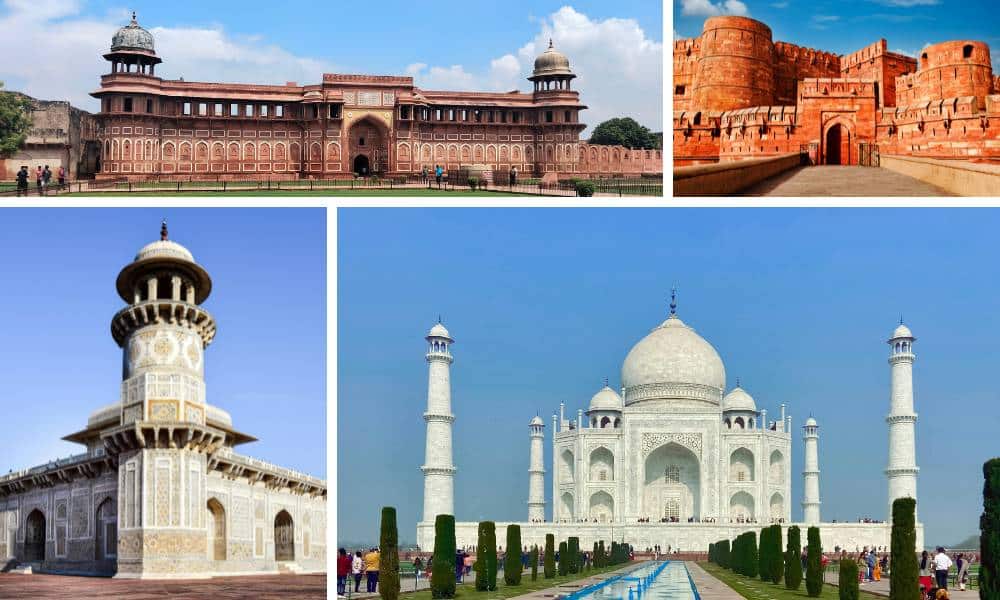
- Afternoon (14:30 – 17:00): The Red Sandstone City (Agra Fort). Explore the massive fortress where the Mughal Emperors lived.
- The Detail: Stand in the Musamman Burj, the octagonal tower where Shah Jahan spent his final years under house arrest, gazing across the river at the Taj Mahal. It is a poignant moment of “Grit” within the “Glory.”
- Evening (17:30 – 19:00): Sunset at Mehtab Bagh. Cross the river to the “Moonlight Garden.”
- The View: Watch the Taj Mahal turn from white to soft gold as the sun sets. It’s the perfect, quiet introduction before you see it up close tomorrow.
Day 12: The Monument of Love, The Ghost City & The Infinite Well
Route: Agra ➔ Fatehpur Sikri ➔ Bharatpur ➔ Abhaneri ➔ Jaipur (Private Car)
The Vibe: Witness the white marble of the Taj Mahal transform from a ghostly grey to a warm, golden glow as the first rays of the Indian sun hit the dome. It is a morning of absolute presence, where the “Grit” of the pre-dawn queue is rewarded by the “Glory” of the world’s most beautiful silhouette. Then follows a high-velocity road trip through the architectural “Grit” of abandoned capitals and the deep geometry of the desert.
- Sunrise (05:30 – 08:30): The Pinnacle of Glory (Taj Mahal). Start your morning at the East Gate before the sun breaks. Witness the white marble transform from a cool grey to a translucent pearl as the first rays hit the dome.
- Pro-Tip: For a deep dive into navigating the logistics, security, and the best vantage points for that perfect shot, read our comprehensive guide: Is the Taj Mahal a Tourist Trap? The Honest Truth (6 AM vs. 4 PM Guide). This will help you decide if the sunrise “Glory” is worth the 5:00 AM “Grit” (Spoiler: It absolutely is).
- Late Morning (10:30 – 12:30): The Ghost City (Fatehpur Sikri). A short drive from Agra leads to the red sandstone capital of Akbar.
- The Detail: Stand under the Buland Darwaza, the highest gateway in the world. Explore the Panch Mahal and the serene white marble tomb of Salim Chishti. This city was abandoned due to water shortages, leaving behind a perfectly preserved “Grit” monument to Mughal ambition.
- Afternoon (13:30 – 15:30): The Natural Flow (Bharatpur Bird Sanctuary). Now known as Keoladeo National Park, this UNESCO site is a break from stone and mortar.
- The Experience: Take a cycle-rickshaw through the wetlands. Depending on the season, you’ll witness thousands of migratory birds—Siberian cranes, herons, and pelicans—representing the “Flow” of nature across continents.
- Late Afternoon (16:30 – 17:30): The Infinite Geometry (Abhaneri). Visit the Chand Baori, one of the deepest and largest stepwells in the world.
- The Grit: With 3,500 narrow steps over 13 floors, this 9th-century marvel was designed to harvest every drop of rainwater in the arid desert. The mathematical precision of the steps creates a dizzying, beautiful “Glory” that serves as a precursor to the Rajput ingenuity of Jaipur.
- Evening: Arrive in the Pink City, Jaipur. Check into your heritage hotel and prepare for a royal Rajasthani welcome.
📍 BharatDesha Guide: See Jaipur like a pro with our Jaipur City Guide: Beyond the Pink Paint (The 2026 Insider Edition).
BharatDesha Quick Take: Phase 4 Logistics
Phase 5: The Rajput Horizon: Pink Palaces & Forts

Day 13: The Royal Reflection & The Desert Crown
Location: Jaipur (The Pink City)
The Vibe: A graceful transition from rest into the high-contrast “Glory” of Rajasthan’s royal architecture.
- Lunch (13:00 – 14:30): A Gentle Start. Begin your afternoon with a heritage lunch at a spot like Baradari (located within the City Palace) or The Johri. Savor the cool, marble interiors as you prepare for the sensory richness of the Pink City.
- Afternoon (14:30 – 16:30): The Seat of the Kachwahas (City Palace). Step into the residence of the Jaipur Royal Family.
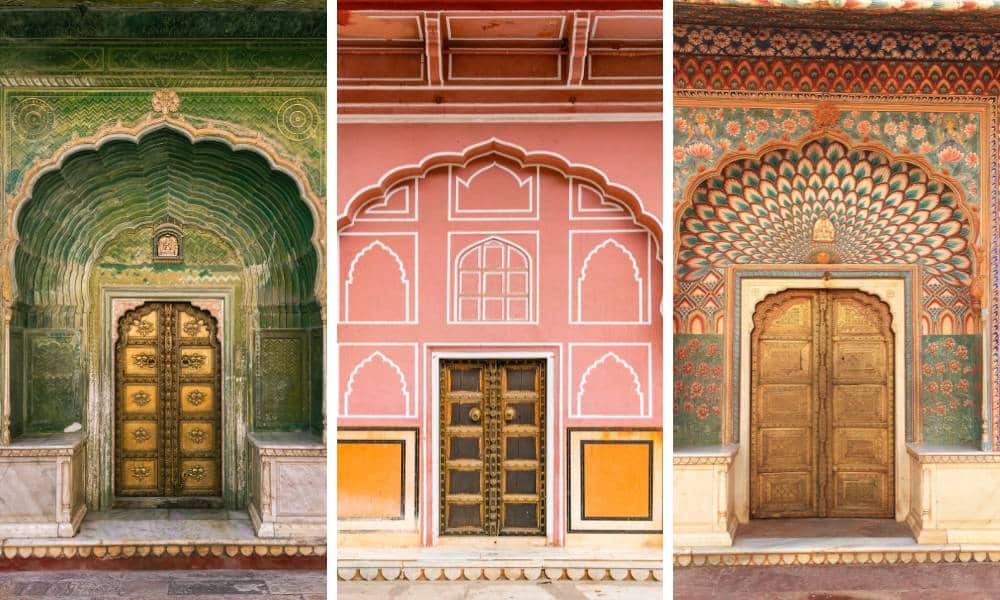
- The Detail: Focus on the Pritam Niwas Chowk, where four magnificent gates represent the four seasons. The Peacock Gate (Autumn) is a masterpiece of blue and green mosaic—a true moment of artistic “Glory” that captures the vibrancy of the desert.
- Late Afternoon (17:00 – 18:30): The Fortress on the Ridge (Amber Fort). Head to the city’s outskirts as the sun begins to lower.
- The Experience: By arriving in the late afternoon, you catch the “Golden Hour” when the yellow sandstone of the fort reflects the desert light. Explore the Sheesh Mahal (Mirror Palace), where thousands of tiny mirrors create a celestial glow, illustrating the “Grit” of the stone exterior hiding the “Glory” within.
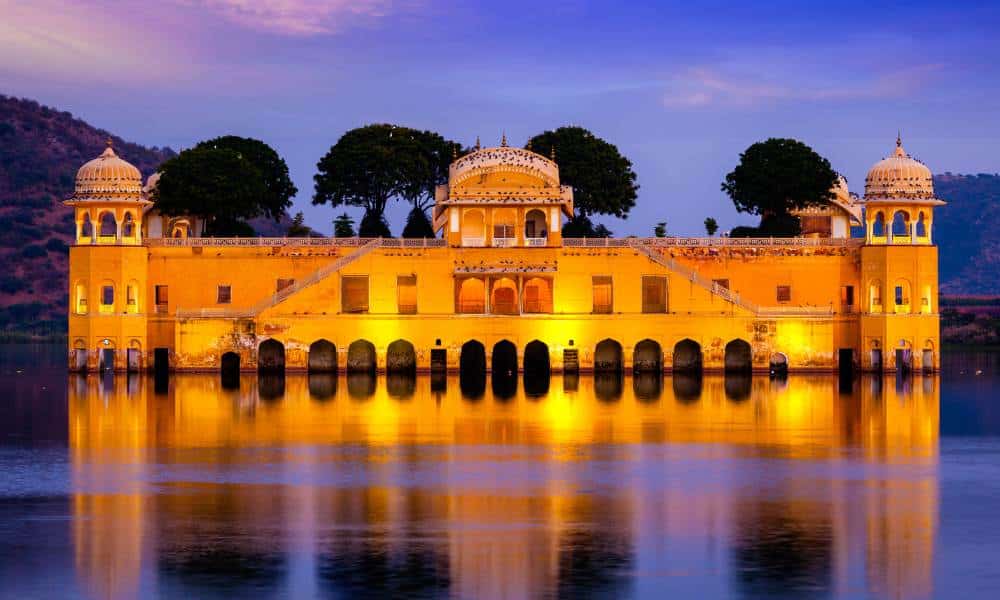
- Sunset (18:30 – 19:30): The Scenic Passage (Kanak Vrindavan & Jal Mahal). As you descend from Amber, pass through the lush Kanak Vrindavan gardens. Stop for a photo-op at the Jal Mahal (Water Palace). Though the interior is closed, the sight of the red sandstone palace floating in the center of Man Sagar Lake against a purple sky is one of Bharat’s most poetic vistas.
- Dinner (20:00 – 22:00): The Authentic Rajasthani Thali. Conclude your journey with a traditional feast.
- The Dish: Immerse yourself in a Dal Baati Churma masterclass. This dish is the definitive “Grit” of Rajasthan—hard-baked wheat rolls (Baati) crushed and soaked in spicy lentil curry (Dal) and clarified butter (Ghee), balanced by the sweetness of Churma. For those seeking bold heat, the Laal Maas (mutton in red chili gravy) is an essential imperial flavor.
Day 14: The Facade of Winds & The Final Return
Location: Jaipur ➔ New Delhi (Exit)
The Vibe: Capturing the final “Pink City” icons and a seamless transition to the skies.
- Morning (08:30 – 10:00): The Icon of Jaipur (Hawa Mahal). Start your morning at the “Palace of Winds.”
- The Experience: Stand across the street as the morning sun illuminates the 953 honeycombed windows. This screen of pink sandstone was designed for royal ladies to witness the “Grit” of the streets while remaining in the “Glory” of the palace.
- Mid-Morning (10:30 – 13:00): The Curator’s Shopping Trail. * The Treasure: Visit Johari Bazar for authentic Kundan jewelry or Bapu Bazar for hand-block printed Sanganeri textiles—perfect, lightweight “Glory” to carry home.
- Afternoon (15:00 – 16:00): The Domestic Leap. Depart for Jaipur International Airport (JAI).
- Strategic Logistics: Book your domestic leg to Delhi via IndiGo or Air India.
- The “BharatDesha” Hack: If you book your domestic and international flights on a single ticket (or through partner airlines like IndiGo’s international codeshares), you can through-check your luggage. This means you drop your bags in Jaipur and pick them up at your final home destination (London, New York, Singapore, etc.), bypassing the baggage carousel “Grit” at Delhi T3.
- Evening (18:00+): The Imperial Exit. Arrive at Indira Gandhi International Airport (DEL). With your bags already cleared for your international flight, enjoy a smooth transit through the premium lounges or duty-free shops of Terminal 3 before your night flight home.
- The Four Seasons: Each gate in the City Palace represents a different Hindu deity and a specific season of the year.
- The imposing yellow and pink sandstone facade of Amber Fort, India’s most iconic hilltop citadel.
- A Royal Retreat: The Chhavi Niwas, or “Blue Room,” showcases a perfect blend of Mughal and British architectural influences.
- Jal Mahal


BharatDesha Quick Take: Phase 5 Logistics
Flights (By Expedia)
Curated Stays (Jaipur)
Getting Around
- MakeMyTrip Cabs (Full Day/Intercity)
- Uber / Ola Rentals (On-Demand)
- E-Rickshaw (Jaipur Shopping)
The Vibe: Romantic, lakeside, and meditative.
Phase 4: The Golden Triangle & Beyond — Delhi to Agra Logistics

Day 9: The Soul of Delhi & The Craft Trail
Location: New Delhi
- Morning (09:00 – 12:00): The Garden Tomb (Humayun’s Tomb). Start your morning at the first great garden tomb of the Mughals.
- The Detail: This UNESCO site is the architectural DNA of the Taj Mahal. Observe the perfect symmetry and the first use of the “double dome” in India. Walking through the Charbagh (four-quadrant garden) is a lesson in how the Mughals brought their vision of “Glory” to the dusty plains of Delhi.
- Afternoon (13:00 – 16:30): The Pan-India Masterclass (Dilli Haat). Head to the open-air craft bazaar at INA.
- The Experience: Wander between stalls of artisans from across Bharat. This is the place for high-quality, hand-crafted “Glory”—from Madhubani paintings to Kashmiri shawls.
- The Food Trail: Treat yourself to a sweet Puran Poli from the Maharashtra stall—the ultimate comforting “Glory” of jaggery and lentils—or try the spicy Litti Chokha from Bihar.
- Evening (17:00 – 19:30): The Vertical Legacy & Sunset (Mehrauli). Drive south to the oldest inhabited area of Delhi.
- The Icon: Visit the Qutub Minar, the world’s tallest brick minaret. Witness the “Grit” of the 12th-century Sultanate carved into red sandstone.
- Sundowners: As the sun dips, head to a rooftop in Mehrauli (like MISO or Olive Bar & Kitchen). Watching the floodlights illuminate the Qutub Minar while the sky turns purple is the definitive Delhi “Glory” moment.
- The Meal: Order a Mughlai Platter featuring Galouti Kebab (softer-than-silk minced meat) or Butter Chicken—the legendary dish that was born in the streets of Delhi.
Day 10: The Agra Sprint
Route: New Delhi → Agra → New Delhi (Hi Speed Train)/(3 hour Private Car)
- The Leap (08:00 – 10:00): Board the Gatimaan Express from Hazrat Nizamuddin or take a private car via the Yamuna Expressway. This is a high-velocity transition from the capital to the heart of the Mughal Empire.
- Morning (10:30 – 13:30): The Ultimate Glory (Taj Mahal). Witness the world’s most famous monument to love.
- Strategic Tip: For the best tactical advice on beating the mid-day heat and navigating the crowds, check our guide: Is the Taj Mahal a Tourist Trap? The Honest Truth (6 AM vs. 4 PM Guide).
- Afternoon (14:30 – 16:30): The Red Sandstone City (Agra Fort). Explore the massive fortress where the Emperors lived. Visit the Musamman Burj, the marble tower where Shah Jahan spent his final years gazing at the Taj from a distance—a poignant moment of “Grit” within royal “Glory.”
- Evening (17:00 – 18:30): Sunset at Mehtab Bagh. Cross the Yamuna to the “Moonlight Garden.” This is the best spot to see the Taj Mahal turn from white to soft gold in the twilight, away from the main temple crowds.
- The Return (19:00 – 21:00): Catch the return train or drive back to New Delhi. Arrive back in the capital to rest before your morning flight to the Udaipur oasis.
BharatDesha Quick Take: Phase 4 Logistics
Getting Around
- Welcome Pickups (Airport)
- Uber / Ola Rentals (On-Demand)
- MakeMyTrip Cabs (Full Day/Intercity)
Phase 5: The Mewar Oasis (Days 11–14)

Now that you’ve experienced the “Big Two” of the North (Delhi & Agra), it’s time for the final pivot to the White City of Udaipur.
Day 11: From Sultanate Grit to Lakeside Glory
Route: New Delhi ➔ Udaipur (Direct Flight)
The Vibe: Moving from the vertical sandstone of Delhi to the shimmering white marble of the “Venice of the East.”
- Morning: Visit the Qutub Minar and the rust-free Iron Pillar, a metallurgical “Glory” that has stood for $1,600$ years.
- Afternoon: Take a direct flight from Delhi (DEL) to Udaipur (UDR).
- Evening: Check into a lakeside heritage hotel. Enjoy a quiet dinner overlooking Lake Pichola as the city lights begin to reflect on the water. We recommend Taj Lake Palace (floating in the water) or The Oberoi Udaivilas (for the 30-acre wildlife sanctuary)
Day 12: The Great Wall of India & The Marble Maze
Location: Kumbhalgarh & Ranakpur
The Vibe: Comparing Maratha “Grit” with the world’s second-longest continuous wall.
- Morning (09:00 – 12:30): The Fortress of Mewar (Kumbhalgarh).
- The Detail: This fort features a 36 km continuous perimeter wall, the second longest in the world after the Great Wall of China.
- The Contrast: Compare this massive, unyielding stone “Grit” to the vertical, basalt forts of the Marathas you saw in Phase 2. Standing on the ramparts, you can see for miles into the Aravalli Range.
- Afternoon (14:30 – 16:30): The 1,444 Pillars (Ranakpur Jain Temple).
- The Experience: Descend into the forest to find this 15th-century marble masterpiece. It features 1,444 uniquely carved pillars—no two are the same. The play of light and shadow here is a spiritual “Glory” that echoes the silence of the Ajanta caves.
- Sadhana Anchor: Practice “Vira” (Strength). As you stand atop the birth place of Maharana Pratap at Kumbhalgarh, reflect on the unyielding spirit required to defend this ridge for centuries.

Day 13: The Oasis of Mewar
Slow your pace to match the ripples of Lake Pichola. Today is the “White City” experience—ivory palaces, floating gardens, and the soft, romantic energy that earned Udaipur the title of “Venice of the East.”
- Morning (09:00 – 12:30): Udaipur City Palace. Explore the “Crystal Gallery” and the Mor Chowk (Peacock Courtyard) where the glass mosaics shimmer in the morning light.
- Lunch (13:00 – 14:30): Ambrai (at Amet Haveli). Request a table at the water’s edge for the absolute best view of the Lake Palace.
- Afternoon (15:00 – 16:30): Saheliyon-ki-Bari (Garden of the Maidens). Observe the gravity-fed fountains that still operate without a single electric pump.
- The Golden View (17:00 – 18:00): Mansapurna Karni Mata Ropeway. Board the cable car to the hilltop temple. This is the highest point in the city center, offering a 360-degree bird’s-eye view of the lakes and the Aravalli range.
- Sunset (18:15 – 19:15): Private Shikara Ride on Lake Pichola. Glide past the illuminated palaces as the sky turns lilac.
- Sadhana Anchor: Practice “Shanti” (Peace). On the boat, watch the reflection of the palaces in the water. Focus on the stillness beneath the movement.
Day 14: The Royal Reflection & Exit (Udaipur ➔ Delhi)
Route: Udaipur –> New Delhi
One final morning in the “City of Lakes” before making your seamless exit. Reflect on the evolution of your journey—from the “Grit” of Old Delhi to the ivory “Glory” of Udaipur.
- Morning: Visit Sajjangarh (Monsoon Palace) for a bird’s-eye view of the entire city and the surrounding Aravallis.
- Lunch: A final meal at Jagat Niwas rooftop.
- The Move: Fly Udaipur (UDR) ➔ Delhi (DEL).
- Exit: Check into your Delhi Aerocity Transit Hotel (JW Marriott or Holiday Inn) to be ready for your international flight.
- Sadhana Anchor: Practice “Ananda” (Bliss). As you pack your bags, look at the one souvenir that represents your journey. Feel the gratitude for the 14 days that changed your perspective.

BharatDesha Quick Take: Phase 5 Logistics
Flights (By Expedia)
Curated Stays (Udaipur)
Curated Stays (Delhi Aerocity)
FAQs: 14 Day India Itinerary Mumbai
Your Bharat Blueprint: The Master Logistics Hub
Conclusion: The Full Circle of Grit and Glory
Your 14-day odyssey across Bharat has been more than a simple sightseeing tour; it has been a masterclass in the resilience and refinement of a civilization. You started in the humid, sea-scented “Grit” of Mumbai and ascended the Maratha heights where the soul of a nation was defended in stone. You transitioned into the “Painted Silence” of the Deccan caves—where engineering met eternity—and finally witnessed the imperial “Glory” of the North.
Whether you chose the pink sandstone corridors of Jaipur or the white marble reflections of Udaipur, you have moved through the very DNA of the subcontinent. You have seen that Bharat is not a monolith, but a living tapestry where every chisel mark on a basalt cliff tells a story of survival, and every silk thread on a loom tells a story of splendor. You return home not just with photographs, but with a new internal geography—one anchored in the unyielding grit of the past and the blinding glory of the future.
Editor’s Note:
This 2026 itinerary was designed to solve the “Traveler’s Paradox”—how to see the world’s most famous monuments without losing the authentic soul of the land. By starting in the Deccan and ending in the North, we’ve prioritized flow, energy management, and logistical “Hacks” (like through-checking luggage) that generic guides often miss.
- The Best Time to Go: Between October and March. The 2026 climate data suggests that late February offers the perfect balance of “cool grit” in the Deccan and “golden glory” in the North.
- The Logistics First Rule: Always book your Phase 4 and 5 domestic flights (IndiGo or Air India) on a single PNR with your international leg whenever possible. This is the difference between a stress-free transit and a baggage-claim nightmare.
- The Sadhana Practice: Don’t skip the “Sadhana Anchors.” Travel in Bharat can be high-velocity; these 3-minute pauses of Dharana or Ananda are what transform a vacation into a pilgrimage of the self.
We know that planning a 14-day journey across a civilization this complex can feel overwhelming. If you have questions about specific connections, need a second pair of eyes on your custom route, or just want to verify a 2026 travel detail, we are here for you.
Reach out to us at hello@bharatdesha.com or drop a question in the comments section below. We would be more than happy to help you fine-tune your Bharat blueprint.
— Priyanka