
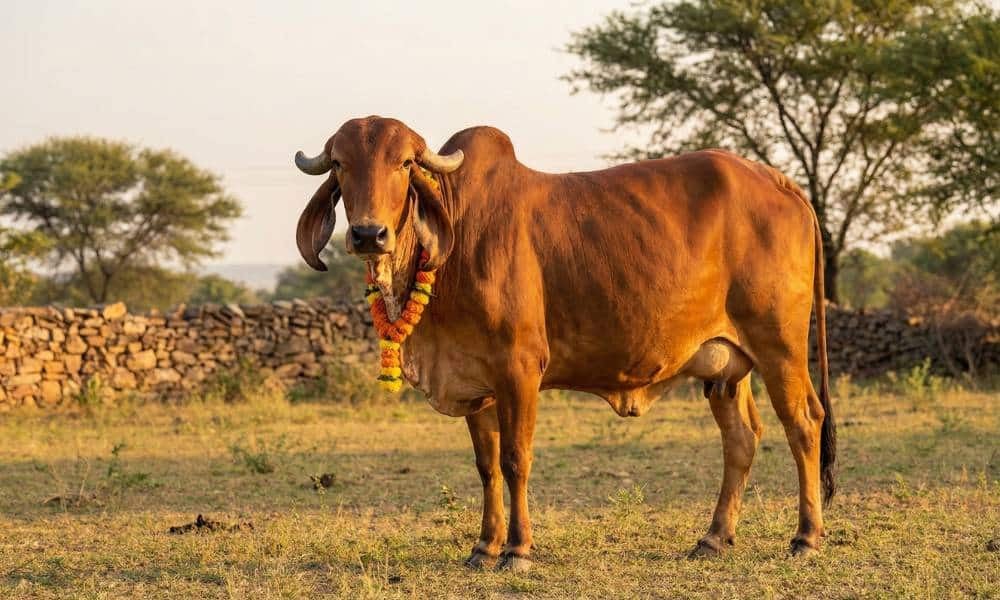
Why the Cow is Sacred in India: More Than Just a “Holy Cow” Myth

The “Holy Cow” is often a punchline in the West. In India, it is a philosophy. This article moves beyond the surface to explore the scientific, economic, and historical reasons why the cow is sacred in India and how Gau Mata became the backbone of Indian civilization.
Land in any Indian city, and you will see it within minutes: A massive bull sitting calmly in the middle of a chaotic intersection, with traffic flowing respectfully around it. You might see a shopkeeper offer the first roti (bread) of the day to a stray cow before he feeds himself.
For the outsider, this is often a source of amusement or confusion.But the question remains: Why the cow is sacred in India ?
The answer lies far deeper than simple religious dogma. As the ancient texts and history reveal, the cow wasn’t just worshipped; she was the engine that built Indian civilization. From the transition of hunter-gatherers to settled societies, to the fight for India’s independence, the story of the cow is the story of India itself.
The Civilizational Anchor: From Nomads to Farmers
Civilization as we know it might not exist without the cow. Thousands of years ago, humans were nomads. We hunted, we moved, we survived. The shift to a settled, agricultural life—where culture, art, and philosophy could flourish—required a partner. That partner was the cow.
- The Bull: He was the tractor before engines. He tilled the soil, allowing mass agriculture.
- The Cow: She provided continuous nutrition (milk) that allowed families to stay in one place rather than hunting for food daily.
In India, this created a debt of gratitude. We don’t just use the cow as a resource; we honor her as a co-founder of our society.
Watch: The Engine of Civilization
Visuals often explain history better than words. Watch this fascinating breakdown by our content partners, Shashvat Research, on how the cow shaped the Indian economy and identity.

The Perfect Eco-System: A Zero-Waste Economy
Long before “sustainability” became a global buzzword, the Indian cow-centric lifestyle was the ultimate green economy. Nothing from the cow was wasted; everything was gold.

1. Amrit: The Elixir (A2 Cow Milk)
Indian A2 Cow Milk is scientifically recognized today for its health benefits and digestibility compared to the A1 milk (from genetically mutated breeds) common in the West. It is the base of Indian nutrition.
2. Medicine (Gau Mutra)
In Ayurveda, distilled cow urine is not waste; it is a bio-enhancer. It has been used for thousands of years in treatments for skin diseases and immunity issues due to its anti-bacterial properties.
3. Fuel & Fertilizer (Gobar)
- Disinfectant: Traditional village homes plastered with cow dung are scientifically proven to repel insects and regulate temperature.
- Soil Health: Unlike chemical fertilizers that strip the soil, manure replenishes it, ensuring the cycle of life continues.
- Energy: Dried dung cakes are a renewable biofuel that powered rural India for centuries.
The Takeaway: When you see a cow in a village, you aren’t looking at a pet. You are looking at a walking, breathing ecosystem that supports the entire family.
Gau Mata: The Spiritual Mother
Why do we say “Mata” (Mother)? In Sanatan Dharma, a mother is defined not just by biology, but by function: One who nurtures selflessly.
The cow gives her milk to humans just as she does to her calf. She serves until her last breath.
- Lord Krishna: The Supreme God chose to appear not as a King, but as a Cowherd (Gopala). His “Leela” (divine play) revolves around serving cows, teaching humanity that God serves nature.
- The Vedas: With over 1,300 mentions, the Vedas place the cow at the center of cosmic order (Rta).
This spiritual reverence solidified the bond. To harm a cow was to harm the very source of sustenance.
Celebrations of the Living: Nandi and Festivals
The reverence for the cow isn’t just a philosophy written in books; it is a living tradition celebrated in temples and annual festivals across the land.
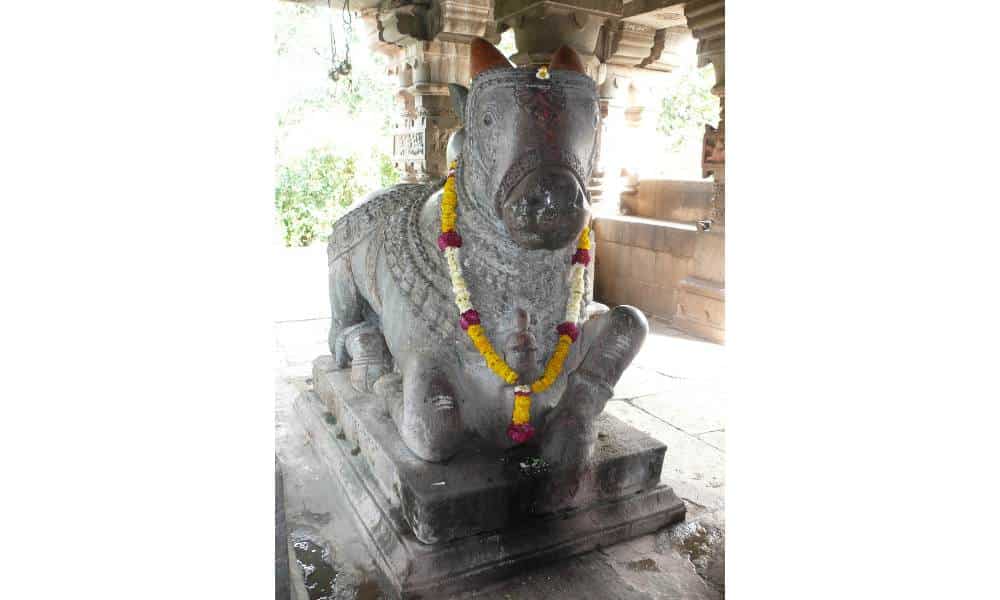
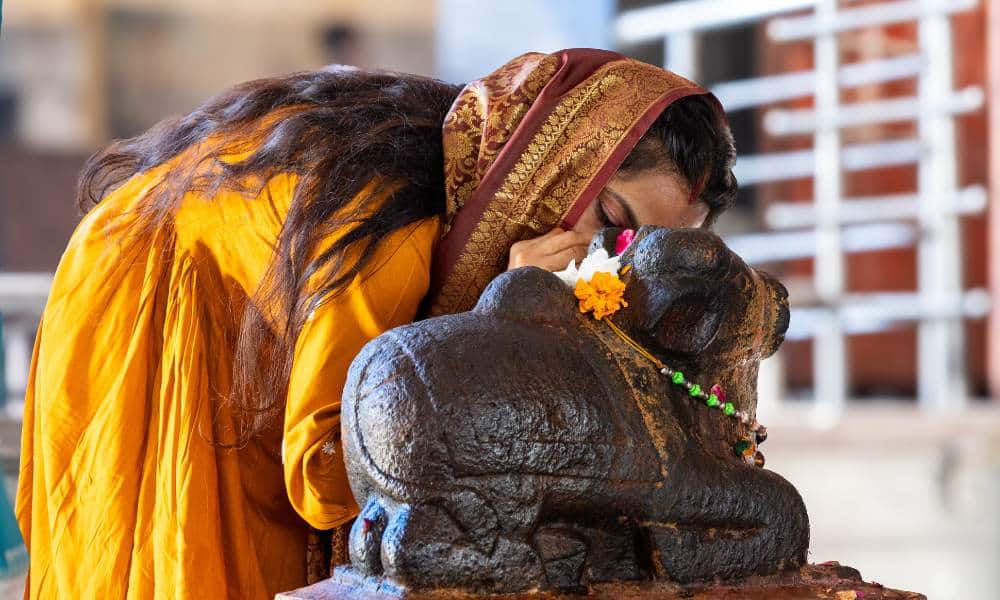
1. Nandi: The Eternal Wait You cannot visit a Shiva temple in India without first bowing to Nandi, the massive bull who sits facing the shrine. He is not merely a statue; he is considered a living devotee in eternal meditation.
- The Identity: Nandi is the Vahana (Vehicle) of Lord Shiva.
- The Lesson: He represents “Controlled Power.” Nandi has the physical strength of a bull, yet he chooses to sit in absolute stillness, waiting for his Lord. He teaches us that power without devotion is chaos.
- The Ritual: Before entering the inner sanctum, devotees whisper their wishes into Nandi’s ear, believing that he—the closest confidant of Shiva—will deliver the message.
2. The Festivals of Gratitude India dedicates specific days solely to worshipping cattle, treating them not as beasts of burden, but as family members.
- Mattu Pongal (Tamil Nadu): A “Thanksgiving” for cows. Farmers bathe their bulls, paint their horns in bright colors, and feed them sweet rice (Pongal) before the family eats.
- Bail Pola (Maharashtra & Central India): This is the great festival of the Bulls. On this day, bulls are given a “rest day” from farm work. They are massaged with turmeric and oil, decorated with shawls and bells, and worshipped in every village square to honor their hard labor.
- Gopashtami (North India): This marks the day Lord Krishna was officially promoted from a keeper of calves to a keeper of cows. It is the “Coming of Age” day for the Divine Cowherd.

Wisdom in Sanskrit: What the Texts Say
To understand the depth of this bond, we must look at the original Sanskrit verses that defined Indian culture.
On the Cow (The Universal Mother)
“गावो विश्वस्य मातरः” Gavo Vishwasya Matarah
Meaning: “Cows are the Mothers of the Universe.” (This implies they nourish all beings, not just their own calves). — Mahabharata, Anushasana Parva
On Nandi (The Divine Bull)
“ॐ तत्पुरुषाय विद्महे नन्दिकेश्वराय धीमहि | तन्नो वृषभः प्रचोदयात् ||” Om Tatpurushaya Vidmahe, Nandikeshwaraya Dhimahi, Tanno Vrishabhah Prachodayat.
Meaning: “We meditate upon the Great Spirit, the Lord Nandi. May the Divine Bull guide our intellect toward Truth.” — The Nandi Gayatri Mantra
The Struggle for Existence: A Bloody History
It is important to understand why Indians are so protective of cows today. It stems from a history of trauma and resistance.
- The Invasions (12th Century onwards): Foreign invaders realized that the cow was the backbone of Indian morale and economy. Cow slaughter became a tool of political dominance and psychological warfare to break the Hindu spirit.
- The British Raj (18th Century): The British established massive slaughterhouses (like the one in Kolkata in 1760) to feed their armies, disrupting the agricultural economy.
The Resistance: The cow became a symbol of the freedom movement. From the Namdhari Sikhs (Kuka Movement) to the Sanyasis of the 19th century, thousands gave their lives to protect the cow. It was synonymous with protecting India’s identity.
The Wandering Nandi: A Living Omen
In your travels, you might see a fascinating sight: A brightly decorated bull, adorned with bells and mirrors, walking door-to-door with a traditionally dressed custodian playing a drum.
This is the Nandi Bail (or Gangireddu in the South).
This is NOT Begging. Western tourists often mistake this for begging. It is Bhiksha (Spiritual Alms).
- The Ritual: The custodian asks the Bull questions about the future of the family (“Will this house prosper? Will the rains come?”). The Bull, trained to understand cues, nods its head or shakes it.
- The Distinction: In begging, the receiver is dependent on the giver. In Bhiksha, the giver is dependent on the receiver for blessings. The householder offers rice or money not out of pity, but out of gratitude for Lord Nandi visiting their doorstep.
- The Verdict: If you see them, do not pity them. Offer a small donation (₹10-20) and receive the nod of the Nandi. It is considered a good omen for your journey.

Travel Tips: Interacting with Cows in India
As a guest in India, how should you navigate this cultural pillar?
- Show Respect: Never shoo away a cow aggressively or hit it. It is considered deeply offensive to locals.
- The “Gau Seva” Experience: Many temples and Ashrams have Gau Shalas (Cow Shelters). Visiting one and feeding cows (bananas or jaggery) is a beautiful, peaceful activity that locals love to see foreigners participate in.
- Taste the Dairy: Taste the difference in fresh, local dairy—whether it’s a clay-cup Lassi in Varanasi or pure Ghee on your roti.
Recommended Resources & Further Reading
To truly understand the depth of the sacred bond between India and the cow, one must look at both the ancient wisdom and modern data. We’ve curated these resources to help you bridge that gap.
1. Visual Wisdom: Shashvat Research
Our content partners at Shashvat Research specialize in cinematic, evidence-based storytelling.For visual storytelling on Indian history and Sanatan Dharma, subscribe to our partners.
2. The Science of A2 Milk
Modern medicine is finally confirming what Ayurveda has taught for millennia. Indigenous Indian breeds like the Gir and Sahiwal are biological treasures.
- The Study: Potential status of A1 and A2 variants of bovine beta-casein gene in Indian cattle.
- The Finding: Indian cattle naturally produce A2 Beta-Casein, which is highly digestible. In contrast, most Western (A1) breeds produce BCM-7, a peptide frequently linked to digestive inflammation.
- 📜 Read the Peer-Reviewed Study on PubMed
3. Continue Your Journey on BharatDesha
Expand your understanding of the Indian lifestyle with these related guides:
- 📜 What is Sanatan Dharma? –> The foundational philosophy that defines our relationship with nature.
- 🥗 The Vegetarian’s Guide to India –> Coming Soon: How to eat like a local and understand the ethics of the Indian plate.
- 🐄 Lord Krishna’s Vrindavan –> Coming Soon: A spiritual travel guide to the historic “City of Cows.”
- 🌿 Ayurveda 101 –> Coming Soon: A beginner’s guide to traditional healing and the role of Panchagavya.
Cow Etiquette: Why the cow is sacred in india?
Conclusion: A Lesson in Gratitude & The Joy of Gau Dan
The reverence for the cow teaches us a vital global lesson: Gratitude for what sustains us. In a world of factory farming and disconnection from nature, the Indian cow stands as a gentle reminder that humans and animals are meant to live in symbiosis, not exploitation. This is the heart of why the cow is sacred in India.
But this understanding is best experienced, not just read. There is a profound peace that comes from visiting a Gau Shala (Cow Shelter). When you step away from the noise of the city and feed fresh grass or jaggery to a rescued cow, something shifts inside you. Looking into her large, calm eyes is a meditative experience that many travelers describe as the highlight of their trip.
In Sanatan Dharma, Gau Dan (Donating for the care of a cow) is considered one of the highest forms of charity. It is said to refine one’s character and wash away the weight of past karma. So, do not just take photos of the cows on the street. Visit a shelter. Offer a small donation. You will walk away with a lighter heart and the silent, powerful blessings of the Gau Mata.
Editor’s Note: Beyond the Tourist Lens
At BharatDesha, we believe that travel to India should be an internal pilgrimage as much as an external one. Seeing a cow in a busy intersection or a Varanasi alleyway isn’t just a “photo op”—it is an invitation to witness a civilization that refuses to forget its roots.
If this article has changed your perspective, we encourage you to make Gau Seva a part of your itinerary. Whether you are visiting the spiritual hubs of Rishikesh or the historical palaces of Rajasthan, there is a Gau Shala nearby waiting to welcome you.
👉 Ready to see the soul of India? Explore our guide to Rishikesh: Ashrams vs. Luxury Retreats –> to find the perfect home base for your spiritual journey, where the bond between man and nature is still vibrantly alive.


